

What Determines the Price of a PVC Mixer?
There is no single list price for a PVC mixer. This guide explains the technical decisions behind the price, how to compare quotations fairly and what we need to quote your project.

What determines the price of a PVC mixer?
The price of a PVC mixer is driven mainly by its batch capacity, the hot-cold configuration (horizontal or vertical cooler), the type of formulation it will process, the motor and speed-control choice, the level of automation and the dosing, filtration and feeding equipment supplied with it. The scope of installation, commissioning and training also affects the total.
That is why there is no meaningful single "PVC mixer price". Two mixers that look the same on paper can differ considerably once each is designed around a different recipe. Below we go through the decisions that move the price.
Main cost drivers
Factor | Effect on price | What to tell us |
|---|---|---|
Batch capacity | Larger vessel, motor and frame | Hourly dry blend demand, number of extruders |
Configuration | Horizontal and vertical coolers are built differently | Building height, floor space |
Recipe type | Rigid or plasticised PVC and filler level drive impeller and power | Recipe type, approximate filler level |
Speed control | A frequency inverter (FV) option adds equipment | How often you switch recipes |
Materials | Stainless steel on product-contact surfaces changes cost | Product and cleanliness requirements |
Automation | Automatic dosing and recipe management widen the scope | Number of raw materials, storage method |
Auxiliary equipment | Moisture extraction, sieving and conveying are separate items | Equipment you already have |
Services | Installation, commissioning, training and freight | Plant location and country |
Batch capacity and hourly output
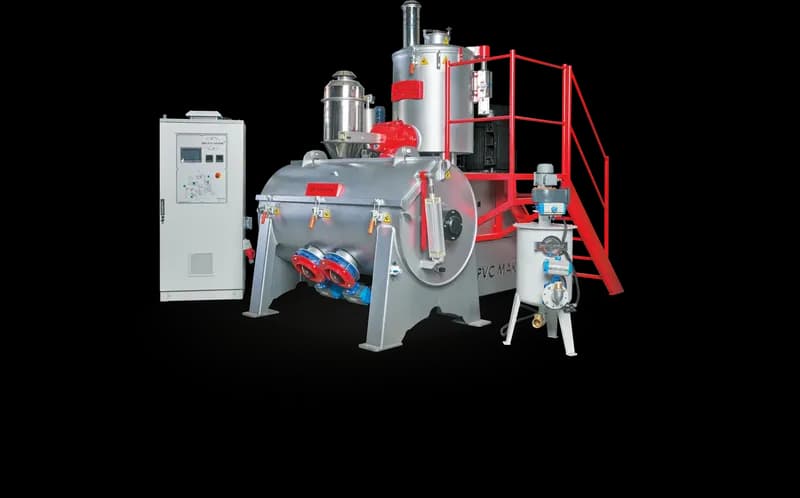
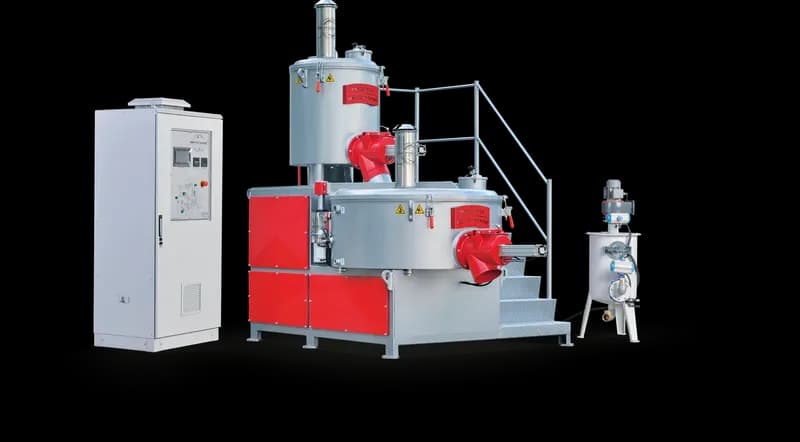
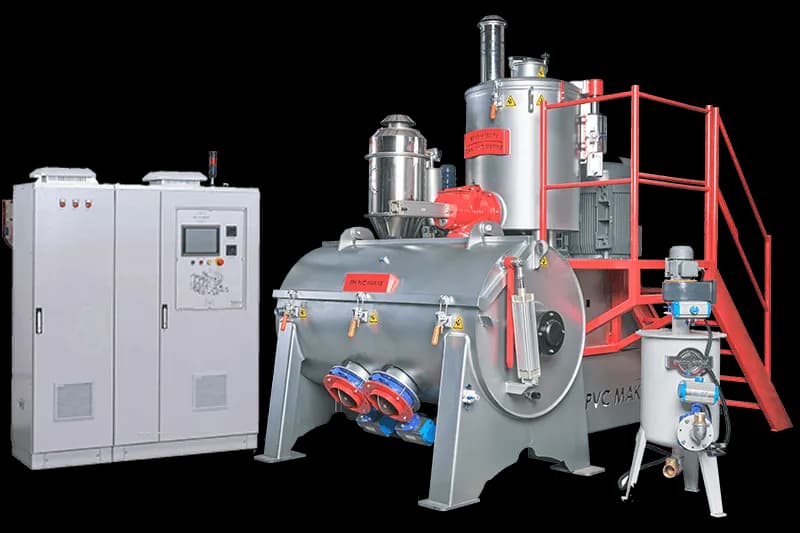
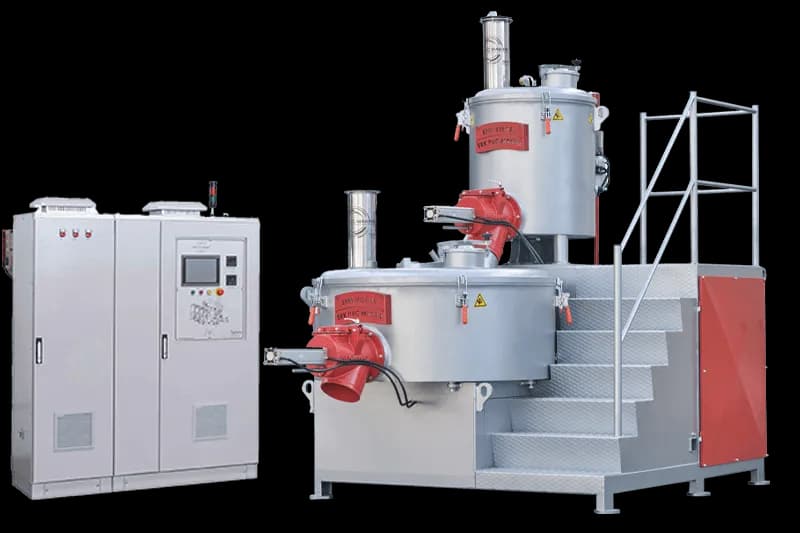
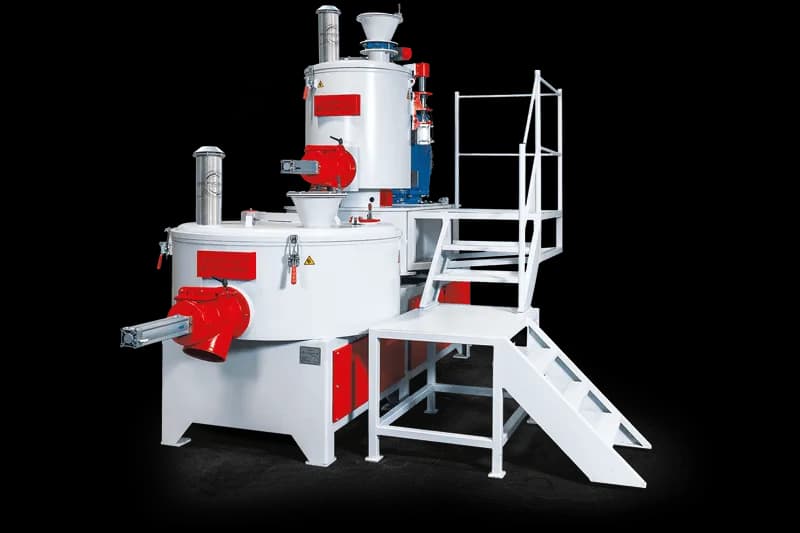
Capacity matters most. Erk's EPM-H horizontal turbo PVC mixer series runs 150–500 kg per batch at 4–6 batches per hour, and the EPM-V vertical turbo PVC mixer series runs 100–200 kg per batch at 4–6 batches per hour. That works out to roughly 600–3,000 kg/h for EPM-H and roughly 400–1200 kg/h for EPM-V, with the real figure depending on the formulation.
Undersizing means a second mixer investment later. Oversizing raises the investment and energy use for no benefit. We recommend sizing on your current extruder consumption plus a sensible growth margin.
Horizontal or vertical hot-cold configuration
In a hot-cold mixer, the heating turbo mixer raises the blend by friction, typically to 110–125 °C, and the cooler brings it down, typically to 40–50 °C. Whether the cooler is horizontal or vertical changes both the machine's construction and the mixing-room layout. A horizontal cooler suits large batches and limited ceiling height; a vertical arrangement suits compact layouts.
Recipe type and impeller
Rigid profile and pipe recipes are often highly filled and need fast, controlled heating. In plasticised cable and hose recipes the priority is even absorption of the plasticiser. Erk uses different impeller geometries for these two groups. Because the recipe type directly affects motor power and impeller choice, it is a large part of the price.
Automation and dosing
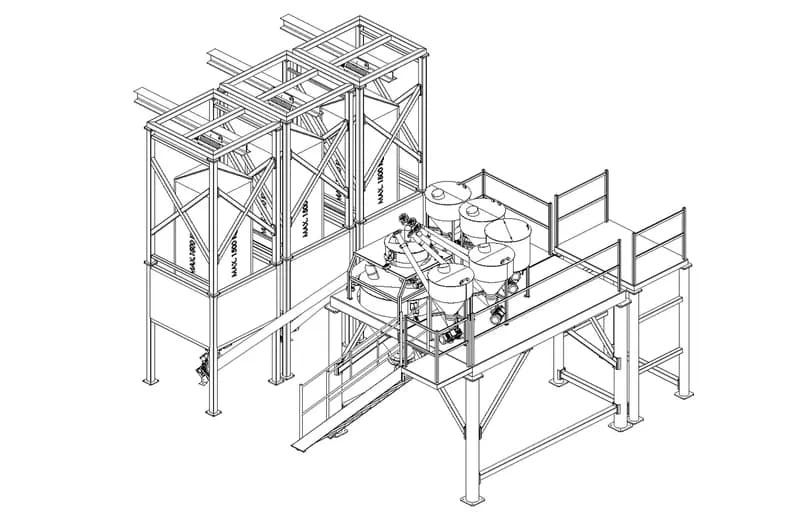
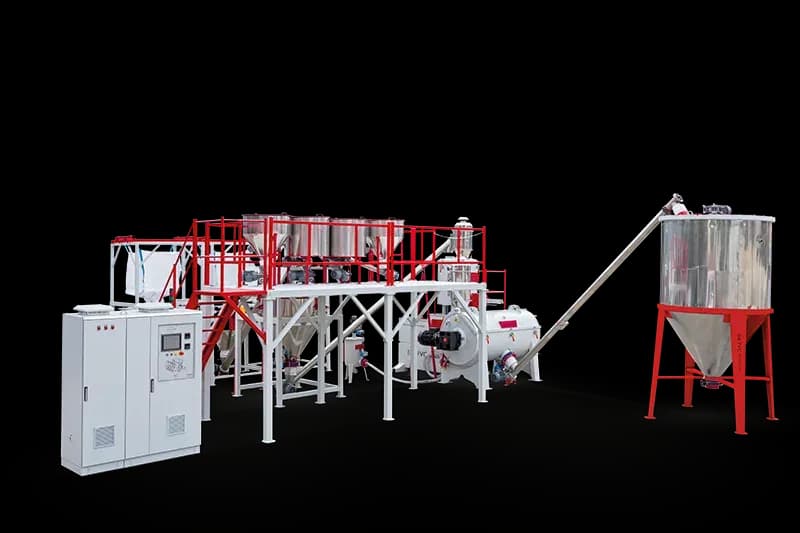
You can buy the mixer on its own or plan it as part of a line. Adding an automatic powder dosing system and liquid dosing raises the initial investment, but cuts manual weighing errors, material losses and labour. Dosing can also be added to an existing mixer later.
Auxiliary equipment
A jet filter for moisture extraction, a powder sieve and a screw conveyor are needed in most plants for the mixer to work efficiently. Always check whether a quotation includes them; one supplier may have priced the mixer alone, another the full line.
Comparing quotations fairly
Looking only at the bottom-line figure can mislead. When you compare offers, ask:
- Is capacity stated on the same basis? For which recipe are batch size and batches per hour given?
- Is the scope the same? Are the cooler, impeller set, control panel, filter and feeding equipment included?
- Are services included? Installation, commissioning, operator training and freight?
- How easy are spare parts to get? Can blades and wear parts be supplied quickly?
- Are you dealing with the manufacturer? Will you have direct access to technical information and parts?
Purchase price versus total cost of ownership
A mixer runs for years, often across several shifts. Over that time these items matter as much as the purchase price:
- Energy use: the right impeller and correct sizing directly affect energy per batch.
- Blade wear: wear depends on calcium carbonate content and running hours; original blades from stock keep downtime short.
- Cost of downtime: when the mixer stops, the extruders cannot be fed, so service and parts support belong in the price comparison.
- Blend quality: an inconsistent dry blend comes back as scrap and lost settings at the extruder.
New or used?
A used PVC mixer can look like the cheaper option. Before deciding, weigh up:
- Capacity and recipe fit: the mixer may have been designed for a different product, and its impeller geometry may not suit your recipe.
- Wear: the condition of blades, vessel interior, bearings and seals is rarely clear without an on-site inspection.
- Spare parts: if the original manufacturer cannot be reached, getting parts can stretch downtime.
- Installation: dismantling, transport, reassembly and integration into your line are separate costs.
- Controls: older control systems can make it harder to connect new dosing equipment.
Once these are added up, the gap is often smaller than it first appears. We can help you compare the options based on your capacity and recipes.
Investing in stages
If the budget does not cover a full line at once, the investment can be split. For example, the hot-cold mixer and basic feeding go in first, with automatic dosing, moisture extraction and sieving added later. For this to work:
- the layout should leave room for later equipment from the start,
- the mixer inlet and platform should be designed so dosing can connect later,
- the control system should be chosen with expansion in mind.
That keeps the first investment down without paying to rebuild later.
Common mistakes
- Sizing only for today: an extruder added in a year or two can leave the mixer short of capacity early.
- Asking for a price without the recipe: a figure given without the recipe may change once impeller and motor are defined.
- Leaving auxiliary equipment for later: a mixer running without moisture extraction or sieving can struggle to deliver good dry blend.
- Ignoring after-sales: access to spare parts and service shapes your costs over the whole life of the mixer.
What to send us for an accurate quotation
To give you a realistic price, we need:
- Product and recipe type (rigid or plasticised, approximate filler level)
- Number of extruders and total hourly dry blend demand
- Preferred configuration (horizontal or vertical) or building constraints
- Automation expectations: number of raw materials and how they are stored
- Plant location and the services you need
You can define your line equipment by equipment in our line configurator, or go straight to the quote request form.
Working with Erk PVC Makine
Erk PVC Makine has built PVC mixing, dosing and feeding systems since 2015, has taken part in more than 500 projects and has lines running in over 46 countries. Our mixers are built at our factory in Ergene, Tekirdağ, and we provide installation, commissioning, operator training, remote support and spare parts ourselves. See every model on our PVC mixers page.
Share your recipe and capacity needs using the form below, and we will prepare a PVC mixer quotation for your plant.
Frequently Asked Questions
Why don't you publish PVC mixer prices online?
Price depends on capacity, configuration, recipe type, automation level and service scope, so a single list price would be misleading. Send us your details and we will prepare a quotation for your project.
Is there a price difference between horizontal and vertical hot-cold mixers?
Yes, because construction and capacity range differ. The EPM-H horizontal series covers 150–500 kg per batch and the EPM-V vertical series 100–200 kg per batch; choose first on capacity and layout.
Are installation and training included in the quotation?
We provide installation, commissioning and operator training; the exact scope of the quotation is agreed based on your plant location and requirements.
Can I buy the mixer first and add automatic dosing later?
Yes. Automatic dosing can be added to an existing mixer later. We recommend planning the layout with that step in mind from the start.
What information do you need to prepare a quotation?
Product and recipe type, hourly dry blend demand, preferred configuration, automation expectations and plant location are enough to start.
Request a Quote
Fill in the form and our sales engineers will get back to you within one business day.