

EPM-V
Vertical Turbo PVC Mixer
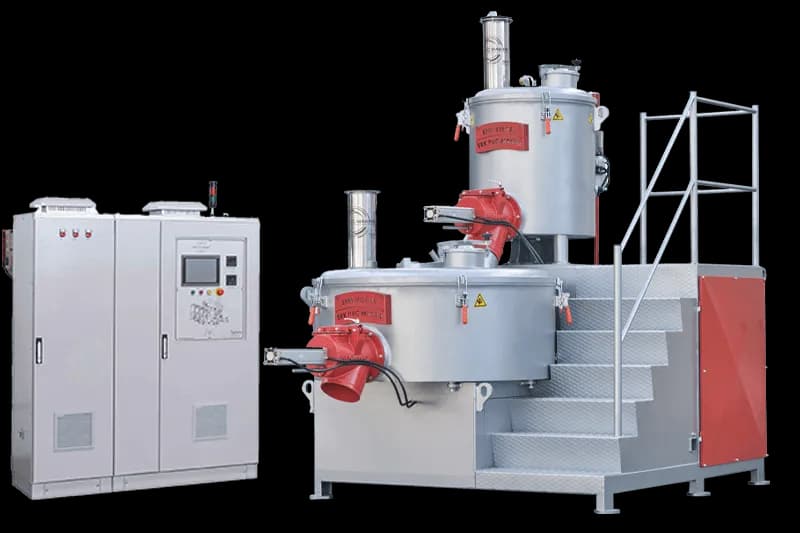
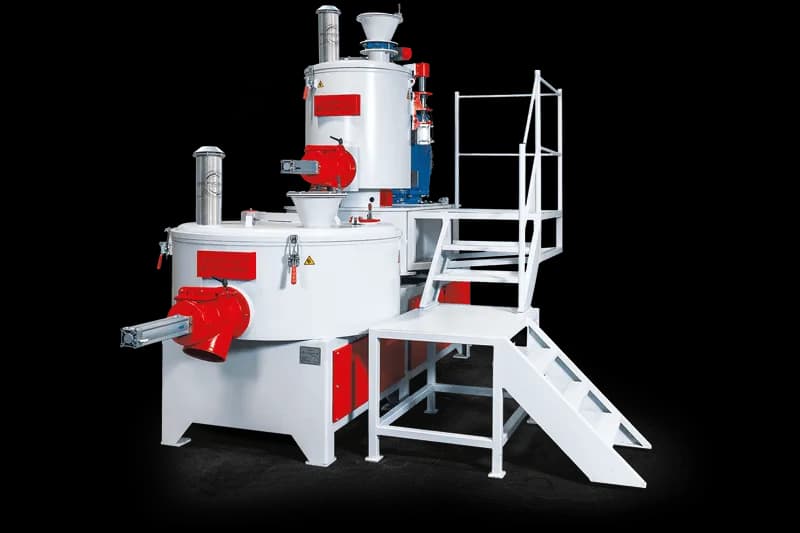
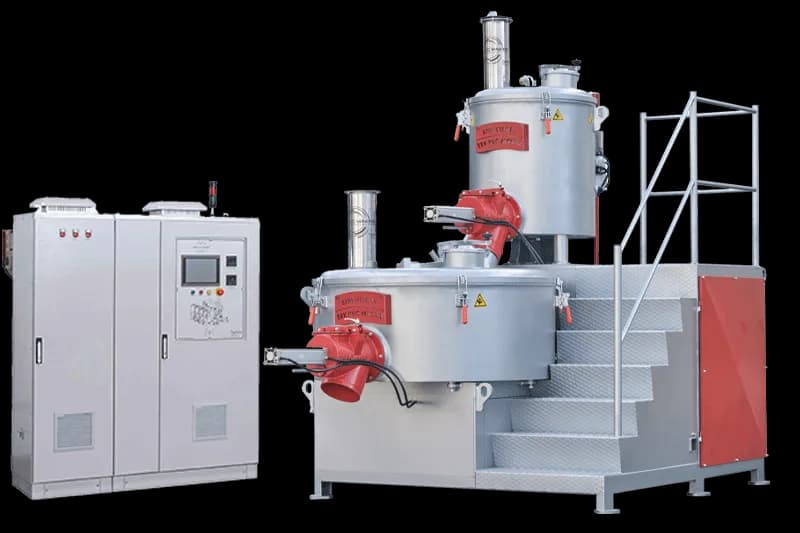
The EPM-V series stacks a vertical heating mixer and a vertical cooler in a compact layout, producing consistent PVC dry blend in 100–200 kg batches for mid-sized lines.
Highlights
Technical Specifications
| Model | EPM-V100 FV / SS | EPM-V150 FV / SS | EPM-V200 FV / SS |
|---|---|---|---|
| Production & Capacity (Charge/Hour) | 4-6 | 4-6 | 4-6 |
| Production & Capacity PVC+Additives Kg. | 100 | 150 | 200 |
| Heater Mixer Volume Lt. | 300 | 450 | 540 |
| Heater Mixer Motor Power kW | 45 | 75 | 90 |
| Cooler Mixer Volume Lt. | 520 | 700 | 850 |
| Cooler Mixer Motor Power kW | 5.5 | 7.5 | 11 |
| Approx. output (kg/h)* | 400–600 | 600–900 | 800–1,200 |
* Batch size × batches per hour; real output depends on the formulation, bulk density and cycle time.
What is a vertical high speed mixer?
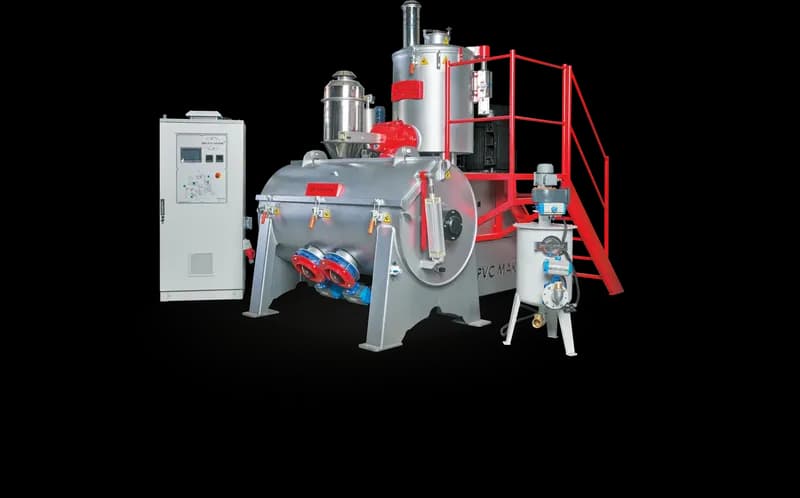
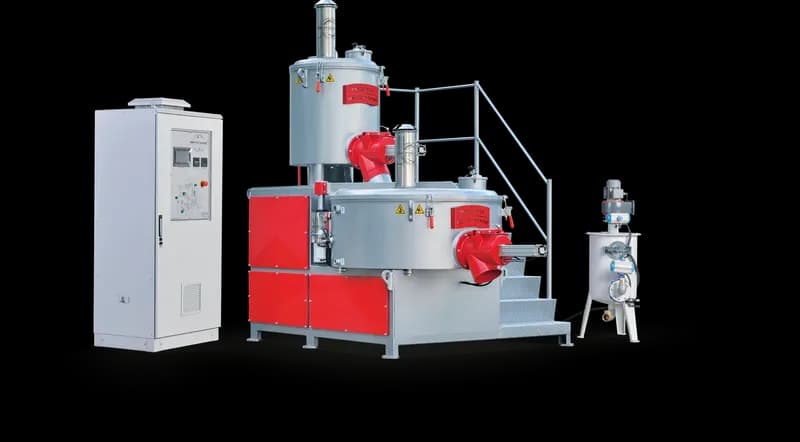
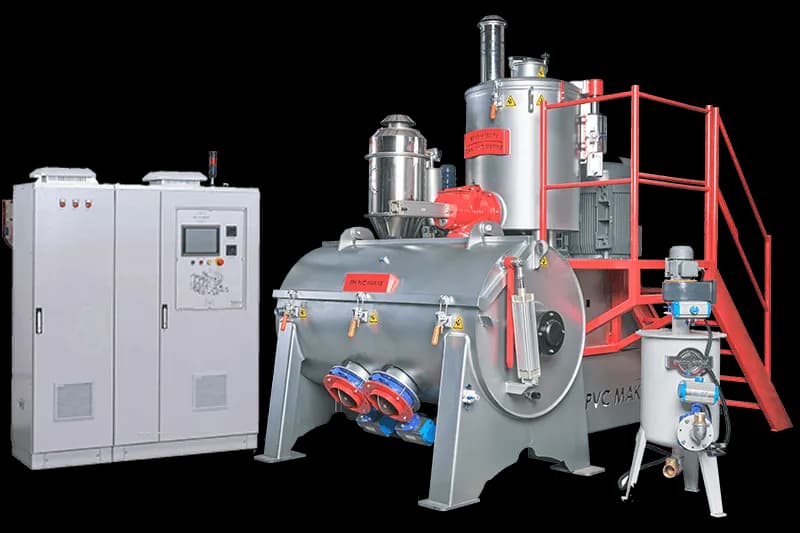
Before PVC can be extruded, the resin has to be blended with stabilisers, fillers, lubricants, impact modifiers and pigments into a free-flowing dry blend. The EPM-V vertical high speed mixer handles this in two stages: a high-speed vertical heating mixer, with a vertical cooling mixer positioned beneath it.
The main argument for the vertical configuration is layout. With heater and cooler arranged one above the other, the unit occupies less floor space — useful when adding a line to an existing plant or working in a crowded mixing room. Vertical turbo mixers of this kind are a common choice for mid-sized profile, pipe and cable lines.
In the field these machines are often simply called a vertical mixer or vertical turbo mixer. If you are looking for a low-speed vertical blender that mixes powders and granules without heating, see our vertical blender.
If you only need a cooler for your existing heating mixer, the cooling mixer is also available on its own.
How it works
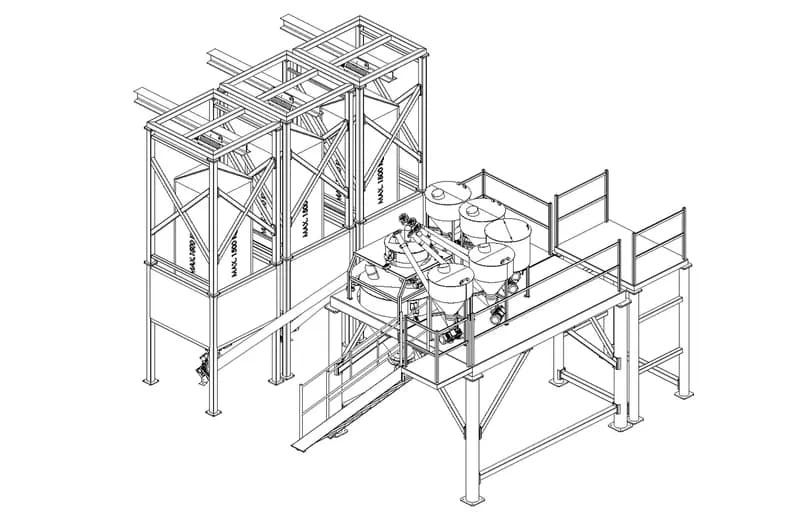
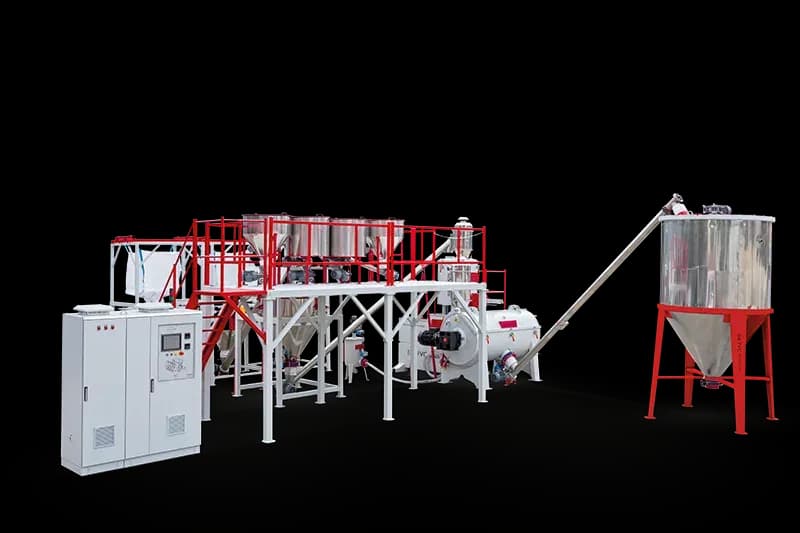
- Charging: PVC resin and additives are weighed to the recipe and loaded into the heating mixer, either by hand or with an automatic powder dosing system.
- Frictional heating: The high-speed impeller heats the material by friction. In typical PVC recipes the blend reaches around 110–125 °C, and the additives spread evenly over the resin particles.
- Cooling: At the target temperature the batch drops into the vertical cooler, where the jacketed vessel typically brings it down to around 40–50 °C. The heater starts the next batch in the meantime.
- Feeding: The cooled dry blend moves to a hopper or silo and then to the extruder via a flexible screw conveyor.
EPM-V model range
The Technical Specifications table above compares three models — EPM-V100, EPM-V150 and EPM-V200 — with batch capacities of 100, 150 and 200 kg of PVC plus additives. The series runs 4–6 batches per hour. On FV models a frequency inverter lets you adjust impeller speed for each formulation.
To size the mixer, multiply batch capacity by batches per hour and compare the result with your extruders' hourly consumption. Leaving headroom for future extruders keeps the mixer from becoming a bottleneck too soon.
To help us recommend a model, it is enough to share:
- Current and planned number of extruders and their hourly consumption
- Product type (profile, pipe, cable, film, etc.)
- Recipe type: rigid or plasticised, high or low filler content
- Floor dimensions and ceiling height of the mixing room
Vertical or horizontal? EPM-V vs EPM-H
Both series use the same hot-cold mixing principle; the differences lie in the cooler design and the plant layout.
- Floor space: the vertical EPM-V is more compact, while the horizontal cooler of the EPM-H spreads over a larger area.
- Headroom: a vertical arrangement needs more height; a horizontal cooler suits mixing rooms with low ceilings.
- Output: EPM-V is aimed at mid-sized lines. For high-output plants feeding many extruders, the EPM-H horizontal turbo mixer offers larger batch sizes.
- Cooling: a horizontal cooler spreads the hot blend over a wide jacketed surface, which pays off with large batches; a vertical cooler is a balanced solution for medium batches.
The right choice depends on target output, room dimensions and recipe. Send us your layout and our engineers will weigh up both options with you.
The right impeller for rigid and soft PVC
The heating mixer's impeller has the biggest effect on blend quality. Erk PVC Makine uses different blade geometries for rigid profile and pipe compounds and for plasticised cable, hose and film compounds. The right impeller shortens heating time, saves energy and controls the bulk density of the dry blend. Replacement mixer blades are available when wear sets in.
Applications
- PVC window and door profiles, curtain rails and cable trunking
- Sewage and clean water pipes, irrigation hoses
- PVC cable and cable compounds
- Flooring, film, tarpaulin and waterproofing membranes
- Wood-plastic composite (WPC) products
Installation and after-sales support
EPM-V mixers are built and tested at our factory in Ergene, Tekirdağ before shipment. Erk PVC Makine does not manufacture extruders; we supply the dosing, mixing, sieving and feeding equipment in front of them. Installation, commissioning, operator training, remote support and spare parts reach customers in more than 46 countries.
To choose the right EPM-V model for your line and get a price, request a quote. What drives the price is explained in our PVC mixer price guide.
Applications
Downloads
Frequently Asked Questions
What is the capacity of the EPM-V vertical high speed mixer?
The EPM-V series has three models with batch capacities of 100, 150 and 200 kg of PVC plus additives, running 4–6 batches per hour. Actual cycle time depends on the recipe and the cooling water temperature.
What is the difference between a vertical and a horizontal turbo mixer?
Both follow the hot-cold mixing principle. The vertical EPM-V needs less floor space and suits mid-sized lines, while the horizontal EPM-H is better for larger batches and plants with limited ceiling height.
What does FV mean in the model names?
FV stands for Frequency Variator, a variable speed drive. It allows the impeller speed to be adjusted steplessly so the mixing speed can be optimised for each recipe.
Can the EPM-V handle both rigid and plasticised PVC?
Yes. The impeller geometry is selected for the recipe type, with different blade designs for rigid profile and pipe compounds and for plasticised cable, hose and film compounds.
What affects the price of a vertical turbo mixer?
Price depends on model size, the FV option, materials, automation level and any dosing or feeding equipment in scope. Request a quote for current pricing and lead time.
EPM-V
Request a Quote
Fill in the form and our sales engineers will get back to you within one business day.