PVC Mixers
Hot-cold turbo mixers for dry blend, plus ribbon, bonding, lab mixers and vertical blenders.
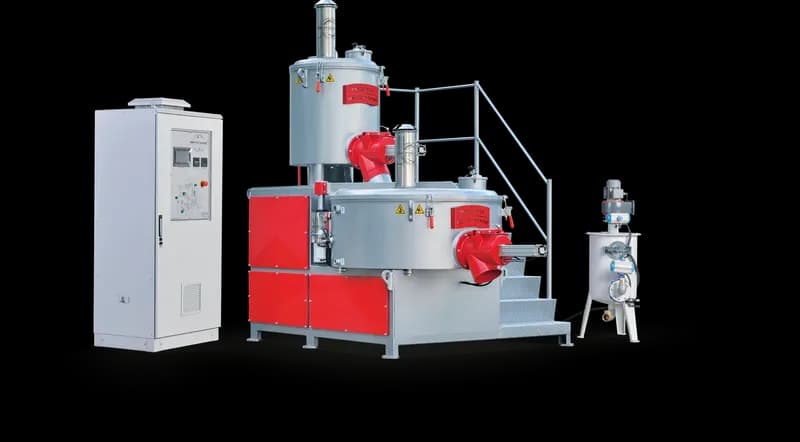
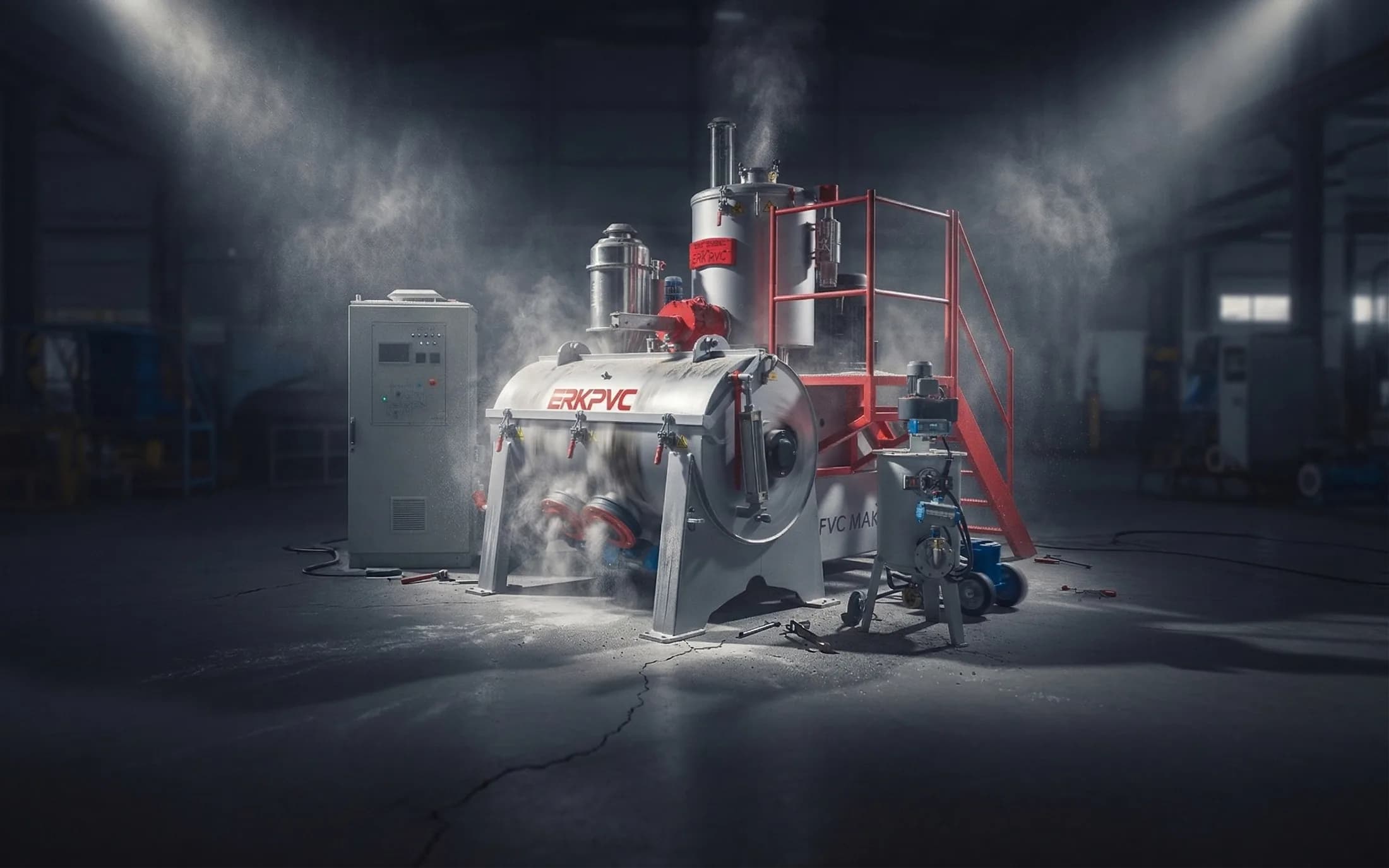
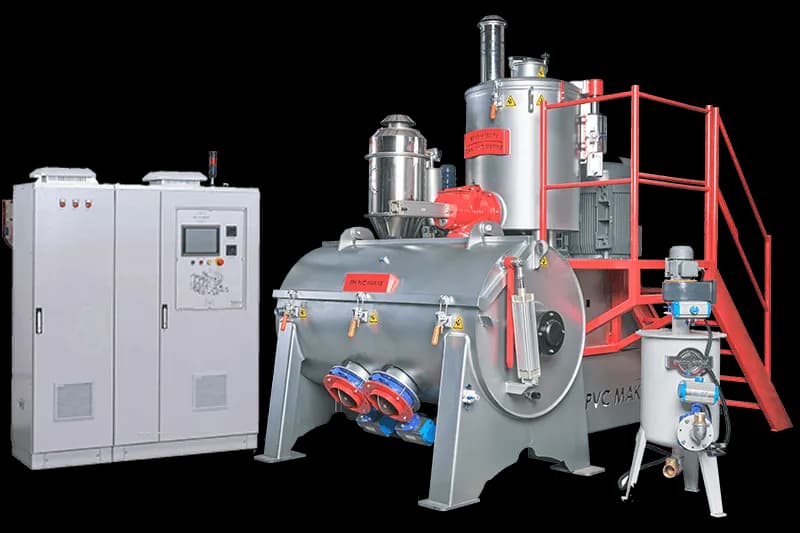 EPM-HHorizontal Turbo PVC MixerThe EPM-H series combines a high-speed heating mixer with a horizontal cooler in one unit, delivering 4–6 batches per hour of rigid or plasticised PVC dry blend.
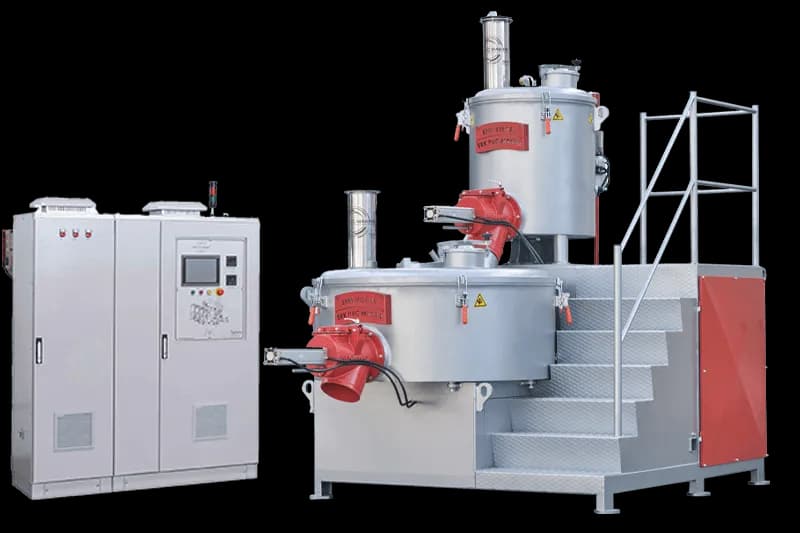 EPM-VVertical Turbo PVC MixerThe EPM-V series stacks a vertical heating mixer and a vertical cooler in a compact layout, producing consistent PVC dry blend in 100–200 kg batches for mid-sized lines.
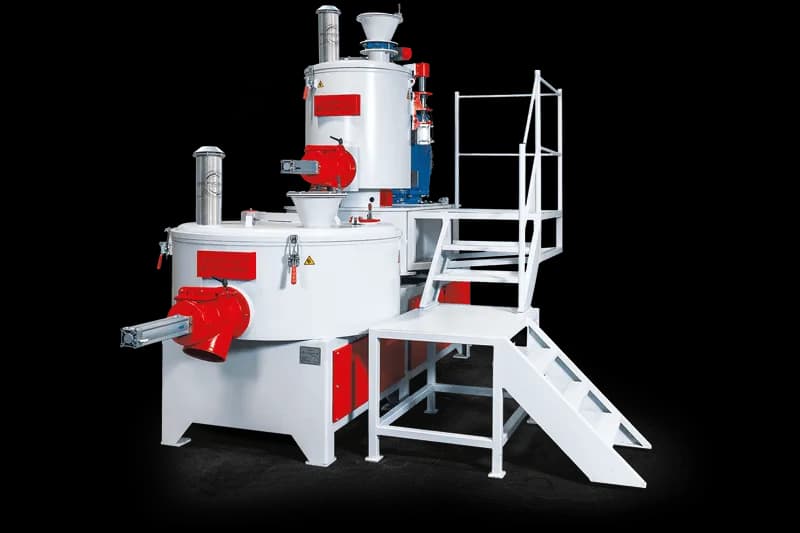 EPM-MBMetallic Bonding MixerA bonding mixer that fixes metallic and pearlescent pigments to powder coating particles at a controlled temperature, giving a stable effect on the line and repeatable results batch after batch.
 EPM-RRibbon BlenderAn industrial ribbon blender for powders, granules and mixes that do not need high speed, configured to your process with a choice of materials, drives, discharge and options.
 EPM-LABLaboratory MixerA laboratory mixer developed by Erk engineers for formulation trials and R&D in raw-material production, combining different configurations in one machine to suit your work.
 EPM-DVertical BlenderA low-speed vertical blender for the precise mixing of powder and granule blends that prevents segregation, keeps material flowing at the bottom of silos and breaks up moisture-caused caking.
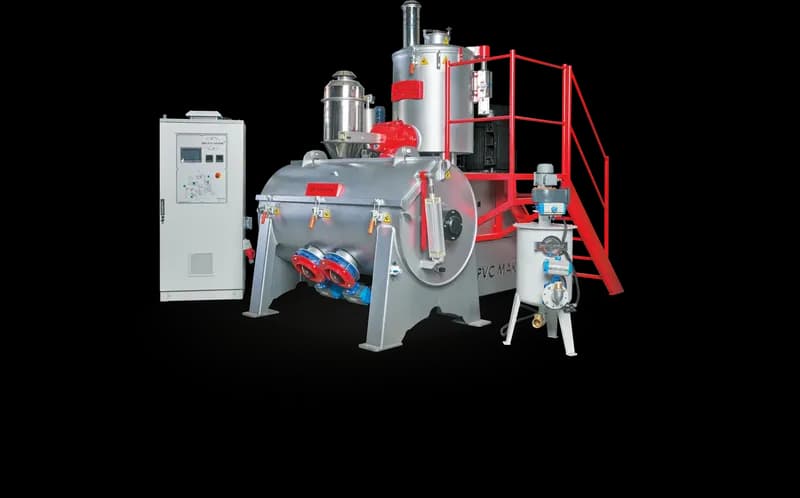 Cooling MixerA horizontal or vertical cooling mixer that brings hot PVC dry blend from the heating turbo mixer down to storage temperature without lumps; for new lines or as a stand-alone unit next to your existing heating mixer.
Capacity calculator
Enter the dry blend output you need per hour to see which hot-cold mixer series fits and the batch size it would need.
Figures are derived from the published batch and cycle ranges and are approximate. Real output depends on the formulation, bulk density and cycle time.
EPM-V
FitsVertical Turbo PVC Mixer
- Series range
- 400–1,200 kg/h
- Batch needed
- 130–200 kg × 4–6 batches/h
EPM-H
FitsHorizontal Turbo PVC Mixer
- Series range
- 600–3,000 kg/h
- Batch needed
- 150–200 kg × 4–6 batches/h
What does a PVC mixer do?
PVC resin cannot be extruded on its own. It has to be combined with stabilisers, fillers (calcium carbonate), impact modifiers, lubricants and pigments into a free-flowing powder called dry blend. The PVC mixer does that job, and it sets the quality of everything downstream: a poorly mixed batch comes back as unstable extruder pressure, colour variation and surface defects.
In industrial PVC processing the standard solution is a PVC hot-cold mixer, also called a heating-cooling mixer or heater-cooler mixer. A high-speed heating mixer raises the material by friction, typically to about 110–125 °C, so the additives bond to the resin particles. The blend is then discharged into a cooling mixer and brought down to about 40–50 °C so it can be stored without lumping. Heating and cooling run in parallel: while the cooler works, the heater starts the next batch.
Erk PVC Makine is a PVC mixer manufacturer from Turkey: since 2015 we have designed and built PVC mixers and mixing systems at our factory in Ergene, Tekirdağ, and our machines run in more than 46 countries. Alongside hot-cold turbo mixers we supply mixer types for jobs that do not need high speed and for special applications.
Our mixer range
Hot-cold turbo mixers
- EPM-H horizontal turbo PVC mixer: heating mixer plus horizontal cooler. 150–500 kg per batch, 4–6 batches per hour. For high-output profile, pipe and cable lines.
- EPM-V vertical turbo PVC mixer: heating mixer plus vertical cooler. 100–200 kg per batch, 4–6 batches per hour. For compact layouts and mid-sized lines.
Special-purpose mixers
- Metallic bonding mixer: for controlled bonding of metallic pigments onto powder coating particles.
- Ribbon blender: gentle, homogeneous blending of powders and granules that do not need high speed. Carbon or stainless steel; single, double or variable speed (FV, frequency variator); optional liquid spray and side choppers; centre or side discharge.
- Vertical blender: a simple, economical vertical unit for granule and masterbatch blends.
- Laboratory mixer: a small-scale turbo mixer for formulation development and quality control.
Which mixer for which job?
The choice depends on the material and on whether the blend needs heat:
- PVC dry blend (rigid or plasticised), high output: needs frictional heating and controlled cooling. Choose the EPM-H horizontal series for large batches and limited headroom, or the EPM-V vertical series for a smaller footprint and medium output.
- Metallic-effect powder coatings: bonding pigment to the particle requires close control of temperature and time; the metallic bonding mixer is built for it.
- Powder and granule blends without heating: for additive premixes, powder blends or granule mixes, a ribbon blender mixes gently at low speed.
- Granule and masterbatch blending: to mix granules with colour or additive masterbatch, a vertical blender is sufficient and economical.
- R&D, sampling and QC: to trial a new formulation in small batches before it goes to the production mixer, use a laboratory mixer.
Not sure? Send us your formulation, product type and hourly demand and we will choose the mixer with you.
How is mixer capacity sized?
For a hot-cold mixer, hourly output is roughly batch size × batches per hour. That figure must exceed the combined consumption of the extruders the mixer feeds. Highly filled or plasticised recipes affect cycle time and motor rating. If you plan to add extruders, leave headroom.
A mixer is part of a line
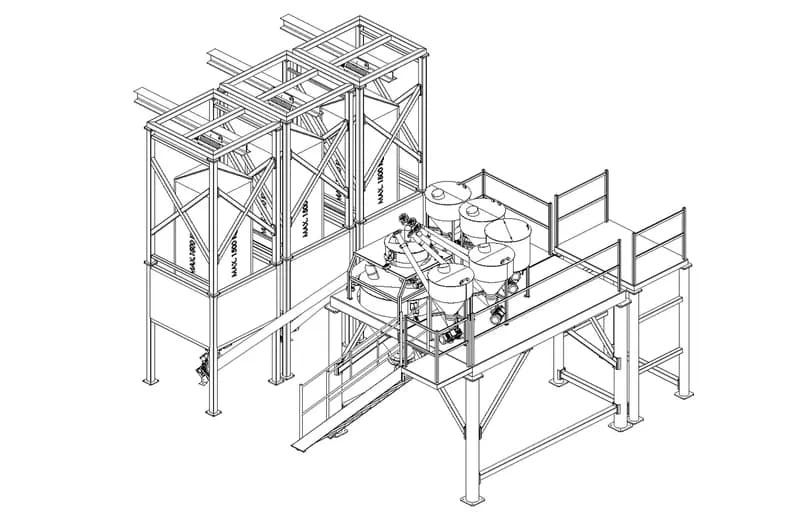
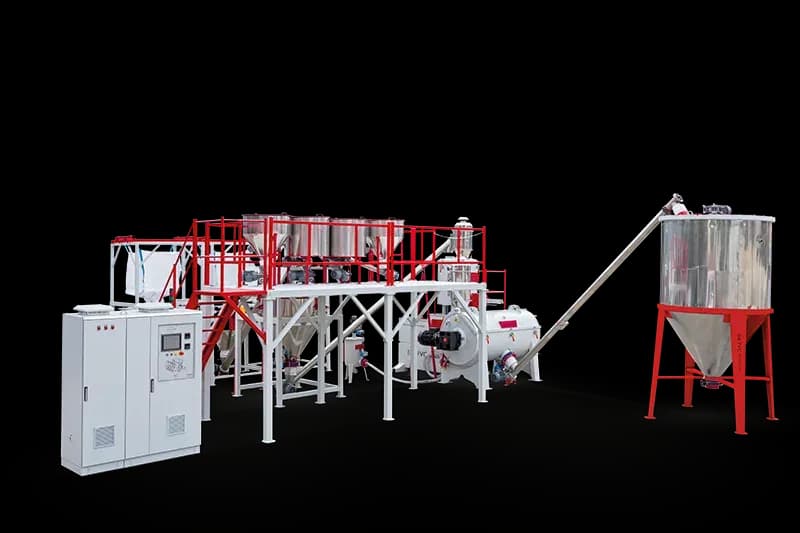
A mixer performs only as well as the equipment around it. Erk PVC Makine does not build extruders; we supply the complete line in front of the extruder:
- Automatic recipe weighing with dosing systems
- Hot-cold mixing, with moisture extraction by the EPM-JET filter and dehumidifier
- Transfer to silos or the extruder hopper with feeding and conveying equipment
- Control of foreign matter and lumps with sieving and filtration
Map your line step by step with our line configurator, or see application examples under industries.
Installation, service and spare parts
With 500+ projects and lines running in more than 46 countries, our own team handles installation, commissioning and operator training. We provide remote technical support and supply mixer blades and other spare parts from stock.
To choose the right PVC mixer for your line and get a price, request a quote.
Frequently Asked Questions
How does a PVC hot-cold mixer work?
The heating turbo mixer heats PVC resin and additives by friction at high speed; in typical applications the blend reaches about 110–125 °C and the additives bond to the resin particles. The blend is then discharged into the cooling mixer and brought down to about 40–50 °C, while the heater starts the next batch.
What is the difference between the horizontal (EPM-H) and vertical (EPM-V) turbo mixer?
The difference is the cooler. EPM-H uses a horizontal cooler and handles 150–500 kg per batch at 4–6 batches per hour, suited to high output and limited headroom. EPM-V uses a vertical cooler and handles 100–200 kg per batch at 4–6 batches per hour, with a more compact layout.
Should I choose a ribbon blender or a turbo mixer?
Ask whether the blend needs heat. PVC dry blend needs frictional heating, so it calls for a hot-cold turbo mixer. For powder and granule blends that need neither high speed nor heating, a ribbon blender is the gentler and more economical choice.
Can you integrate a new mixer into my existing line?
Yes. We review your existing dosing, silo and feeding equipment and engineer the new mixer's connections, discharge height and control integration. Where needed, we supply dosing, conveying and sieving equipment in the same scope.
What determines the price of a PVC mixer?
Price depends on mixer type and capacity, motor rating, materials (carbon or stainless steel), speed control, automation level and any dosing, feeding or filtration equipment in scope. Request a quote for current pricing and lead time.