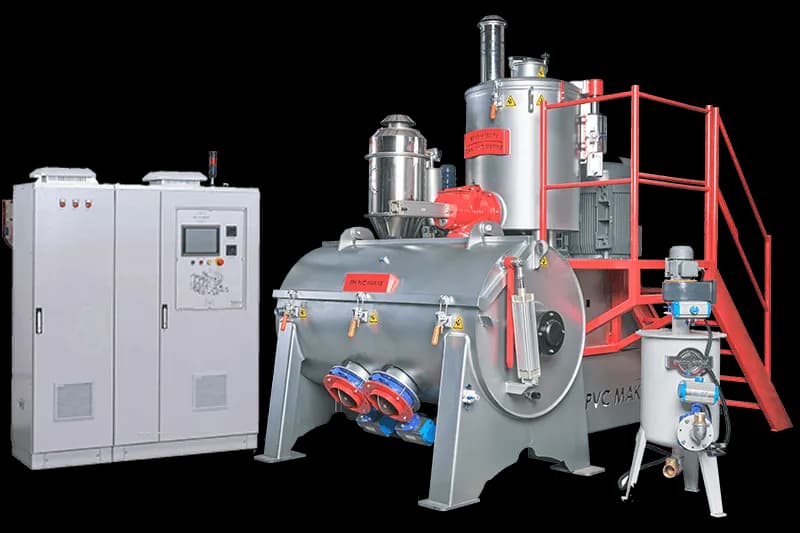
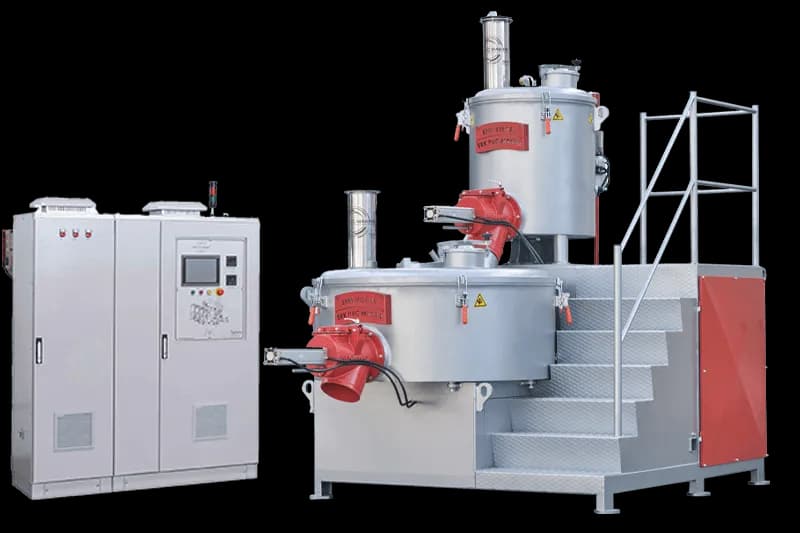
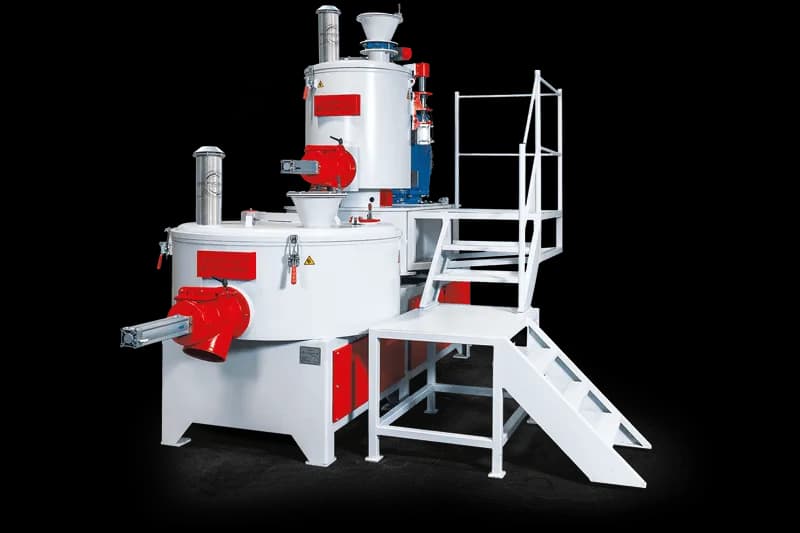


EPM-D
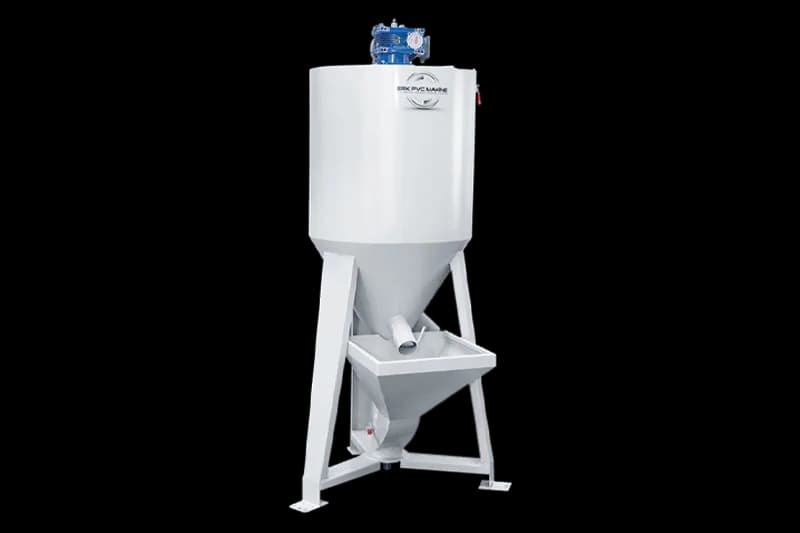
Vertical Blender
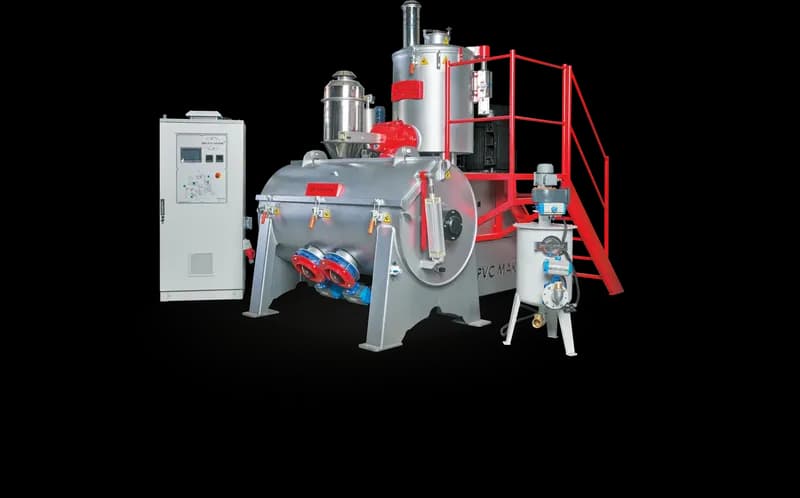
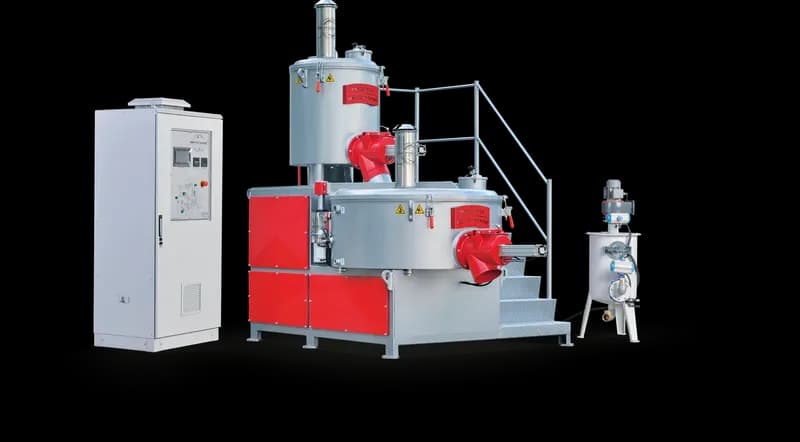
A low-speed vertical blender for the precise mixing of powder and granule blends that prevents segregation, keeps material flowing at the bottom of silos and breaks up moisture-caused caking.
Highlights
What is a vertical blender for granules?
A vertical blender for granules and powders mixes material inside an upright vessel at low speed. Its job is not to heat the material or change its structure, but to distribute different components gently and evenly — and to keep the blend that way.
That makes it quite different from a turbo mixer, which runs at high speed and relies on frictional heat. For applications such as PVC dry blend, where additives must be worked thermally into the resin, the EPM-V vertical high speed mixer is the right machine. The vertical blender is designed instead for precise blending of ready components, granule blending and material control inside silos.
Why low speed?
The most common problem with powder and granule blends is segregation. Components that differ in particle size, shape or density tend to separate during fast mixing, vibration or conveying: fines settle to the bottom, coarse particles rise to the top, and the blend drifts away from the recipe.
Low-speed operation keeps this to a minimum:
- Components change position without harsh impact.
- Granule shape and size are preserved, and less dust is generated.
- Uniformity is reached steadily and maintained throughout mixing.
Keeping silos flowing
The second key role of the vertical blender is to keep material flowing in silos and hoppers. Powders and granules that sit for long periods — especially in humid conditions — compact, cake or form bridges inside the silo. The result is stalled discharge, irregular feeding and line stoppages.
The vertical blender tackles this in three ways:
- Movement at the silo base: it keeps the material at the bottom of the silo moving so discharge continues without interruption.
- Breaking up caking and bridging: it disperses lumps and bridges caused by moisture.
- Air circulation: it helps air move through the material, reducing compaction.
Where moisture needs to be dealt with at source, a jet filter and dehumidifier system can be added to the line.
Applications
- PVC composite and additive homogenisation: keeping prepared blends and additive packages evenly distributed.
- Polymer granule blends: blending different granules, colour or additive masterbatches.
- Powdered chemicals: precise blending of powder chemicals and maintaining flowability in storage.
Vertical blender or ribbon blender?
Both machines work at low speed. The choice usually comes down to plant layout and application: the vertical blender suits silo and hopper duty and granule blending. If you need liquid addition, choppers or centre/side discharge, consider a horizontal ribbon blender.
What to consider when choosing one
Configuring a vertical blender correctly depends on understanding how the material behaves. At quotation stage we usually review:
- Material type: powder, granules or a mix, with particle size distribution and bulk density.
- Tendency to segregate: the bigger the differences in particle size and density between components, the more important it is to preserve the blend.
- Moisture sensitivity: how readily the material absorbs moisture and the conditions in storage.
- Mode of use: whether the machine will act as a separate blending unit or keep material flowing inside an existing silo or hopper.
- Position in the line: the dosing, sieving and conveying equipment upstream and downstream.
Line integration
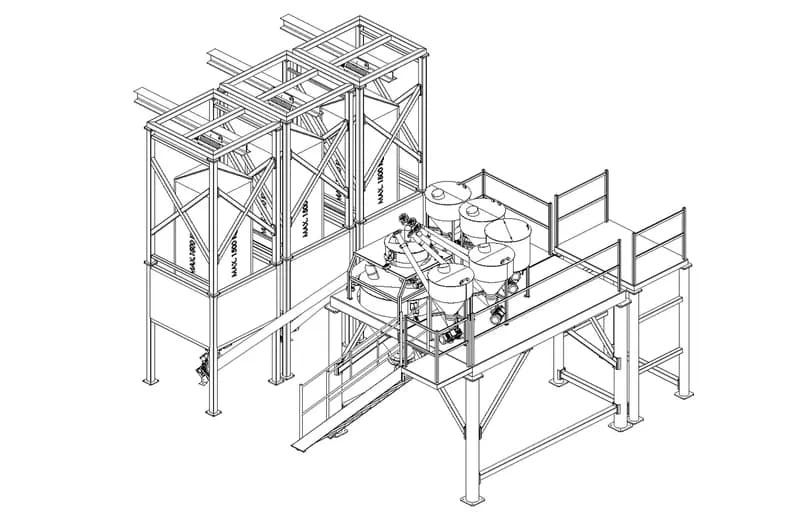
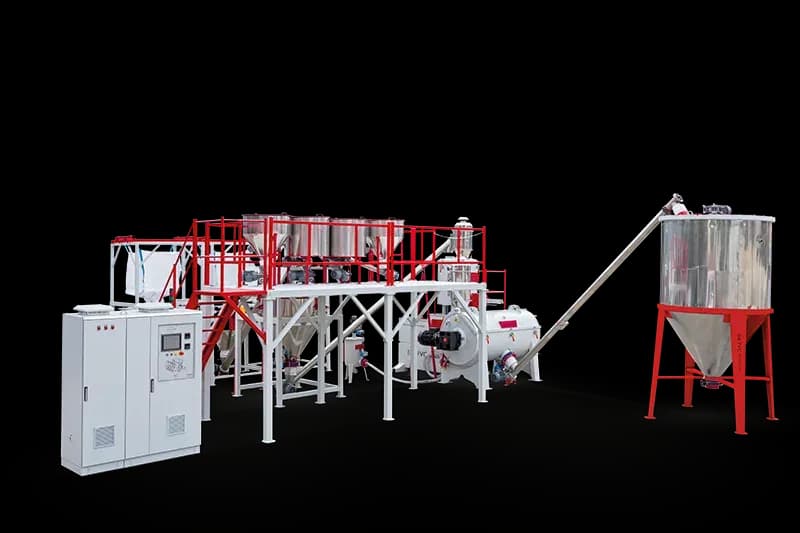
The vertical blender can work alongside dosing, sieving and conveying equipment as part of your raw material line. A granule sieve removes foreign matter and oversize pieces from granule blends, and a flexible screw conveyor handles onward transport. Erk PVC Makine builds all of this upstream equipment at its factory in Ergene, Tekirdağ and provides installation, training and spare parts support.
To specify the right vertical blender for your powder or granule blend and get a price, request a quote.
Applications
Downloads
Frequently Asked Questions
What is a vertical blender used for?
A vertical blender mixes powder and granule blends precisely at low speed and keeps material flowing in silos. Its main applications are PVC additive homogenisation, polymer granule blends and powdered chemicals.
Is a vertical blender the same as a vertical high speed mixer?
No. A vertical high speed mixer runs fast and uses frictional heat to produce PVC dry blend. A vertical blender works at low speed without generating heat, mixing ready components and keeping the blend uniform.
Why does low-speed mixing matter?
Components with different particle sizes or densities can separate during fast mixing. Low-speed operation prevents this segregation, preserves granule structure and reduces dust.
Does it solve caking and bridging in silos?
Yes. The vertical blender keeps material moving at the silo base, breaks up caking and bridging caused by moisture and helps air circulation, so discharge continues without interruption.
What affects the price of a vertical blender?
Price depends on the vessel or silo size, the properties of the material, materials of construction and any dosing, sieving or conveying equipment in scope. Describe your application in the quote form for current pricing.
EPM-D
Request a Quote
Fill in the form and our sales engineers will get back to you within one business day.