

Erk PVC Makine engineering teamUpdated:
What is an automatic dosing system and what does it change?
An automatic dosing system weighs every powder and liquid in a PVC recipe and charges the hot mixer without manual handling. Here is how it differs from manual weighing, what it is made of and what it changes in a plant.

Contents8
What is an automatic dosing system?
An automatic dosing system weighs each raw material in a recipe against a stored target and transfers the finished batch to the mixer, or the next process step, without operator handling. On PVC dry blend lines it usually works gravimetrically, by mass: resin, filler, powder additives and liquids such as plasticisers are measured by weight rather than volume, and charged to the heating turbo mixer one batch at a time.
PVC recipes are written as mass ratios, so what matters for recipe accuracy is the mass entering the mixer, not its volume. We explain why in gravimetric vs volumetric dosing.
Manual vs automatic dosing
In many plants dosing still looks like this: an operator opens bags, scoops additives onto a scale, pours liquids from drums and tips everything in through the mixer lid. It works, but the result depends on the operator, the shift and how busy the day is.
| Manual dosing | Automatic dosing |
|---|---|---|
Recipe handling | Read from paper or a screen, applied by hand | Selected in the system, quantities applied automatically |
Repeatability | Varies by operator and shift | Same weighing logic every batch |
Records | Kept by hand, or not at all | Actual weights can be logged per batch |
Dust and spills | High during bag opening and scooping | Lower with enclosed weighing and transfer |
Operator workload | Lifting bags and drums | Monitoring and managing the process |
Error risk | Wrong additive, missed ingredient, misread scale | Off-recipe batches become much harder to make |
The point is consistency, not speed. With manual dosing it is hard to get the small-share additives, especially stabilisers and lubricants, exactly right on every batch. Those small differences come back at the extruder as heat stability, surface or colour problems.
What does the system consist of?
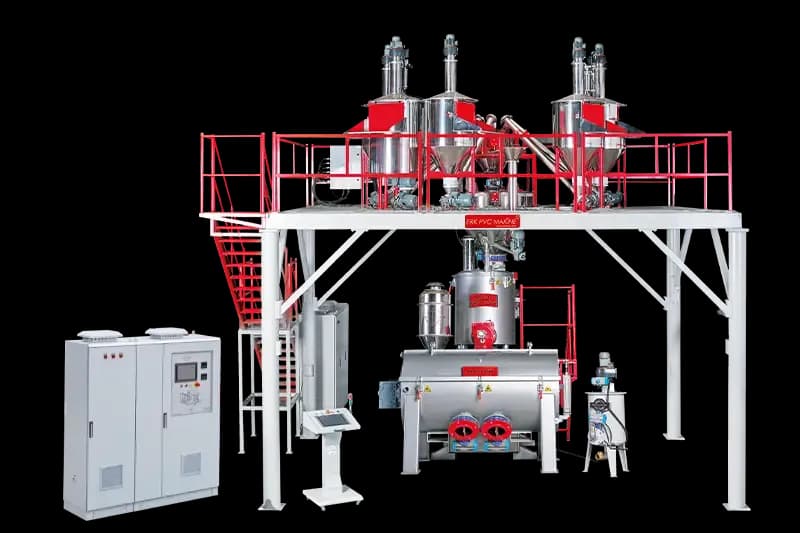
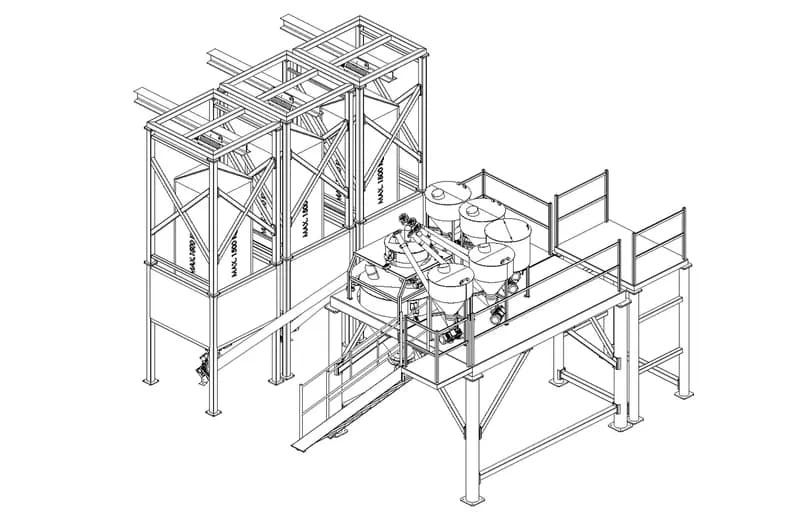
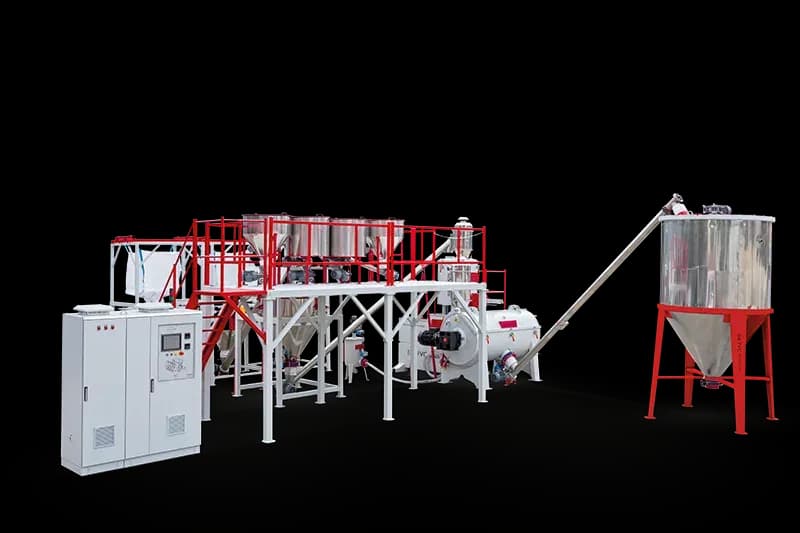
Every PVC dosing system is engineered around the plant, but most include:
- Raw material storage: silos for major components such as resin and calcium carbonate, intermediate hoppers or big-bag discharge points for additives.
- Powder weighing: weigh hoppers on load cells, fed with each material in turn.
- Liquid weighing: a liquid dosing line that draws plasticisers, ESBO and liquid stabilisers from their own tanks by weight.
- Control system: where recipes are stored, batches started and weights monitored.
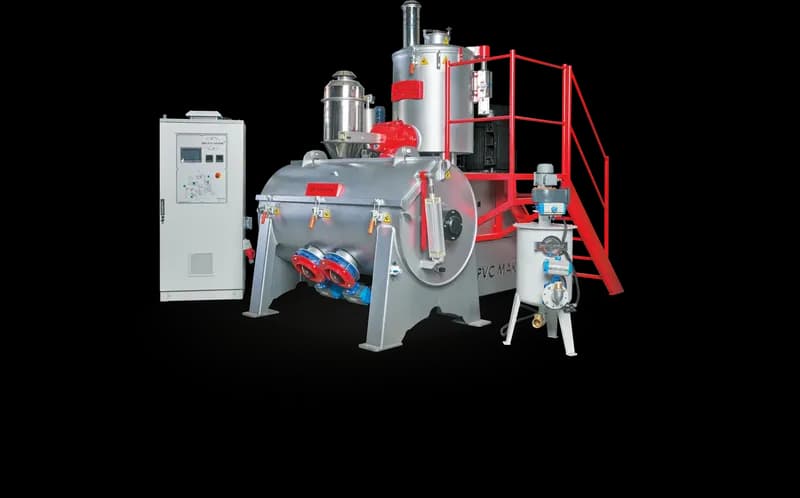
- Mixer connection: the chute and valve arrangement that delivers the weighed batch to the hot mixer.
Erk PVC Makine's automatic powder dosing system uses gravimetric batch weighing: a stored recipe is selected, each material is weighed by mass and the batch goes into the hot mixer with no manual handling.
How powder and liquid dosing work together
In rigid PVC the liquid share is usually small. In flexible PVC the plasticiser can be one of the largest components of the batch, so for cable, hose, film and flooring producers liquid dosing matters as much as powder dosing.
The automatic liquid dosing system can run alongside powder dosing under one control system and one recipe. The sequence is simple:
- The operator selects the recipe.
- Powders are weighed and charged to the heating mixer.
- Liquids are weighed separately and added at the right point in the cycle.
- Actual values are logged for the batch.
When the liquids go in depends on the recipe and the temperature profile, and that timing is defined as part of the recipe in the control system.
Integration with the hot mixer
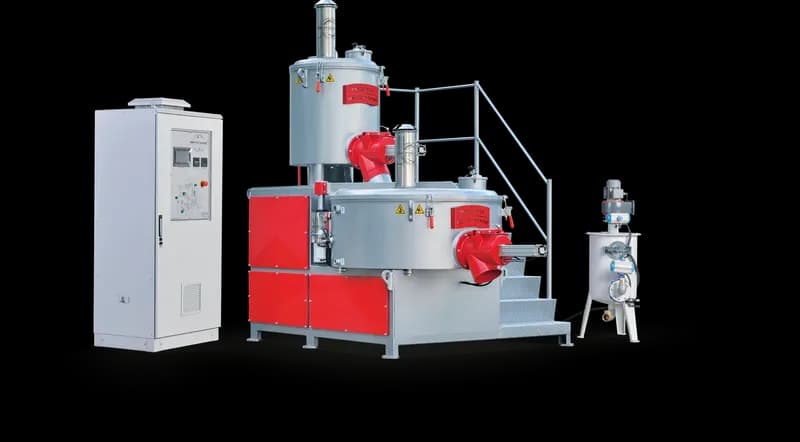
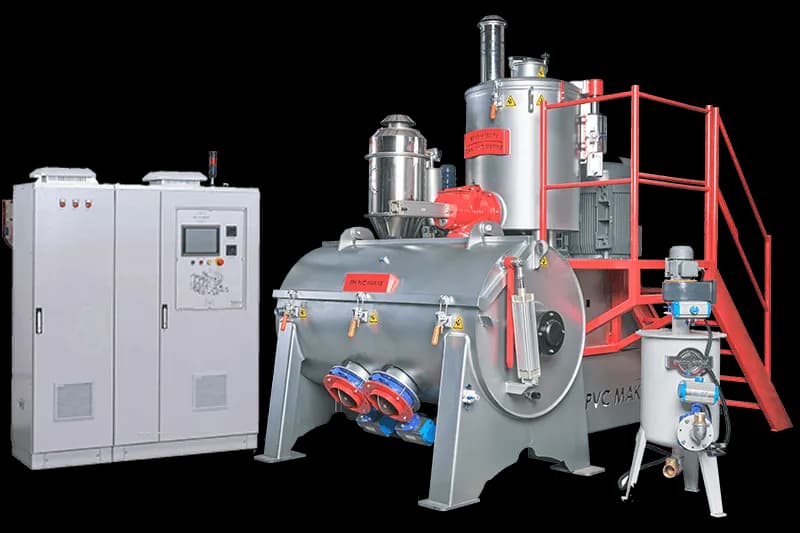
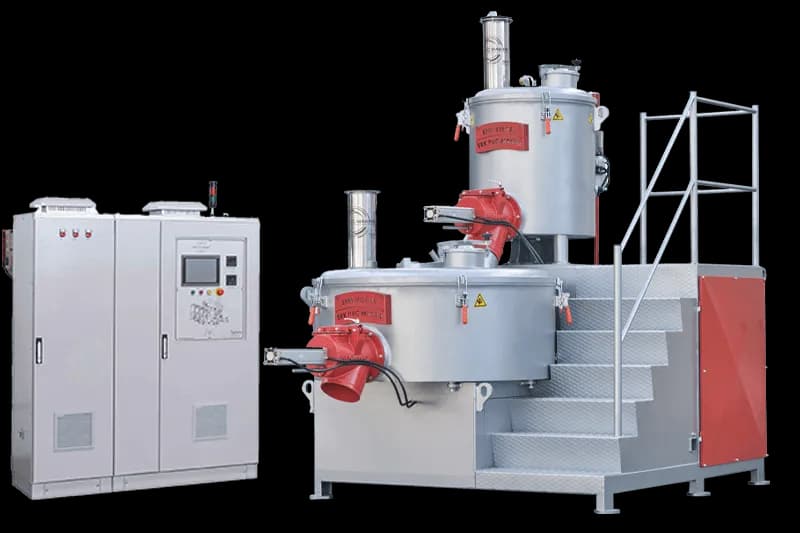
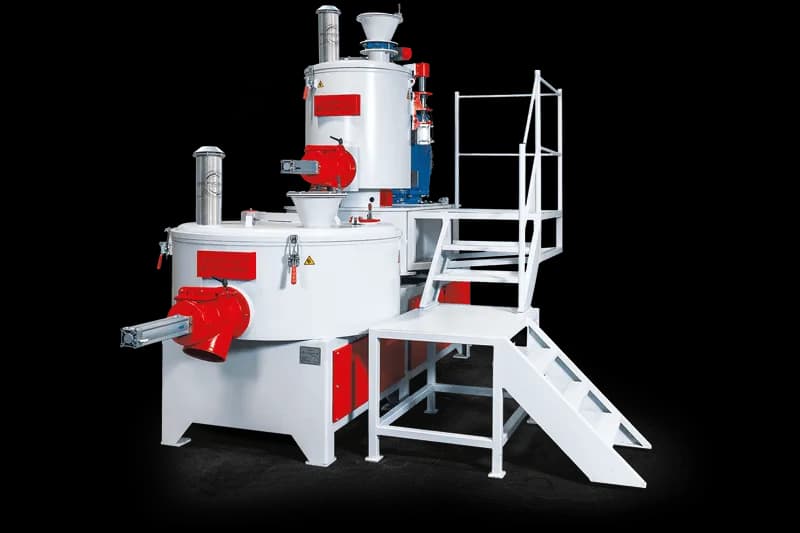
A dosing system is not a stand-alone machine; it is the front end of the mixing line. Batch size has to match the mixer's capacity, and weighing time has to fit the mixer's cycle. The EPM-H horizontal turbo PVC mixer, for instance, runs 4–6 batches per hour, so dosing is planned to have the next batch ready while the heater is still working on the current one. The mixer should never wait for the scale.
If you already have a mixer, automatic dosing can usually be added later. The mixer inlet, available headroom and raw material storage are assessed on site first.
What does it change in the plant?
The benefit is best measured in day-to-day operation rather than in headline numbers. Typically you see:
- Consistent blends: the same recipe is prepared the same way on every batch, regardless of shift or operator.
- Traceability: you can see which raw materials, and how much of each, went into a given batch. That makes complaint investigations possible.
- Less dust and spillage: enclosed weighing and transfer replace open bags and scoops.
- Less manual handling: operators supervise the process instead of carrying bags and drums.
- Easier product changes: each product is a stored recipe; changing over means selecting a new one.
- Raw material tracking: consumption records make stock and purchasing easier to plan.
How large the gain is depends on the number of ingredients, the number of batches and how the plant works today. With a simple recipe that rarely changes, the difference may be small. With multi-ingredient recipes and frequent changeovers, it becomes obvious.
When does it make sense?
Automatic dosing is worth considering when:
- The recipe has many powder additives and small-share ingredients
- You run flexible PVC with plasticisers and liquid stabilisers
- You run many batches a day across more than one shift
- Customers expect traceability and batch records
- You are building a new line or adding mixer capacity
Bottom line
Automatic dosing moves the recipe from paper into the system. Every ingredient is weighed by mass, powders and liquids come from the same recipe, and the batch enters the mixer at the right moment. Erk PVC Makine plans, installs and commissions the dosing system together with the mixing line, and supports it with operator training, remote support and spare parts. Send us your raw material list and batch size and request a quote.
Frequently Asked Questions
How does an automatic dosing system work?
The operator selects a stored recipe; the system weighs each raw material by mass and transfers the batch to the heating mixer. Liquids are weighed separately from the same recipe and added at the right point in the cycle.
Can automatic dosing be added to an existing mixer?
In most cases, yes. Feasibility depends on the mixer inlet, available headroom and raw material storage, which are assessed on site.
Can powder and liquid dosing run in the same system?
Yes. Erk PVC Makine can set up liquid dosing to run with powder dosing under one control system and one recipe.
Which plants benefit most?
Plants with multi-ingredient recipes, many batches per day or flexible PVC production, and those that need batch records, see the clearest difference.
What drives the price of an automatic dosing system?
The number of raw materials, storage type, batch size, need for liquid dosing and the scope of automation. Use the quote form for current pricing.