

Erk PVC Makine engineering teamUpdated:
Powder separation in plastics processing: which dust, which method?
Fines in granules, lumps in dry blend and dust in conveying air are different problems, and each needs its own separation method. The methods, where they belong in the line and what to ask before choosing equipment.

Contents8
Why powder separation matters
In plastics processing, "dust" is not one problem. Granular raw material carries fines left over from pelletising, PVC dry blend leaving the mixer can contain lumps, and the air that moves material around carries airborne dust. All three affect product quality, equipment life and the cleanliness of the plant, but each one is separated in a different way.
Powder separation is the umbrella term for the steps that remove these unwanted fractions from the main material flow or from the air, so that only the intended material reaches the extruder or injection moulding machine. The right method depends on what has to be separated from what.
Three different separation problems
Problem | What is removed | Typical method | Position in the line |
|---|---|---|---|
Fines and oversize in granules | Fines, agglomerated and oversize pellets | Vibratory screening | Between silo / hopper and extruder |
Lumps and foreign matter in dry blend | Lumps, hardened pieces, bag fragments | Check screening | After the cooling mixer |
Dust and moisture in air | Dust-laden air, mixer vapour | Filtration with pulse-jet cleaning | Mixer venting, conveying air outlet, silo |
Making this distinction first prevents the wrong equipment choice. Removing fines from granules needs a sieve, not a filter; extracting mixer vapour needs a filter, not a sieve.
Method 1: screening by particle size
Screening is the most direct way to separate material by size. The material is fed onto a vibrating screen; what passes continues as product, and what stays on top leaves through a separate outlet.
- Granule screening: A granule sieve removes oversize and agglomerated pellets on one deck and, where needed, fines on a second deck. Uniform pellets melt more evenly in the feed zone, so pressure and output fluctuate less.
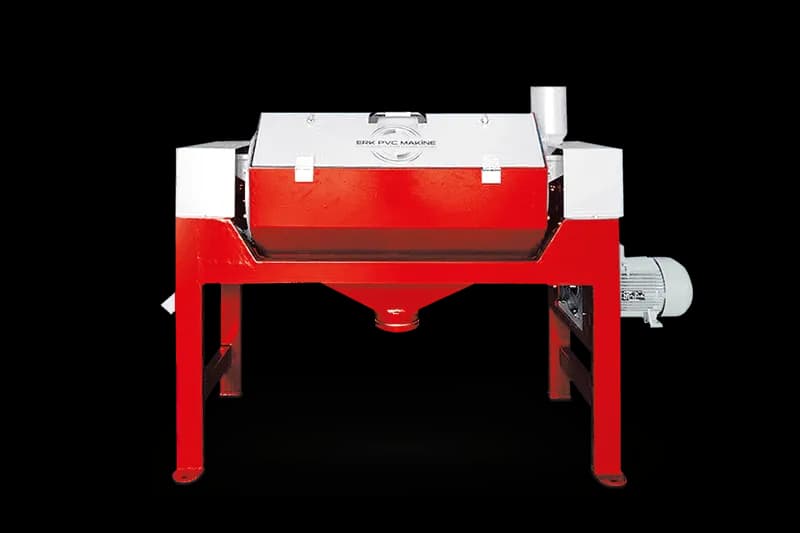
- Powder check screening: A powder sieve does not change the particle size distribution of a dry blend; it catches lumps and foreign matter, which is why it is also called a check screener.
Mesh size and the number of decks are not fixed values. Too fine a mesh lowers throughput and blinds quickly; too coarse a mesh lets lumps through. The right balance depends on the particle structure, flowability and quality target of the material.
Method 2: filtration to remove dust from air
When material is conveyed by air or a hopper is filled, the displaced air has to leave the system, and it carries fine dust. Filtration separates that dust from the air.
- Bag and cartridge filters: Air passes through porous filter elements and the dust stays on their surface. Efficiency depends on the element type and on keeping the dust layer under control.
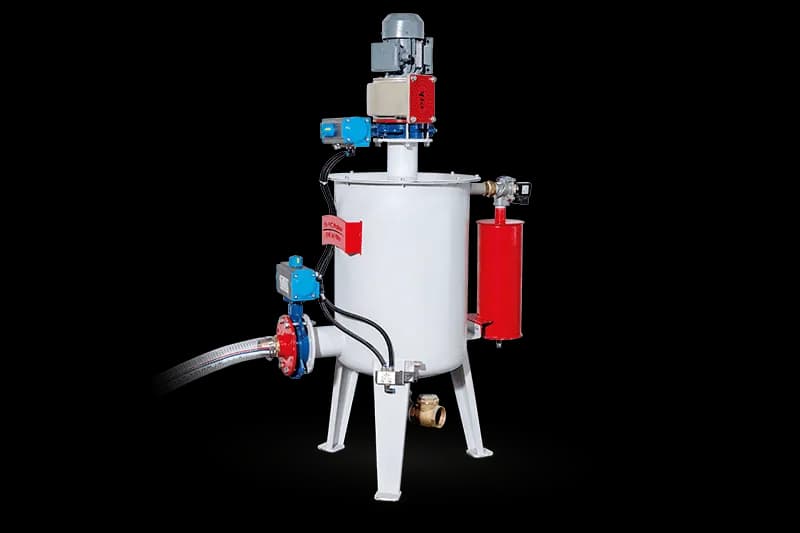
- Pulse-jet cleaning: Short bursts of compressed air clean the elements from the inside out. The dust cake drops off, filter resistance falls again and the system keeps running without stopping production.
- Cyclones: Centrifugal force removes coarse and heavy particles from the air. Because they are not enough on their own for very fine dust, they usually serve as a pre-separator in front of a filter.
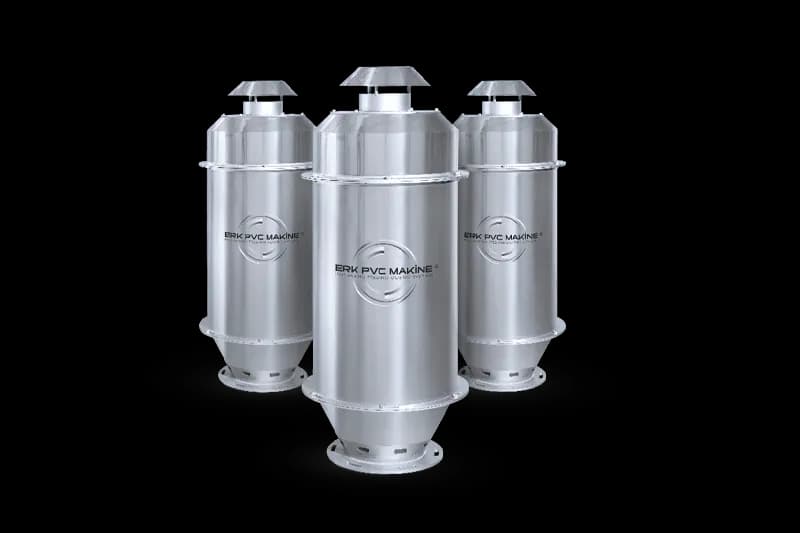
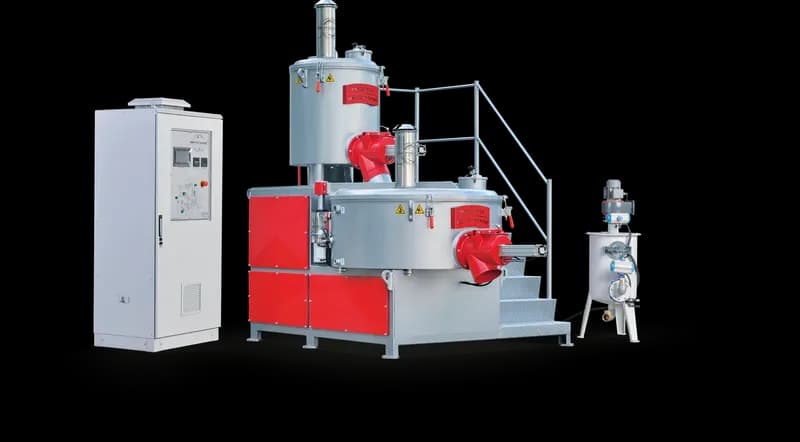
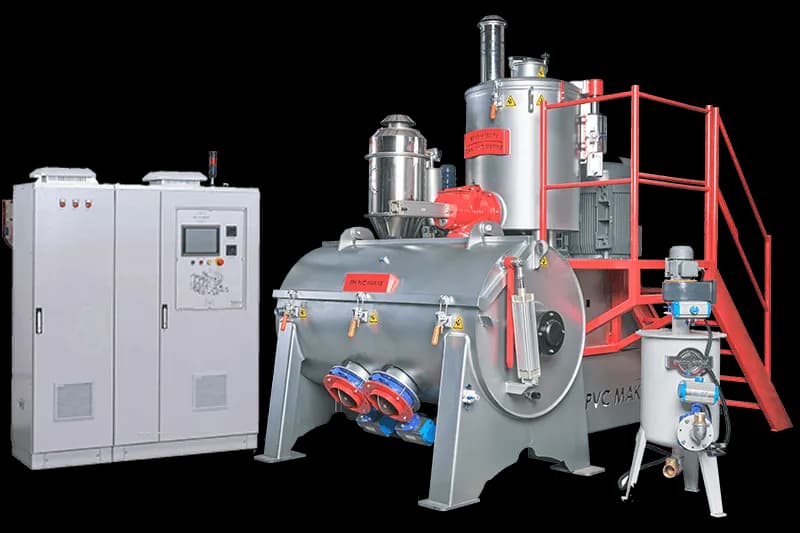
In PVC lines, filtration matters at two points. The first is the heating mixer: moisture and dust released as the temperature rises fall back into the batch if they are not extracted, causing agglomeration. Erk’s EPM-JET filter and dehumidifier draws off that vapour and dust while the mixer runs. The second is conveying and silo venting: an air filter keeps conveying-air dust away from vacuum pumps, fans and the production floor.
Method 3: special separation techniques
Recycling lines also use electrostatic separators, magnetic separators and air classification to sort plastic types or remove metals and other contaminants. These techniques rely on differences in density, electrical charge or magnetism. Because they are sensitive to conditions such as humidity and material cleanliness, they are mostly used in specialised applications; in PVC dry blend and granule preparation lines, the real work is done by screening and filtration.
Separation points in a PVC line
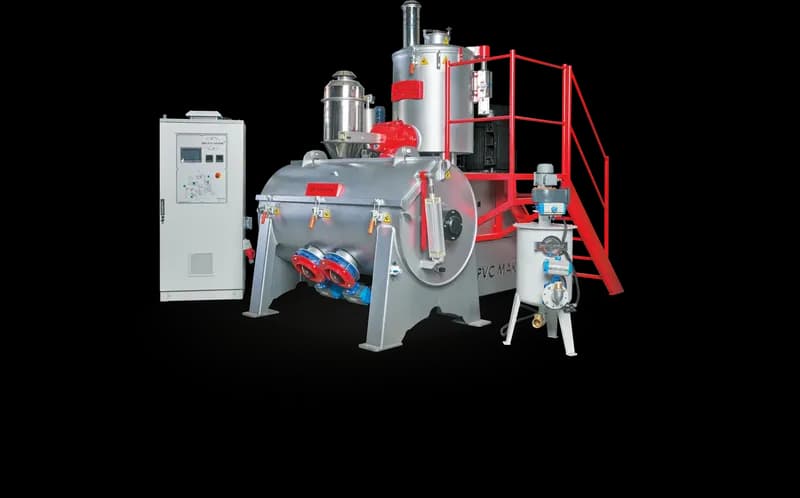
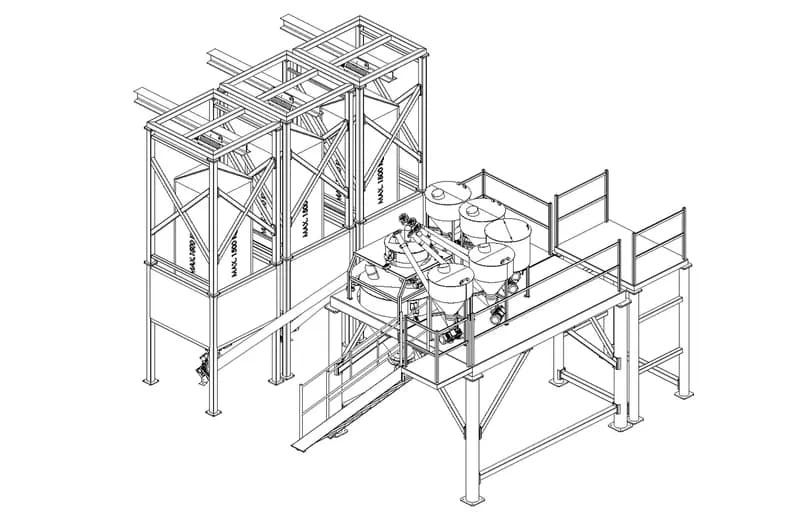
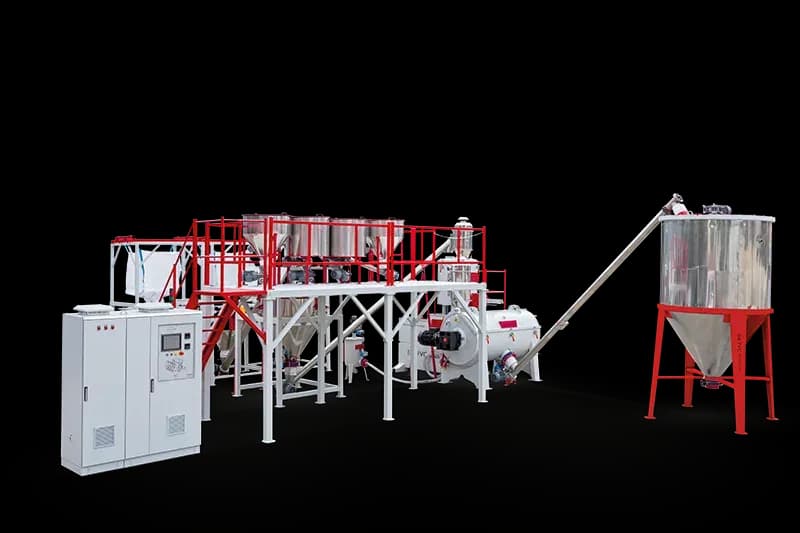
In a typical mixing line from raw material to extruder, separation comes in at several points:
- Dosing: While raw materials are weighed by automatic powder dosing, hopper venting dust is held back by a filter.
- Heating mixer: EPM-JET extracts the moisture and dust released as the batch heats up.
- After the cooling mixer: A powder sieve catches lumps and foreign matter before they reach the extruder.
- Conveying and silos: A flexible screw conveyor keeps dust contained thanks to its closed design; pneumatic lines and silos use air filters.
- Granule feeding: Where granular raw material is used, a granule sieve removes oversize and fines before feeding.
Not every line needs every point. Which ones are needed depends on the recipe, the raw material form and the layout.
What separation delivers
- A more stable process: Uniform particle size and a lump-free blend mean more even melting and steadier pressure in the extruder.
- Fewer defective parts: Many surface specks, bubbles and rough spots come from lumps, dust and moisture in the raw material.
- Equipment protection: Foreign matter wears and blocks screws, screen packs and dies; dust wears pumps and fans.
- Less material loss: Dust held by a filter stays in the system, and checking the sieve reject outlet reveals process problems early.
- A cleaner plant: Containing dust at the source keeps machines and electrical cabinets cleaner.
Questions to answer before choosing equipment
These details are a good starting point for a quotation:
- Material: granules, powder or a mix of both?
- What has to be removed: fines, oversize, lumps, foreign matter, moisture?
- Quantity per hour or per batch
- Position of the separation unit in the line and the space available
- How often colours or recipes change (for ease of cleaning)
- Abrasiveness of the material (for example high calcium carbonate content)
Erk PVC Makine does not build extruders; it designs and installs the raw material preparation line in front of them. Screening and filtration equipment is placed in the same layout as the mixers, dosing and feeding systems, with installation, commissioning, operator training, remote support and spare parts included.
To review the dust problem in your line, browse our sieving and filtration range or request a quote.
Frequently Asked Questions
Do I need a sieve or a filter for powder separation?
It depends on what is being removed. Fines from granules or lumps from dry blend need a sieve; dust or mixer vapour in air needs a filter. Many lines use both at different points.
What is the difference between a powder sieve and a granule sieve?
A granule sieve removes oversize and fines from granular raw material. A powder sieve catches lumps and foreign matter in powders such as PVC dry blend without changing their particle size distribution.
Why extract moisture and dust from the heating mixer?
Moisture released as the temperature rises falls back into the batch if it is not removed, causing agglomeration, poor homogeneity and micro moisture pockets in the final product. EPM-JET extracts it while the mixer runs.
How are mesh size and filter type chosen?
There is no fixed value. They are selected per application from the particle structure, flowability, quality target and the air volume of the line. Share your material data and we will define the configuration with you.
Can separation equipment be added to an existing line?
In most cases, yes. Sieves and filters can be adapted to existing mixers, silos and feeding lines; the layout and connection points are reviewed on site or from drawings.