

EPM-GS
Granule Sieve
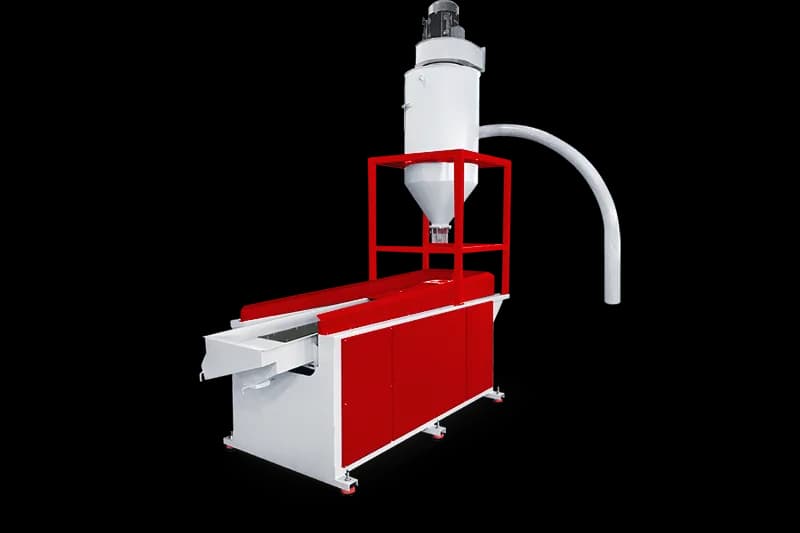
A granule sieve separates oversize pellets and fines from granular material, so your extruder or injection moulding machine receives only clean pellets of the size you want.
Highlights
What is a granule sieve?
Pelletised plastic rarely arrives perfectly uniform. Whether it comes from bags, a silo or a compounding line, it usually contains clumped or "married" pellets, long cuts, fine dust from pelletising and sometimes foreign matter. A granule sieve sorts this material by size: on-spec pellets go to the product outlet, while oversize and fines are discharged separately.
The result is free-flowing, uniformly sized granules at your extruder or injection moulding machine — which means a more stable melt, fewer rejects and fewer unplanned stops.
How a granule sieve works
Granule screening is usually done on the vibratory principle. Material is fed onto the top screen, and vibration moves the pellets across the screen surface so that each one meets the apertures many times.
- Feeding: Pellets are fed in a controlled way from a silo, hopper or conveying system.
- Scalping: Oversize and clumped pellets that cannot pass the screen stay on top and leave through their own outlet.
- Fines removal: Where needed, a second screen deck separates dust and fragments from the product stream.
- Clean product outlet: On-spec pellets are discharged to an intermediate hopper or straight into the feeding line.
The number of decks, the screen aperture and the type of screen cloth are selected per application, based on pellet size, shape, flowability and your quality target. Rather than quoting a fixed mesh size, we start from your material and define the right configuration with you.
Where it is used
- Before extrusion and injection moulding: check screening to keep foreign matter and lumps away from the screw, die and nozzle.
- After compounding: removing oversize and dust after pelletising, before bagging or silo storage.
- Recycled pellets: evening out particle size in reclaimed material of mixed size and cleanliness.
- Masterbatch and additive pellets: size control for smooth flow and accurate ratios in dosing.
Why sieve granules?
- A more stable process: uniform pellets melt more evenly in the feed zone, reducing pressure and output swings.
- Fewer rejects: surface defects, specks and thickness variation often trace back to inconsistent raw material.
- Equipment protection: foreign matter wears and blocks screws, screen packs and dies.
- Dust control: removing fines cuts dust build-up in conveying lines and around the machine. An air filter can clean the conveying air on the same line.
Sieving powders instead?
If the material is a powder — for example PVC dry blend leaving the mixer — the task is different. A powder sieve designed to catch agglomerates and foreign matter is the right choice there. See all our solutions in the sieving and filtration category.
Line integration
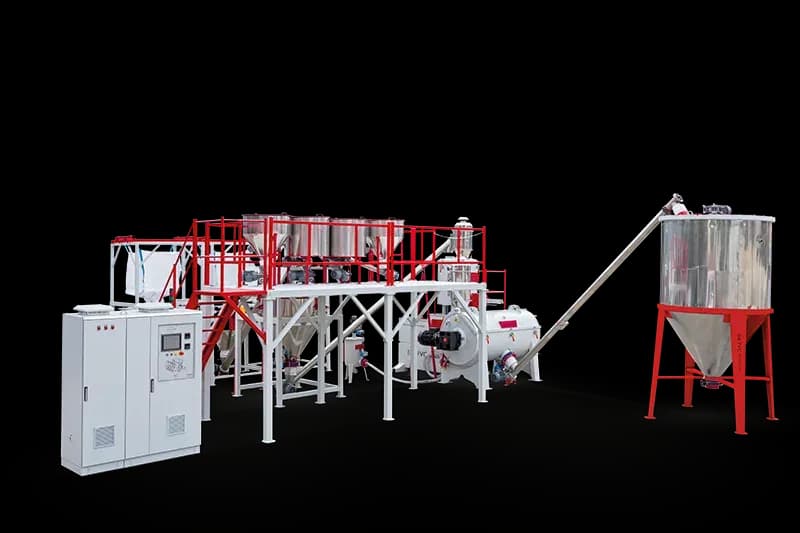
Erk PVC Makine does not build extruders; we design and install the raw material preparation line in front of them. The granule sieve is laid out together with silos, hoppers and a flexible screw conveyor, so screened pellets reach the feed point without manual handling.
Installation and after-sales support
Our sieves are manufactured and checked at our factory in Ergene, Tekirdağ before shipping. As on the lines we have supplied to more than 46 countries, we handle installation, commissioning, operator training, remote technical support and replacement screen cloth.
Fill in the form below to define the right sieve configuration for your pellets and receive a quotation.
Applications
Downloads
Frequently Asked Questions
What mesh size is used for granule sieving?
The screen aperture is selected for your pellet size and shape and for the oversize and fines fractions you want to remove. Share a sample or your pellet specification and we will recommend the screen cloth and aperture.
What is the difference between a granule sieve and a powder sieve?
A granule sieve separates oversize pellets and fines from pelletised material. A powder sieve is used on powders such as PVC dry blend to catch agglomerates and foreign matter. Which one you need depends on the form of the material you are screening.
Where should a granule sieve sit in the line?
It is usually placed between the silo or intermediate hopper and the feed point of the extruder or injection machine. It can also follow a compounding line, before bagging or silo storage. The exact position depends on your plant layout.
Can a granule sieve be retrofitted to an existing line?
Yes, in most cases a granule sieve can be added to an existing line. We review your layout, current conveying system and required capacity to define the connection points and any intermediate equipment needed.
What determines the price of a granule sieve?
Price depends on the required capacity, the number of screen decks, the materials of product-contact parts, the automation level and any feeding equipment in scope. Request a quote for current pricing and lead time.
EPM-GS
Request a Quote
Fill in the form and our sales engineers will get back to you within one business day.