

Erk PVC Makine engineering teamUpdated:
How do you calculate PVC mixer capacity?
The hourly output of a hot-cold PVC mixer is batch size multiplied by batches per hour. We walk through the formula, the factors that move it and two worked examples using the EPM-H and EPM-V ranges.

Contents9
How is PVC mixer capacity calculated?
The approximate hourly output of a hot-cold PVC mixer is:
Hourly output (kg/h) ≈ batch size (kg per batch) × batches per hour
That figure must be higher than the combined hourly dry blend consumption of every extruder the mixer feeds. Batch size is the total mass of PVC resin plus all additives; batches per hour depends on the recipe, target temperature and cooling conditions. The result of the formula is therefore always an approximate range, not a fixed number.
To run the numbers with your own batch size and batch count, use our PVC mixer capacity calculator.
The two parts of the formula
Batch size
Batch size is how much PVC plus additives a mixer model can process in one batch. In Erk PVC Makine's series:
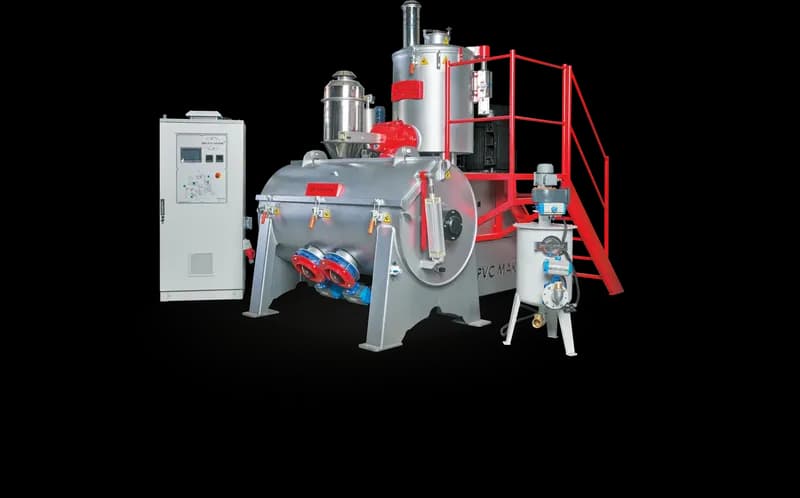
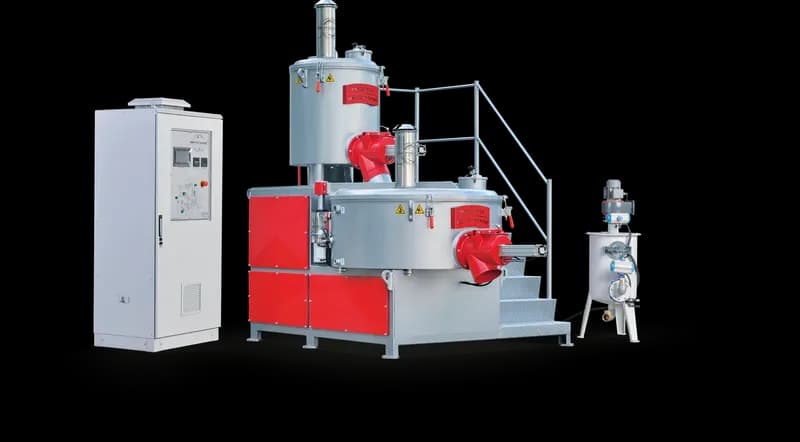
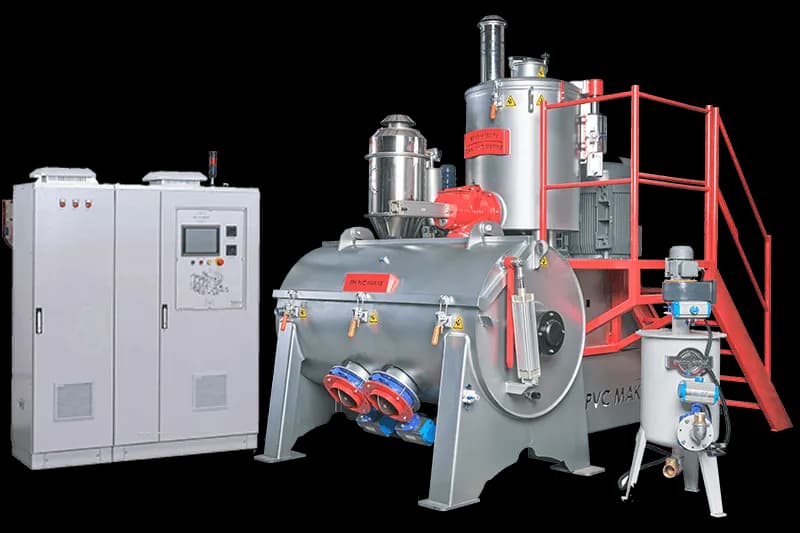
- EPM-H horizontal turbo PVC mixer: five models, 150–500 kg per batch
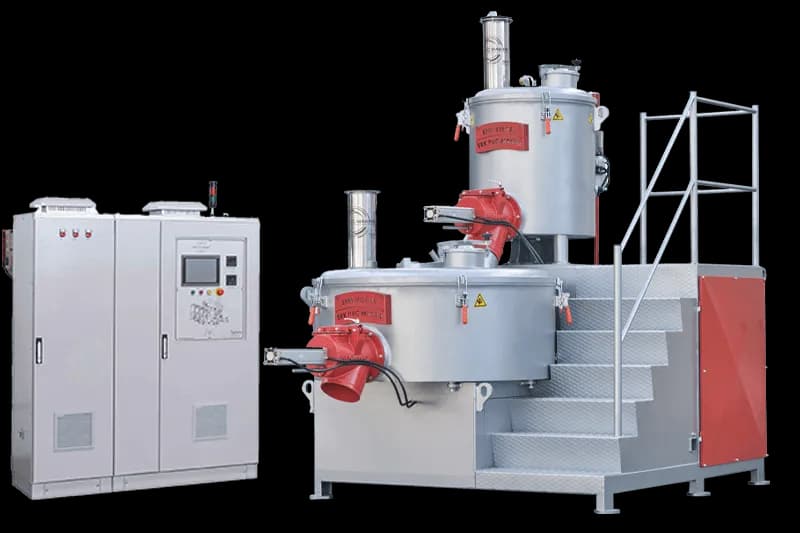
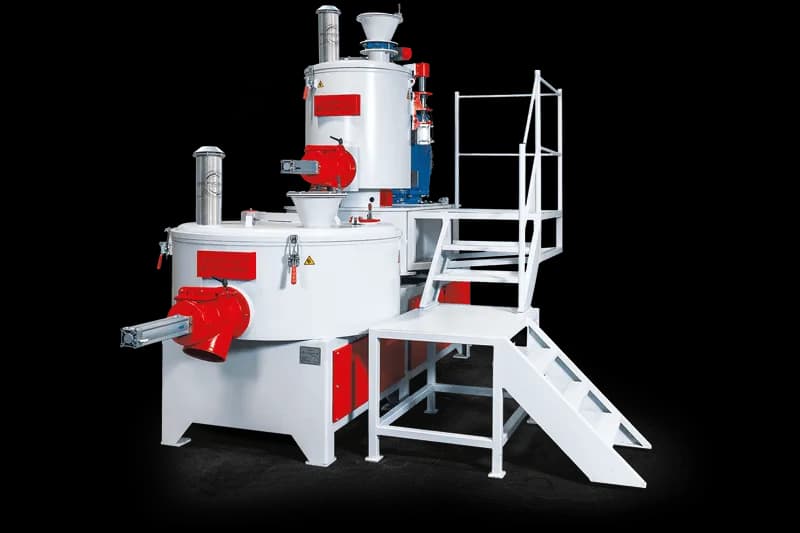
- EPM-V vertical turbo PVC mixer: EPM-V100, V150 and V200, at 100, 150 and 200 kg per batch
How batch mass relates to vessel volume depends on the bulk density of the blend. A highly filled recipe makes a heavier batch in the same volume, a light recipe a lighter one. That is why a model should be chosen with the recipe in hand, not on kilograms alone.
Batches per hour
Batches per hour follows from cycle time. Because the heater and cooler run in parallel, the longer of the two usually sets the cycle.
- EPM-H series: 4–6 batches per hour, or roughly 10–15 minutes per batch
- EPM-V series: 4–6 batches per hour, or roughly 10–15 minutes per batch
What drives heating time is explained in our article on the hot mixer temperature profile.
What moves the numbers
The same mixer gives different hourly output on different recipes. The main factors are:
- Recipe type: in flexible recipes the plasticiser needs time to be absorbed, which can lengthen the cycle.
- Filler content: high calcium carbonate levels change heating behaviour and motor load.
- Target temperature: typical PVC discharge is around 110–125 °C; a higher target means longer heating.
- Cooling water: water temperature and flow set cooling time, and cycles can stretch in summer.
- Dosing speed: if the next batch is not ready, the mixer waits. An automatic powder dosing system prepares the next batch while the mixer runs, avoiding that loss.
- Impeller condition: worn blades lengthen heating and cut output; see our article on mixer blade wear.
Step-by-step method
- Add up extruder consumption. Sum the actual hourly output (kg/h) of each extruder. List planned investments on a separate line.
- Add a margin. A margin of around 15–25 % on total demand is common practice, covering recipe changes, cleaning, stoppages and seasonal cycle variation.
- Pick a conservative batch rate. Calculate with the low end of the series' batches-per-hour range and treat the high end as a bonus.
- Work out the required batch size. Required batch = target output ÷ batches per hour.
- Choose the model. Pick the model that covers the future too, not just the smallest one that meets today's figure.
Worked example 1: rigid PVC profile line
A hypothetical plant runs two profile extruders consuming about 250 kg/h of dry blend each. A third extruder of the same size will be added within a year.
Step | Calculation | Result |
|---|---|---|
Current demand | 2 × 250 kg/h | 500 kg/h |
Planned demand | 3 × 250 kg/h | 750 kg/h |
Target with 20 % margin | 750 × 1.2 | 900 kg/h |
Required batch at 4 batches/h | 900 ÷ 4 | 225 kg |
A 225 kg batch is larger than the biggest EPM-V model (200 kg per batch). The EPM-V200 gives roughly 800–1200 kg/h at 4–6 batches per hour: it covers today's 500 kg/h comfortably, but reaches the 900 kg/h target with the third extruder only above 5 batches per hour, and leaves no margin in the conservative calculation (4 batches per hour, 800 kg/h). Here an EPM-H model with a batch size above 225 kg is the better choice. If the investment only had to serve the two existing extruders, the EPM-V200 would be a reasonable option.
Worked example 2: flexible PVC cable line
A hypothetical cable plant runs one extruder consuming about 150 kg/h of plasticised dry blend. Because a plasticised recipe can lengthen the cycle, the calculation uses the low end of the range.
Step | Calculation | Result |
|---|---|---|
Demand | 1 × 150 kg/h | 150 kg/h |
Target with 25 % margin | 150 × 1.25 | about 190 kg/h |
Required batch on EPM-V (4 batches/h) | 190 ÷ 4 | about 48 kg |
The EPM-V100, at 100 kg per batch, reaches roughly 400 kg/h even at 4 batches per hour and covers this demand comfortably. On a line like this, plan the mixer together with an automatic liquid dosing system for the liquid ingredients.
From hourly output to daily production
When you turn hourly output into daily and monthly plans, use real running time. Shift changes, cleaning at recipe and colour changes, planned maintenance and unplanned stops all reduce the mixer's theoretical operating hours.
For example, a mixer producing roughly 900 kg/h could in theory prepare about 21.6 tonnes of dry blend in a 24-hour day. With three hours of stoppages in total, that falls to about 18.9 tonnes. Because the extruders keep running, the buffer silo capacity and the margin of mixer output above extruder demand need to be looked at together, so the mixer can make up for those stops.
The buffer silo sits between mixer and extruder: when the mixer stops briefly, the extruder keeps running from the silo, and when the mixer restarts, the margin lets it refill the silo. Without a margin the silo never refills, and the first stoppage stops the extruder too.
Common calculation mistakes
- Using nameplate extruder output: use what the extruder actually produces, not the catalogue figure.
- Calculating with the top batch rate: six batches an hour is not guaranteed for every recipe in every season.
- Treating the mixer in isolation: dosing, sieving and conveying must carry the same throughput. After the mixer, sizing the flexible screw conveyor correctly matters for exactly this reason.
- Ignoring growth: replacing a mixer that becomes a bottleneck is usually more expensive than buying one size up at the start.
Capacity is not the only factor between the horizontal and vertical series; floor space and ceiling height count too. That is covered in horizontal vs vertical cooler mixer. For the whole process, see our guide what is PVC dry blend.
Conclusion
Capacity sizing starts with a simple multiplication, but a sound result means looking at the recipe, cooling conditions and growth plans together. Once you have your figure, we recommend checking it with our engineers.
Send us your number of extruders, hourly consumption and recipe type: and request a quote for your line.
Frequently Asked Questions
What formula is used to calculate PVC mixer capacity?
Approximate hourly output is batch size (kg) multiplied by batches per hour. The result is an approximate range that depends on the recipe and cooling conditions.
What is the hourly output of the EPM-H and EPM-V series?
EPM-H, at 150–500 kg per batch and 4–6 batches per hour, corresponds to roughly 600–3000 kg/h; EPM-V, at 100–200 kg per batch and 4–6 batches per hour, to roughly 400–1200 kg/h. Actual figures depend on the recipe.
How much margin should I leave on mixer capacity?
Common practice is to add around 15–25 % to total extruder demand. If you plan new extruders in the near term, include them in the calculation.
Does a flexible PVC recipe reduce mixer output?
It can, because plasticiser absorption takes time and lengthens the cycle. For flexible recipes it is safer to calculate with the low end of the batch rate.
Can you check my capacity calculation?
Yes. Share your number of extruders, hourly consumption, recipe type and mixing room dimensions, and our engineers will confirm the right model with you.