

Erk PVC Makine engineering teamUpdated:
What is PVC dry blend and how is it made?
Dry blend is the free-flowing powder that turns PVC resin into extruder-ready feedstock. This guide covers the ingredients, the hot-cold mixing process, quality criteria and the equipment that makes up a dry blend line.
Contents7
What is PVC dry blend?
PVC dry blend is a dry, free-flowing, homogeneous powder made by heating PVC resin with stabilisers, fillers, lubricants, modifiers, pigments and, for flexible PVC, plasticisers in a high-speed mixer, then cooling it. Because the additives are bonded onto and into the resin particles, the blend does not separate in transport and reaches the extruder with the same composition every time.
Put simply, dry blend is the intermediate product between the resin bag and the extruder. Much of the quality of a window profile, pipe, cable, floor covering or film is decided here: a poorly mixed batch comes back as unstable melt pressure, colour variation and surface defects.
What goes into a dry blend?
Formulations vary widely by product, but most contain the following groups:
Ingredient | Role |
|---|---|
PVC resin (suspension grade) | Base polymer, the largest share of the blend |
Stabiliser (Ca/Zn, lead-based, etc.) | Prevents thermal degradation during processing |
Filler (calcium carbonate) | Lowers cost, affects stiffness |
Lubricants | Control melt flow and sticking to metal surfaces |
Impact modifier, processing aid | Toughness and fusion behaviour |
Titanium dioxide, pigments | Colour and UV resistance |
Plasticiser, ESBO (flexible PVC) | Flexibility and extra heat stability |
Rigid compounds contain little or no plasticiser. In flexible compounds for cable, hose and film, liquids can be a large part of the recipe. That difference drives many decisions, from impeller geometry to when liquids go into the mixer.
How is dry blend made? The process step by step
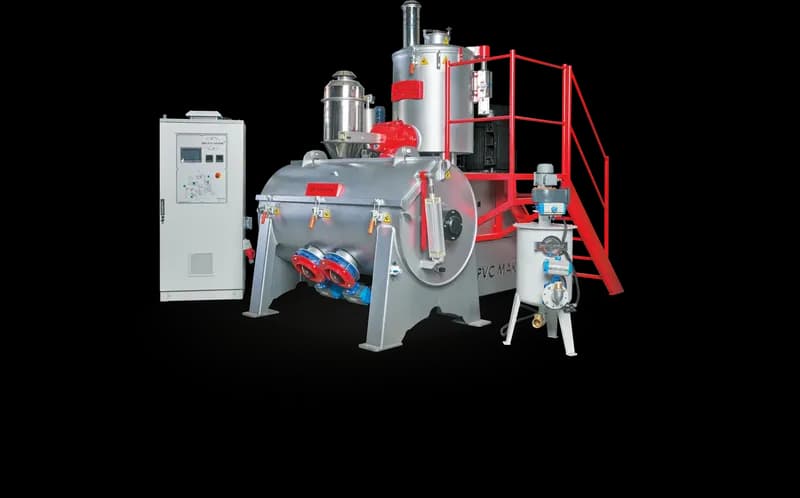
The industrial standard is the hot-cold mixer, also called a heating-cooling or heater-cooler mixer. The process breaks down into five steps.
1. Dosing
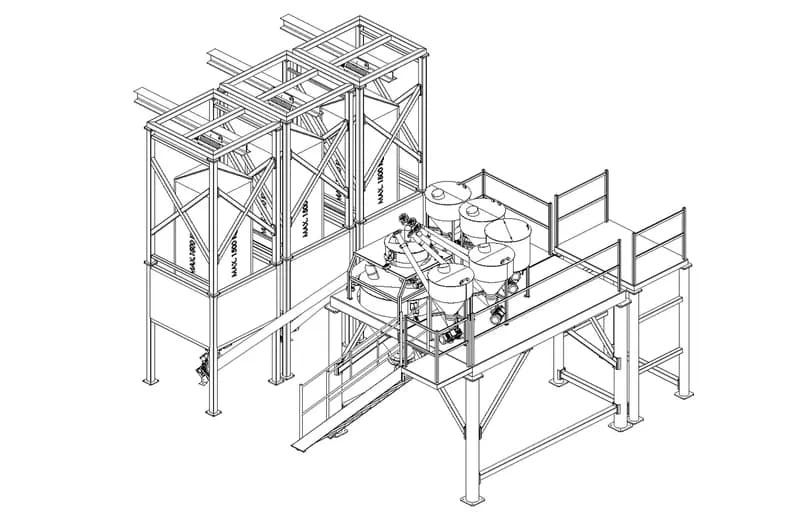
Resin and powder additives are weighed to the recipe and charged into the heating mixer. Manual weighing brings recipe errors, waste and no traceability, so mid-sized and large plants use an automatic powder dosing system, plus an automatic liquid dosing system for flexible PVC. Whether to meter by volume or by weight is covered in gravimetric vs volumetric dosing.
2. Frictional heating and additive addition
The high-speed impeller of the heating mixer warms the material by friction. As the temperature climbs, the resin particles open up, stabilisers and lubricants melt and coat them, and plasticiser is absorbed. When each additive goes in has a direct effect on the result: see PVC additive addition order, and for the temperature curve and cycle time, hot mixer temperature profile.
3. Discharge
When the blend reaches its target temperature, typically around 110–125 °C in PVC applications, it is discharged from the heater into the cooler. Moisture and vapour released at this stage need to be extracted; we cover this in jet filter and dehumidification.
4. Cooling
A jacketed cooling mixer keeps the hot blend moving at low speed and typically brings it down to 40–50 °C. Dry blend stored hot will cake in the silo and its properties drift. Whether the cooler should be horizontal or vertical depends on output and room layout; the comparison is in horizontal vs vertical cooler mixer. While the cooler works, the heater starts the next batch, so heating and cooling run in parallel.
5. Sieving, conveying and storage
The cooled blend passes through a sieve to remove lumps and foreign matter, then goes to a silo or straight to the extruder hopper. Over short and medium distances a flexible screw conveyor is the common choice; see flexible screw conveyor selection.
What does good dry blend look like?
A good dry blend shows:
- Homogeneity: the same composition in every sample, with no streaks of colour or additive.
- Free flow: no bridging in the silo, steady flow from the hopper.
- Consistent bulk density: so the extruder feed zone fills the same way every time.
- Low moisture, no lumps: no visible agglomerates, burnt specks or discolouration.
Causes and fixes for lumps, poor flow, low bulk density and discolouration are collected in PVC dry blend problems. Many of these trace back to a worn impeller; with high-filler recipes in particular, mixer blade wear directly affects mixing time and quality.
Rigid vs flexible PVC dry blend
Even in the same mixer, rigid and flexible recipes behave differently:
- Rigid PVC: profile and pipe recipes can carry a lot of filler. Calcium carbonate is abrasive and changes how quickly the batch heats up. The priority is even additive distribution and a bulk density that stays the same from batch to batch.
- Flexible PVC: in cable, hose and film recipes the resin has to absorb all of the plasticiser. Added too early or too fast, the liquid leaves the blend wet and sticky; added too late, there is not enough time for absorption. Either way you get lumps and poor flow.
That is why impeller geometry, speed control and the moment of liquid addition are set for each recipe. Erk PVC Makine uses different blade geometries for rigid and flexible formulations.
Storing dry blend
Cooled dry blend usually waits in an intermediate silo or hopper. The longer it sits, the more chance it has to pick up moisture or compact, so the silo should be closed, have a cone that helps the powder flow, and only receive blend that has been properly cooled. If several recipes share one silo, plan cleaning at product changeover.
What equipment does a dry blend line need?
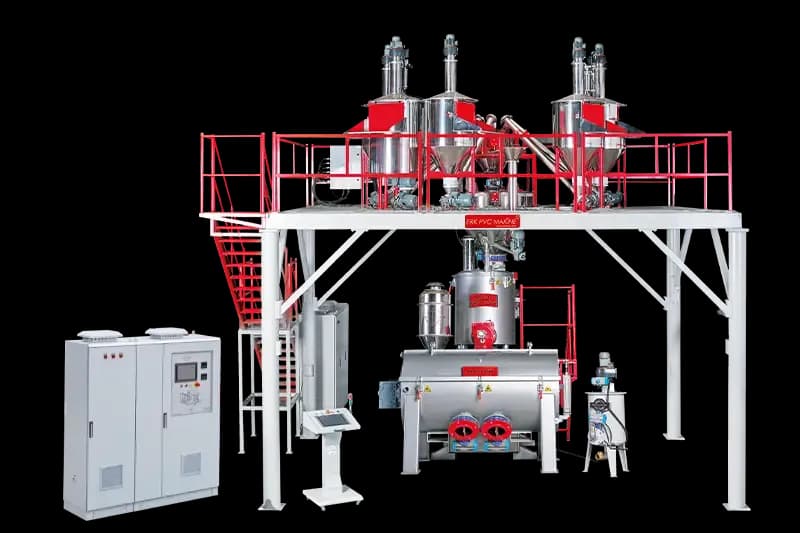
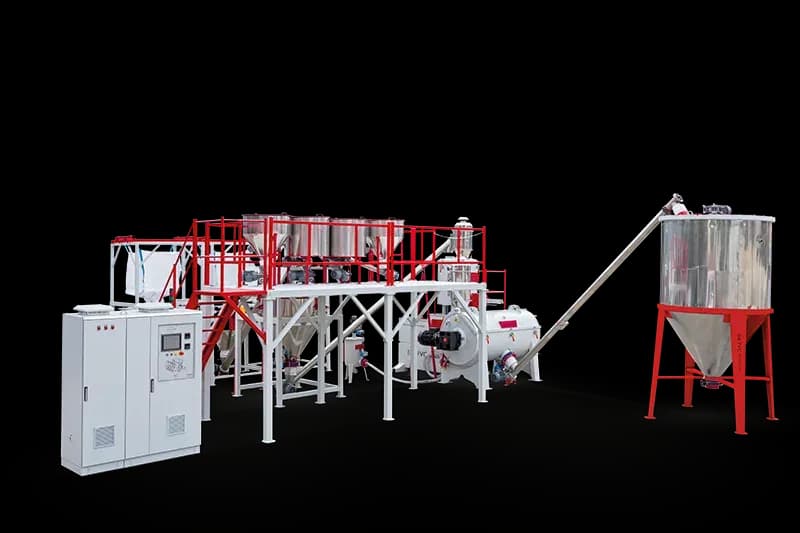
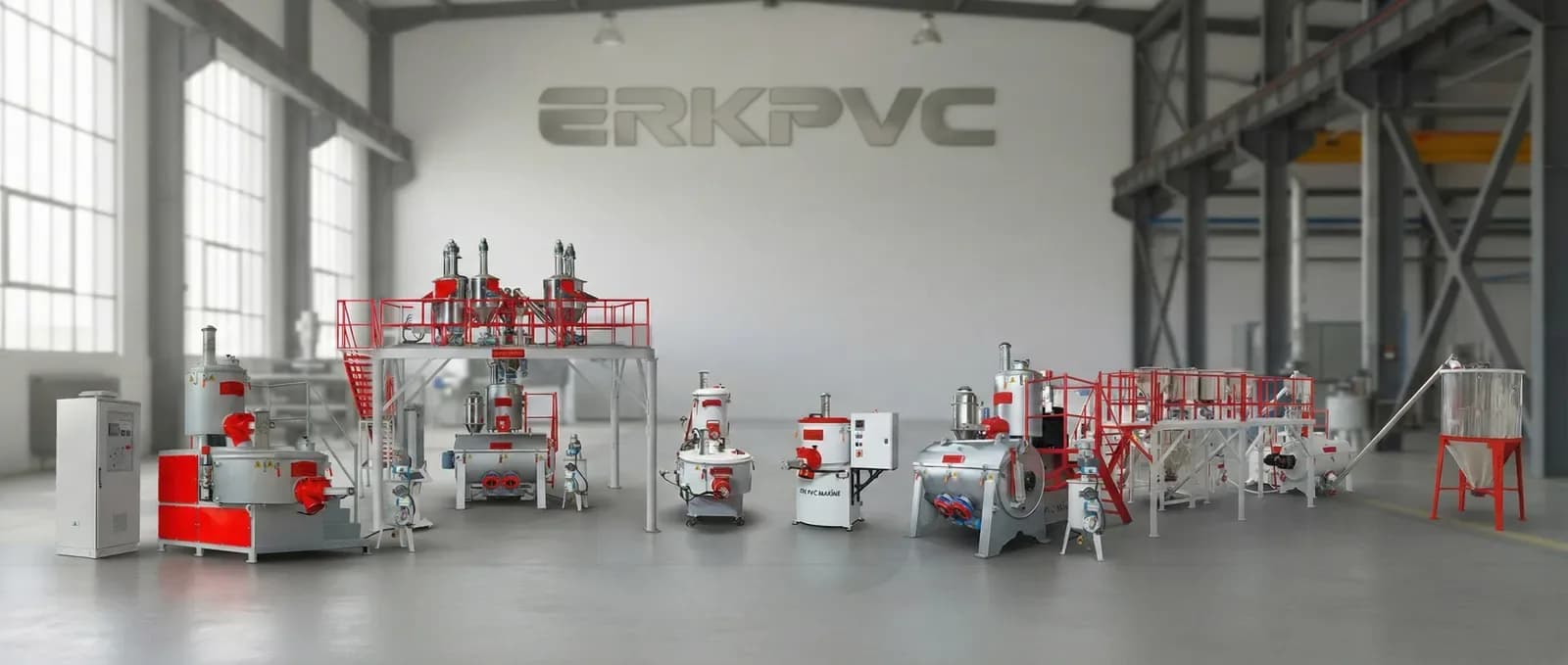
A complete dry blend plant usually includes:
- Raw material storage (silos, big bags, sack tipping) and dosing
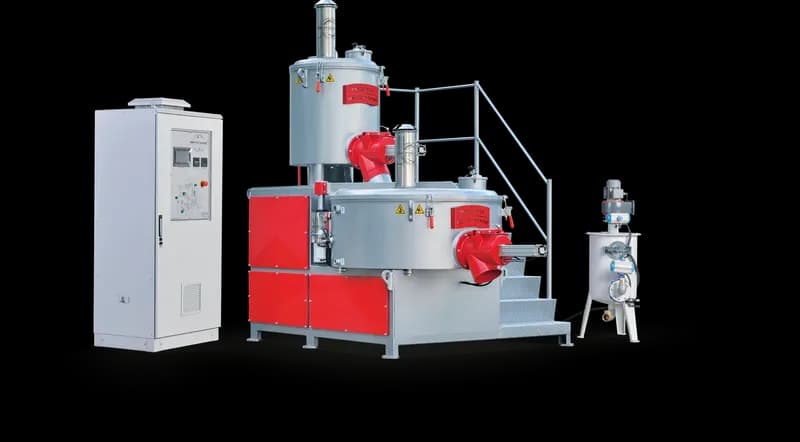
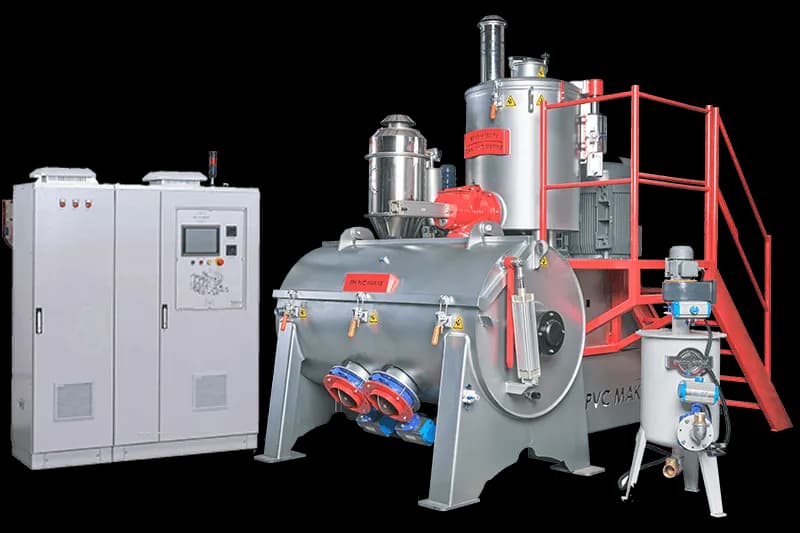
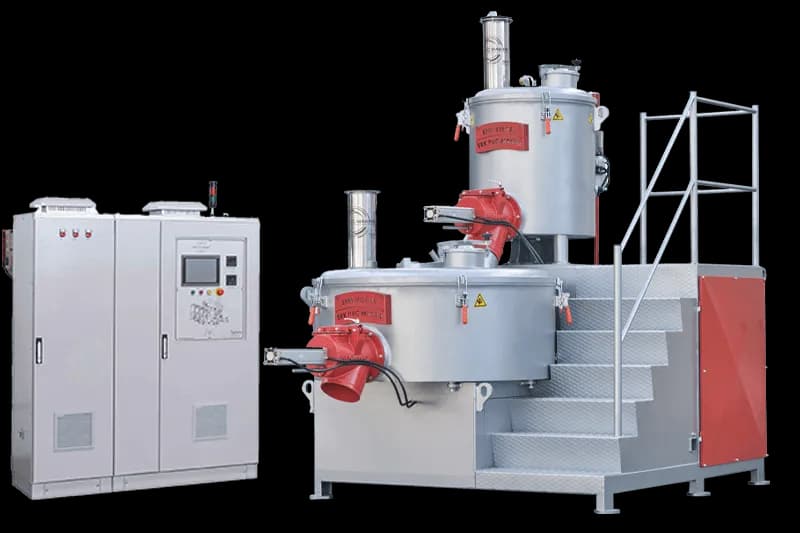
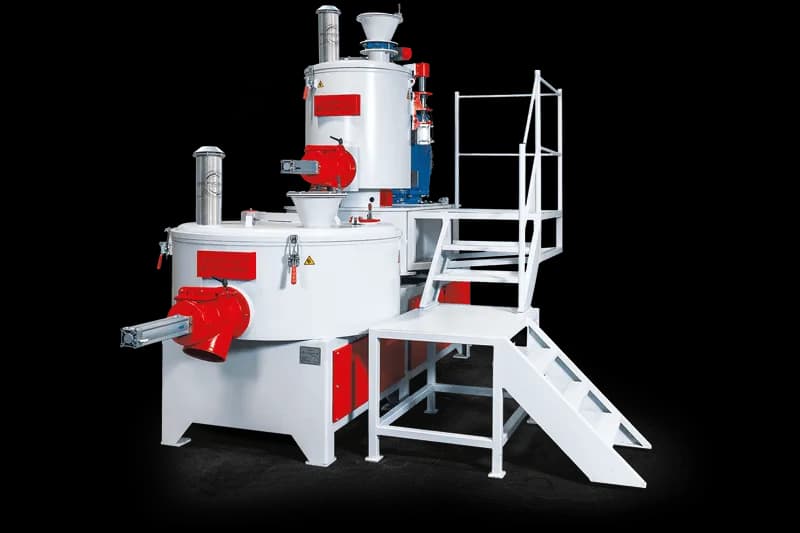
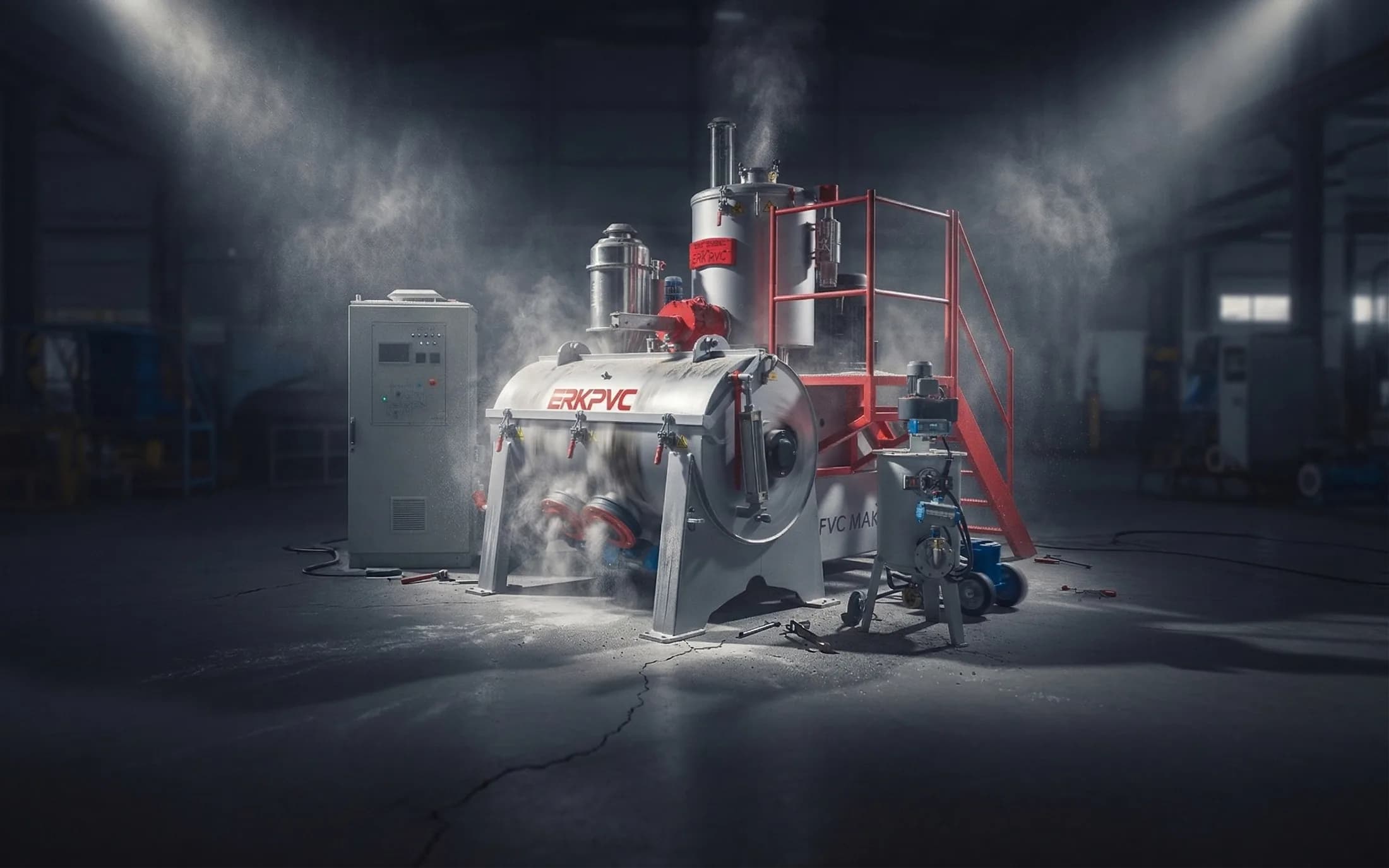
- A hot-cold mixer: the EPM-H horizontal turbo PVC mixer (150–500 kg per batch, 4–6 batches per hour) or the EPM-V vertical turbo PVC mixer (100–200 kg per batch, 4–6 batches per hour)
- Moisture extraction and dust filtration
- Sieving
- Conveying and extruder feeding
The practical way to size the mixer is to work from hourly demand, batch size and batches per hour; a worked example is in PVC mixer capacity calculation. If you are weighing up a second-hand machine, read used vs new PVC mixer. Powder coating producers use a related mixing technique to bond metallic pigments: what is metallic bonding.
Our PVC dry blend plant page describes how all of this is delivered as one turnkey project.
Building a dry blend line with Erk PVC Makine
Since 2015 Erk PVC Makine has built PVC mixers, dosing, feeding, sieving and filtration equipment at its factory in Ergene, Tekirdağ, with more than 500 projects and lines in over 46 countries. We do not make extruders; we design, install and commission everything in front of the extruder, train your operators and back the line with remote support and spare parts.
Send us your formulation and hourly demand: map the line with our line configurator or go straight to request a quote.
Frequently Asked Questions
What is the difference between PVC dry blend and PVC compound?
Dry blend is a dry, free-flowing powder in which the additives are bonded to the resin particles. Compound is that blend melted and pelletised. Profile and pipe lines are usually fed with dry blend directly.
Why is dry blend made with heat?
Heat opens up the resin particles, melts stabilisers and lubricants and lets plasticiser be absorbed. The additives bond to the particles, so the blend does not separate in handling.
Why does the blend need cooling after the hot mixer?
Hot dry blend cakes in silos and bags, flows poorly and can degrade. The cooling mixer typically brings it down to around 40–50 °C so it can be stored and conveyed.
How long does one batch of dry blend take?
It depends on the recipe, target temperature and cooling water. The EPM-H series runs 4–6 batches per hour and the EPM-V series 4–6, with heating and cooling running in parallel.
Can rigid and flexible PVC be made in the same mixer?
Yes, but impeller geometry and liquid addition should be chosen for the recipe. For flexible PVC we recommend planning the mixer together with automatic liquid dosing.