

Mixing, Bonding and Sieving Systems for Powder Coating Production
Bonding, sieving and dust-free conveying for metallic and pearlescent powders: your post-milling line.
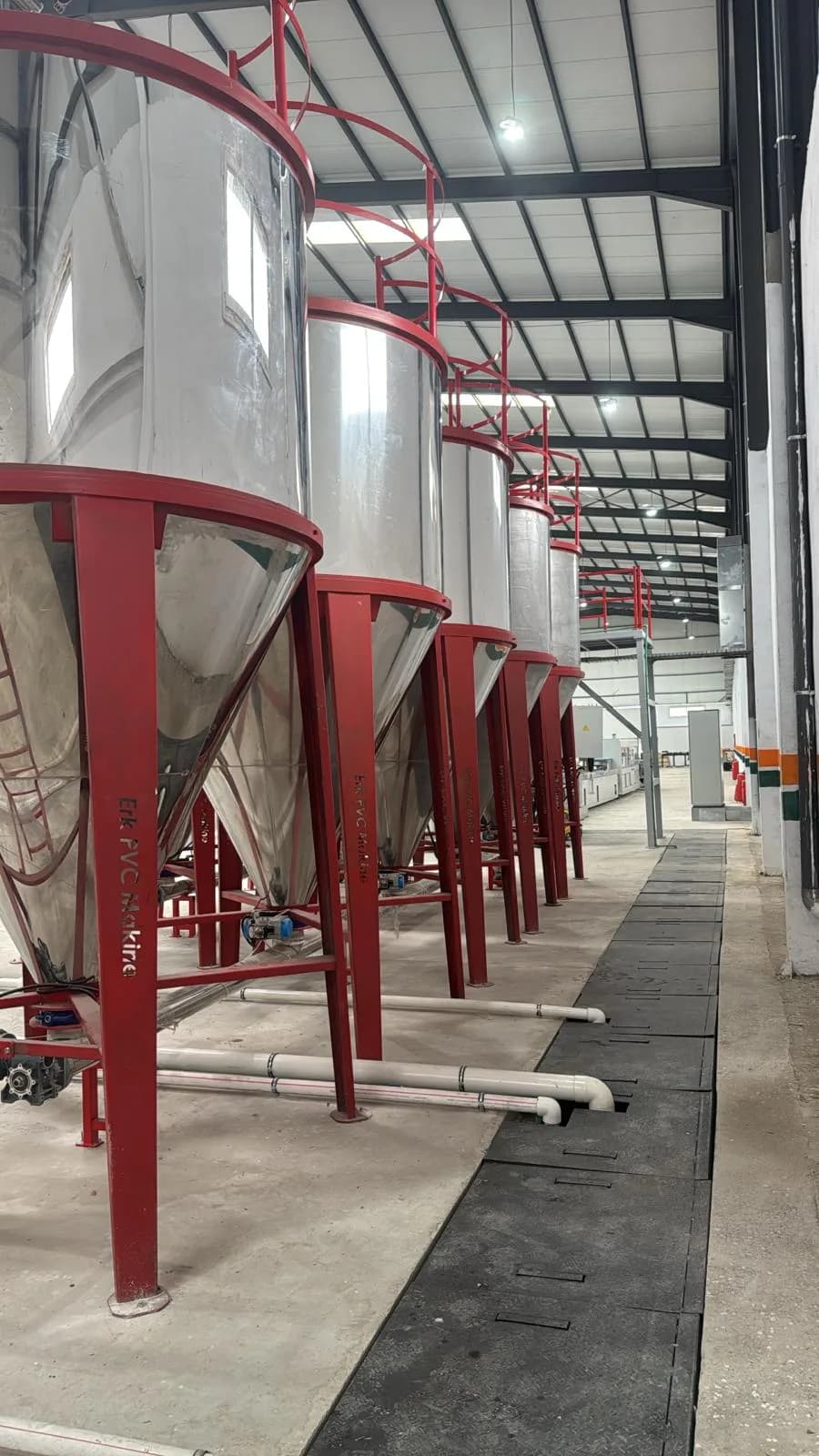
Erk PVC Makine designs and installs mixing, feeding and sieving systems for powder coating production. The premix mixer, extruder, mill and classifier come from other suppliers. We supply the dust-free conveying that feeds the premix to the extruder, the bonding mixer that attaches metallic and pearlescent pigments after milling, and the sieving step — and we work alongside whatever brand of equipment you already run.
Powder coating blend requirements
Powder coatings are made by melt-mixing a premix of resin and hardener, pigments, fillers and flow or surface additives in an extruder, then cooling and milling it into a fine powder. Typical resin systems are polyester, epoxy or hybrid.
In metallic and pearlescent ranges, aluminium, bronze or pearl-effect pigments are added after milling, because the extruder and mill would damage the flakes. When the pigment is simply dry blended into the powder, the particles stay separate, charge differently during electrostatic spraying, and the effect varies from part to part. That is why quality metallic ranges use bonding, a process that attaches the pigment to the surface of each powder particle at a controlled temperature.
Recommended line steps
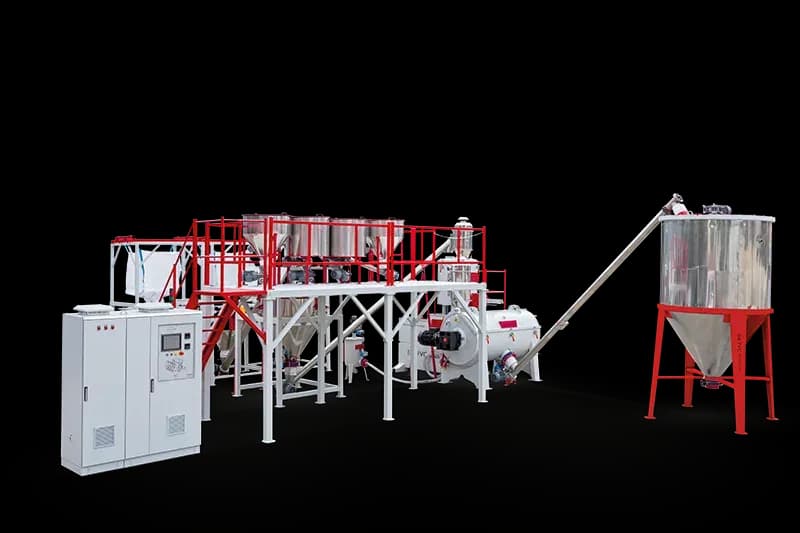
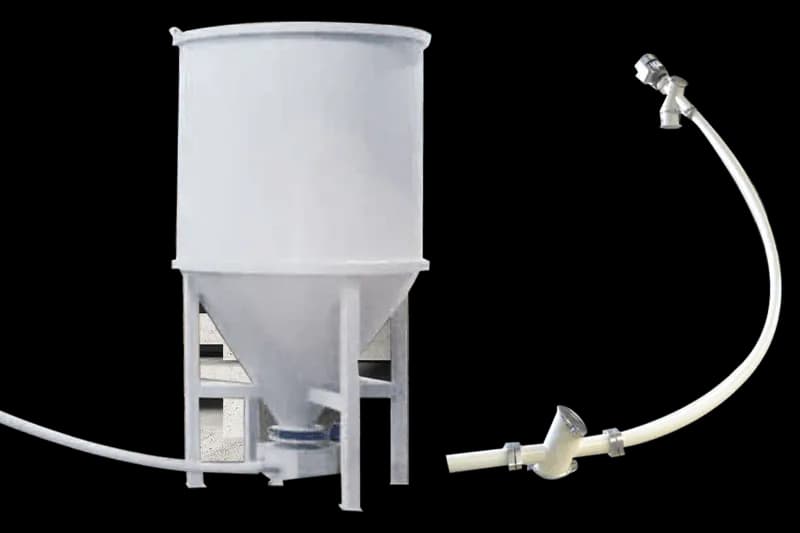
- Premix feeding: A flexible screw conveyor carries the prepared premix, enclosed and dust-free, to the extruder hopper.
- Extrusion, milling and classifying: These steps run on your existing equipment or equipment from the supplier you select, producing the base powder.
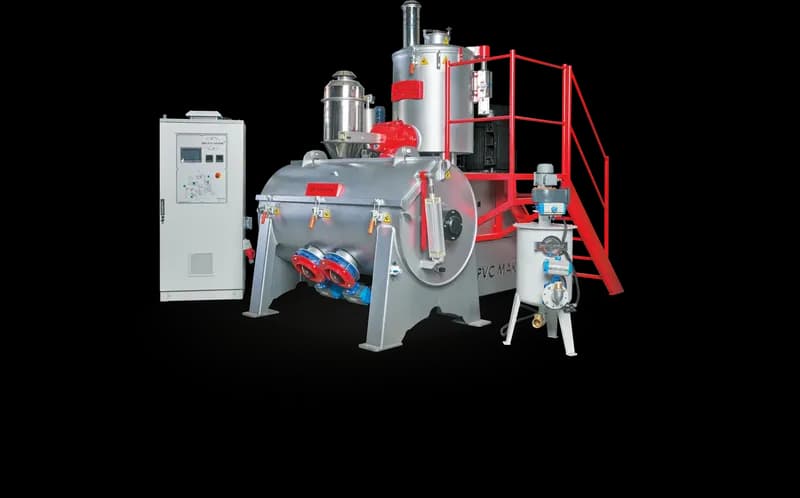
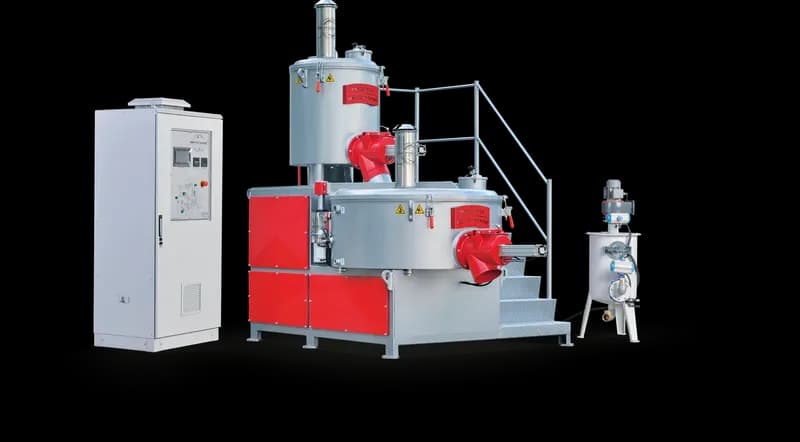
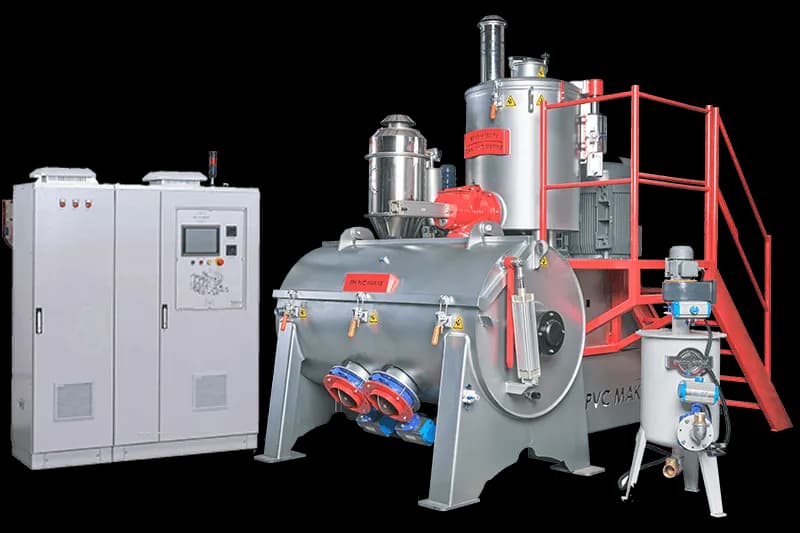
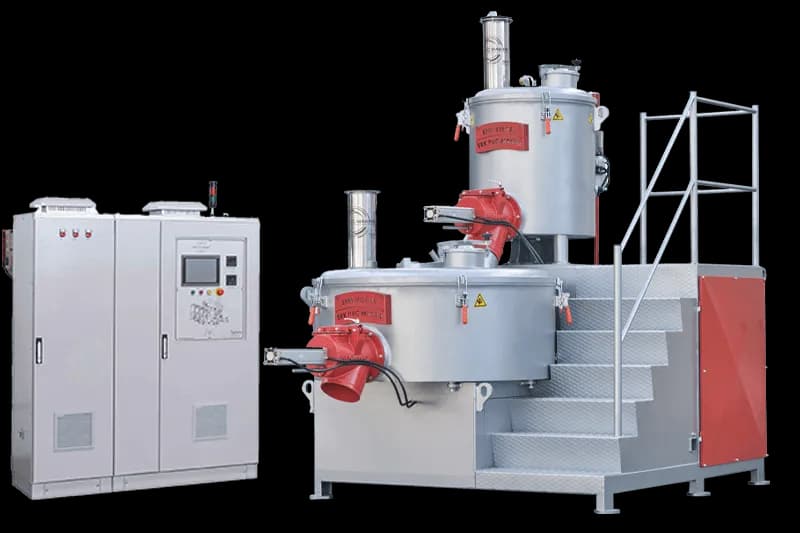
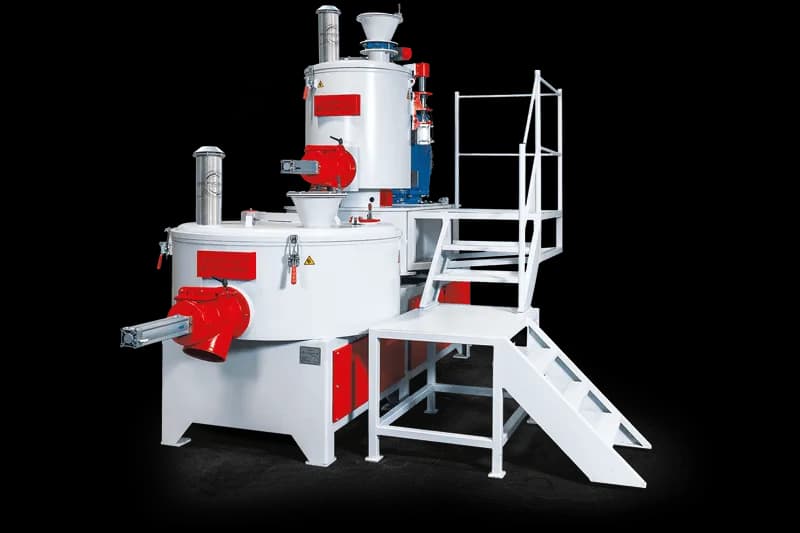
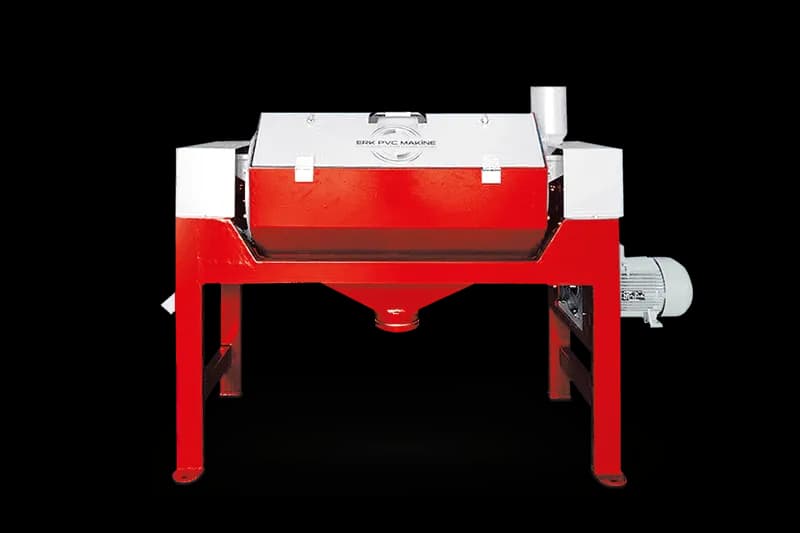
- Bonding: Base powder and effect pigment are mixed in a metallic bonding mixer under controlled temperature and time; the pigment adheres to the particle surface, and the batch is then cooled to lock the bond in place.
- Sieving: The cooled product passes a powder sieve that removes agglomerates and oversize particles.
- Conveying and packing: The sieved powder is transferred dust-free to the packing hopper by flexible screw conveyor.
For a new pigment or base powder, the temperature window and mixing time can be established at small scale in a laboratory mixer before production.
Recommended equipment
Line step | Erk equipment | Why |
|---|---|---|
Premix and product conveying | Enclosed, dust-free conveying | |
Metallic/pearlescent effect | Bonds pigment to the particle surface at a controlled temperature | |
Agglomerate control | Removes agglomerates and oversize particles | |
Formulation trials | Establishes bonding conditions at small scale |
An optional frequency inverter (FV) drive on the bonding mixer lets you tune agitator speed to the pigment's sensitivity and the formulation.
Quality factors
- Temperature control: too cool and the pigment does not attach; too hot and particles fuse together. Every batch following the same profile is the basis of colour consistency.
- Protecting the flakes: agitator speed is set to avoid breaking pigment flakes and dulling the effect.
- Free pigment: pigment left unbonded separates during application; the right time and temperature keep it to a minimum.
- Agglomerates: fast cooling after bonding and sieving stop lumps and oversize particles reaching the product.
- Dust control: enclosed conveying limits fine powder spreading into the plant and into other colours.
Sizing example
Example: Consider a hypothetical powder coating plant that produces metallic and pearlescent series alongside standard colours. Powder coating does not use a hot-cold PVC mixer; the step to size is the bonding mixer, and its capacity is set by batch logic rather than kg/h.
- Batch size: Start from the most frequently ordered metallic lot size; a lot completed in a single batch helps colour consistency.
- Cycle time: Heating, bonding and cooling times depend on the recipe and determine the number of batches per hour.
- Colour changes: With frequent series changes, a smaller mixer and short cleaning time can be more efficient than large, infrequent batches.
- Scale-up: Temperature and time are first established in the laboratory mixer, then the production-scale metallic bonding mixer is selected.
The line also includes a powder sieve and flexcon screw conveying. Send your lot size and cycle data via the quote page; for batch sizing on PVC lines the capacity calculator is also available.
What Erk supplies and what other suppliers supply
Erk PVC Makine does not build powder coating extruders, mills or classifiers; these and the premix mixer come from the supplier of your choice. We supply the conveying, bonding, sieving and lab-scale mixing equipment — manufactured at our factory in Ergene, Tekirdağ (head office in Istanbul) — together with installation, commissioning, operator training, remote support and spare parts.
For colour concentrates and pigment premixing, see our masterbatch page.
Request a line layout
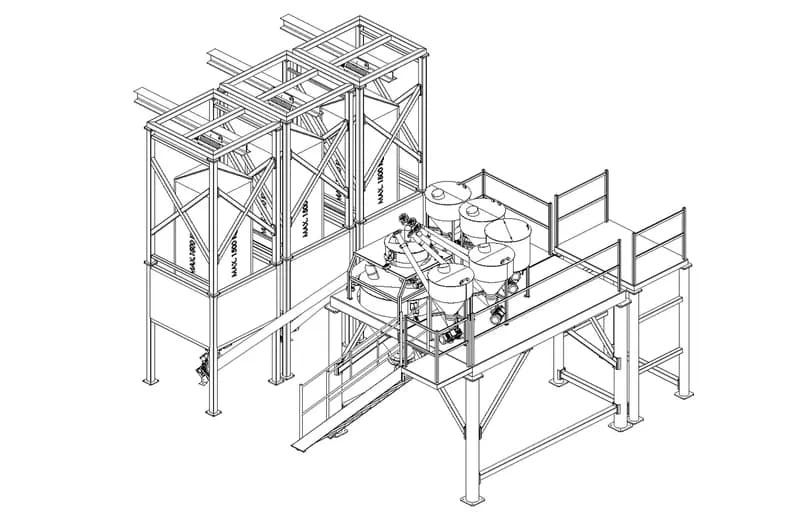
Send us your base powder type, pigment type and target output per shift, and we will send you a line layout with an equipment list. To put your line together step by step, you can also use our line configurator.
To receive a line layout and quotation for your powder coating bonding and sieving line, request a quote.
Products
Frequently Asked Questions
Which equipment does Erk supply for powder coating production?
We supply flexible screw conveyors that move the premix to the extruder and finished powder to packing without dust, a bonding mixer for metallic and pearlescent effects, a powder sieve after bonding and a laboratory mixer for formulation trials. The premix mixer, extruder, mill and classifier come from other suppliers.
Why is bonding preferred for metallic powder coatings?
When pigment is only dry blended into the powder, pigment and coating particles stay separate; they charge differently during spraying, so the effect varies and reclaimed powder no longer matches. Bonding attaches the pigment to the particle surface, giving a more stable effect and reclaim that can be reused.
Will your bonding mixer work with my existing extruder and mill?
Yes. The bonding mixer works after milling and classifying, so it is independent of your extruder and mill brand. How base powder is charged into the mixer and how product moves from the sieve to packing are planned around your existing plant.
How do you achieve an even metallic effect and avoid free pigment and agglomerates?
We manage heating precisely around the resin’s softening range and repeat the same profile in every batch, with agitator speed set so pigment flakes are not damaged. Once bonding is complete, the batch is cooled to stop particles sticking together, and a powder sieve then removes agglomerates and oversize particles. The right temperature and time can be established beforehand with trials in a laboratory mixer.
Can I run trials with my own base powder and pigment?
Yes. We recommend establishing bonding conditions for a new pigment or base powder at laboratory scale before production. Our laboratory mixer is used for exactly this kind of R&D work, and we can plan your trial needs together at the quotation stage.
Request a Quote
Fill in the form and our sales engineers will get back to you within one business day.