

Erk PVC Makine engineering teamUpdated:
Powder dosing problems: bridging, load-cell drift and inaccurate weighing
Most dosing problems start not in the scale but in how the material leaves the hopper and how weighing is set up. The most common problems, their symptoms and how to deal with them.

Contents8
Where do dosing problems come from?
A gravimetric dosing system weighs every raw material by mass according to the recipe. Even with correctly calibrated scales, batches can drift from target, weighing can take longer or a component may not flow at all. Most of these problems come from three places:
- Material flow: if powder does not leave the hopper steadily, no scale can weigh it accurately.
- Weighing mechanics: pipes, hoses or vibration touching the weigh hopper disturb what the scale reads.
- Control settings: when feeding slows down and when it stops determines how close the batch gets to target.
The problems below are the ones met most often in PVC lines.
1. Bridging (arching)
Symptom: there is material in the hopper but feeding stops or slows right down; weighing takes longer or raises an alarm.
Cause: fine, cohesive powders (some stabilisers, fine calcium carbonate, pigments) form an arch over the hopper outlet and stop the flow. Moisture pick-up, powder that has sat and compacted, and narrow outlets make bridging worse.
Remedies:
- Hopper geometry (cone angle, outlet size) chosen for the material’s flow behaviour
- Keeping material dry and closed, and not letting it sit in the hopper for long
- Where needed, mechanical or air-assisted flow aids assessed for the specific material
2. Ratholing and erratic flow
Symptom: a narrow channel opens in the middle of the hopper while material at the walls never moves; flow is normal for a while and then the hopper suddenly empties.
Cause: the material flows only from the centre instead of as a mass; what stays at the walls ages, picks up moisture or hardens, and can break loose all at once as the hopper empties.
Remedy: hopper design matched to the material, and first-in, first-out use of raw materials.
3. Flushing and overshooting the target
Symptom: with light, aerated powders, material pours out like a liquid during feeding and the weight overshoots.
Cause: fine powder mixed with air during conveying or discharge behaves like a fluid for a while. In addition, material still in the air when feeding stops ("in-flight material") lands on the scale and pushes the final value past target.
Remedies:
- Switching from coarse to fine feeding as the target approaches
- Setting the cut-off point to allow for in-flight material
- Letting aerated material settle after it enters the hopper
4. Load-cell drift
Symptom: zero drifts with an empty hopper, the same recipe weighs differently batch to batch, or the reading keeps fluctuating.
Causes:
- Mechanical contact: rigid pipes, cables or platform contact carry part of the load around the scale.
- Vibration: a nearby mixer, fan or compressor makes the reading fluctuate.
- Pressure differences: poor hopper venting creates pressure differences during filling and discharge that affect the scale.
- Calibration and environment: scales left uncalibrated, temperature changes and dirty connections cause drift.
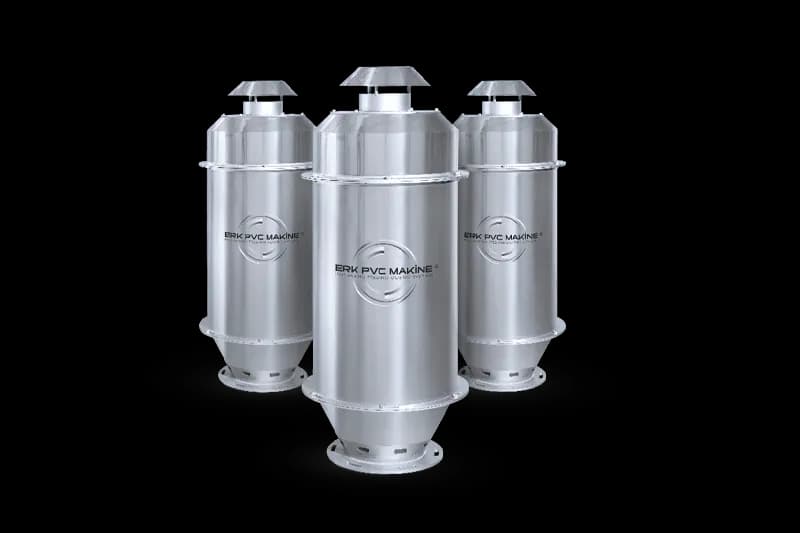
Remedies: flexible connections to the weigh hopper, isolation from vibration sources, correctly sized venting with a filter (air filter) and regular calibration.
5. Static and build-up
Symptom: powder sticks to hopper walls and pipes, and some material stays behind after every batch.
Cause: dry powders pick up static charge as they flow; some additives are sticky by nature.
Remedy: earthing the equipment, keeping surfaces clean and checking whether material left in the hopper ends up in the next batch.
6. Wrong sequence and recipe errors
Even in an automatic system, a wrongly defined recipe, a raw material loaded into the wrong hopper or a component order that does not suit the mixing process can spoil a batch. The order in which additives should go in is covered in PVC additive addition order.
How weighing is set up in Erk’s system
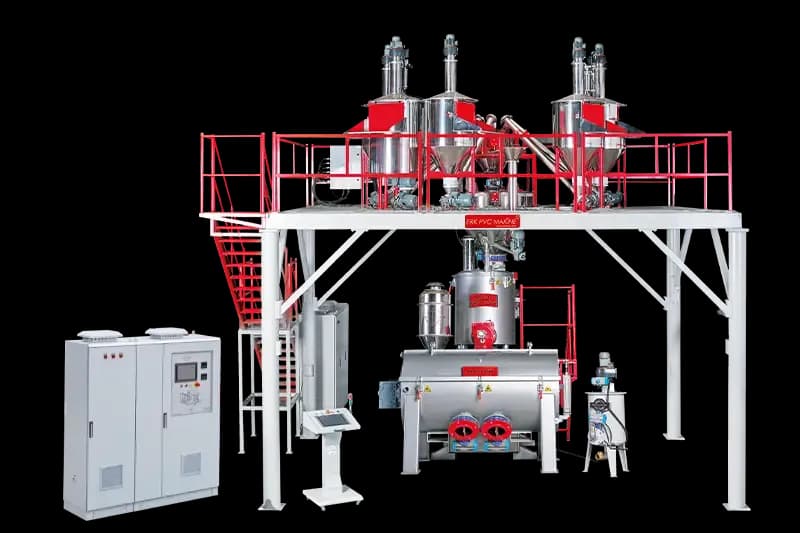
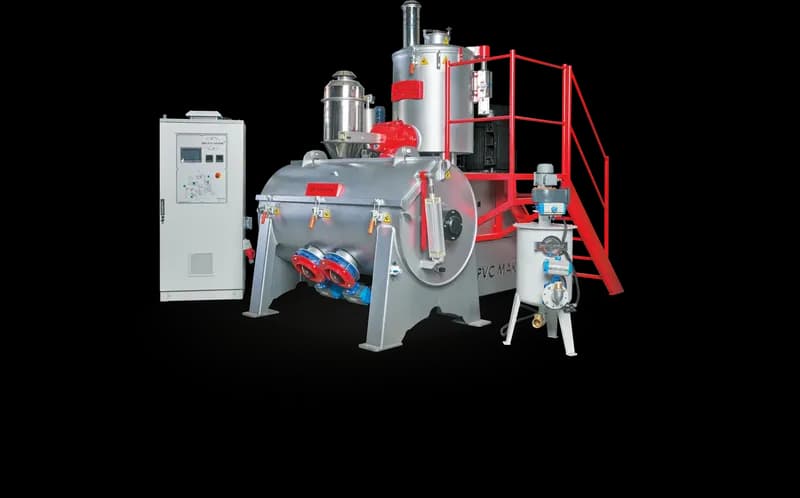
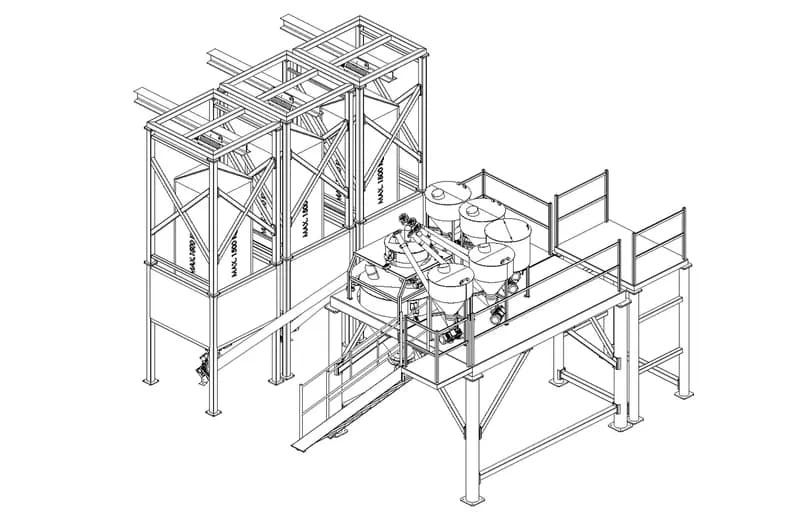
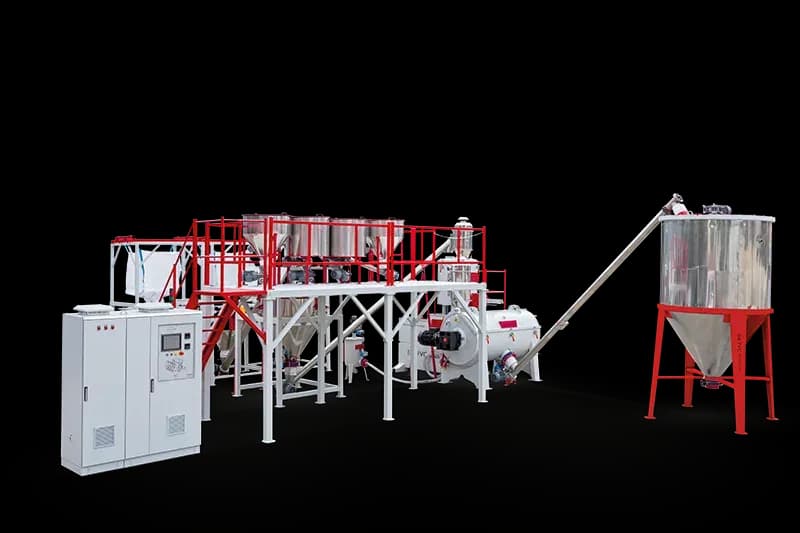
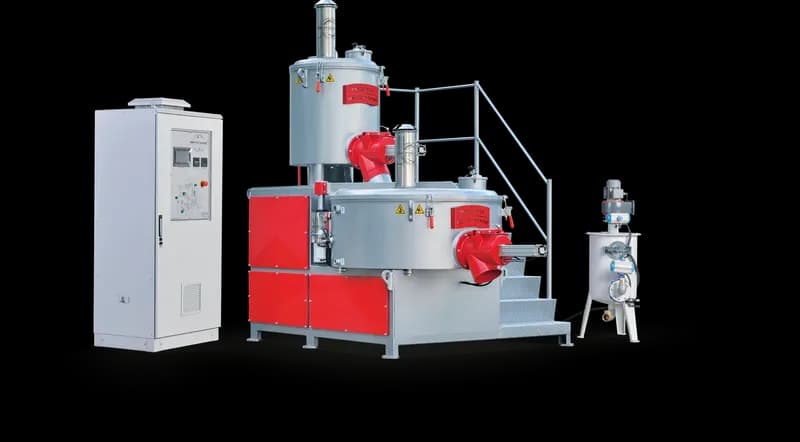
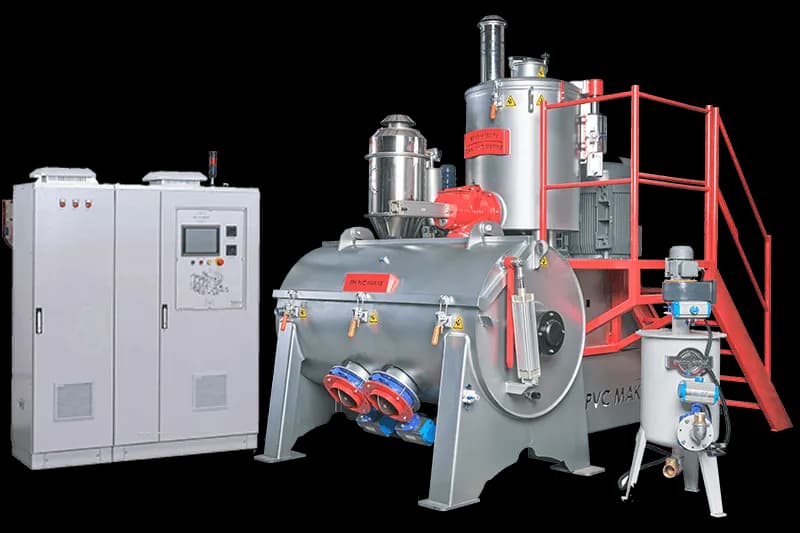
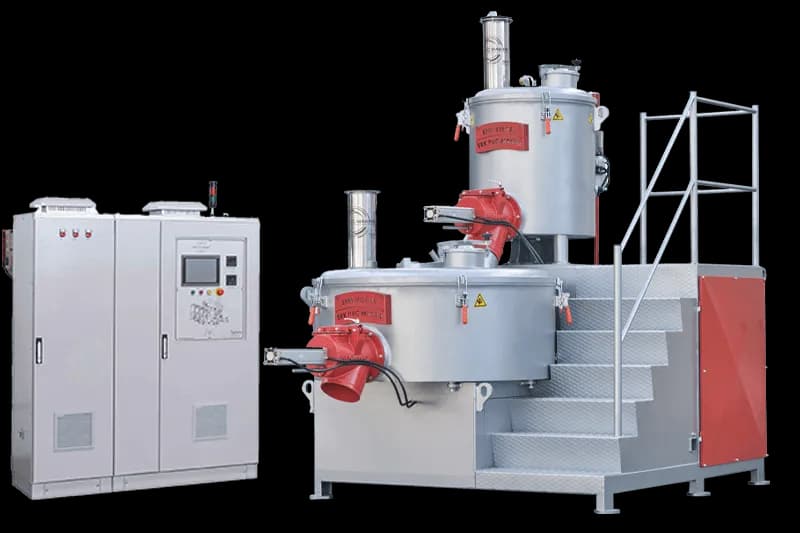
Erk PVC Makine’s automatic powder dosing system is gravimetric: each raw material is fed in turn from its own bin into the weigh hopper, feeding stops when the target mass is reached, and the completed batch is charged to the heating turbo mixer. Liquid additives join the same cycle through automatic liquid dosing. Hopper geometry, feeders and any flow aids are assessed for your raw materials during the project.
If your current dosing system shows any of the problems above, send us your raw material list and the symptoms and we will look at the cause with you. For the difference between gravimetric and volumetric dosing, see this article.
Frequently Asked Questions
How can bridging be prevented in powder dosing?
By choosing hopper geometry for the material’s flow behaviour, keeping the material dry and closed, and where needed assessing mechanical or air-assisted flow aids for that specific material.
Why does a load cell read incorrectly?
The most common causes are rigid pipes or cables attached to the weigh hopper, vibration nearby, pressure differences from hopper venting, missing calibration and temperature changes.
Why does weighing overshoot the target?
Material still in the air when feeding stops lands on the scale, and aerated fine powders can flush. Switching to fine feeding near the target and setting the cut-off for in-flight material reduce the overshoot.
Do dosing problems affect mixing quality?
Yes. An under- or over-weighed additive changes the composition of the dry blend however well the mixer works, and shows up later as fluctuation in the extruder and product defects.