

Erk PVC Makine engineering teamUpdated:
PVC dry blend problems: lumps, poor flow, low bulk density and discolouration
Dry blend problems usually show up at the extruder, but they start in the mixer. Here are the four most common ones, their likely causes and what to check first.

Contents10
What counts as a dry blend problem?
A dry blend problem is any case where the PVC compound leaving the hot-cold mixer is not a free-flowing, uniform and stable powder. The four most common symptoms are lumps, poor flow, low bulk density and discolouration. They are often noticed at the extruder as pressure swings, surface defects or colour variation, but the cause usually sits in the mixer: temperature, addition order, moisture or the condition of the impeller.
For how dry blend is made in the first place, see what is PVC dry blend. The table below is a quick starting point.
Symptom | Common causes | Check first |
|---|---|---|
Lumps | Local concentration of liquids, moisture, material breaking off the wall | Liquid feed method, moisture extraction, vessel cleanliness |
Poor flow | Early discharge, incomplete bonding, warm storage | Discharge and cooler outlet temperatures |
Low bulk density | Insufficient heating, worn impeller, wrong addition order | Temperature curve, blade condition |
Discolouration | Overheating, long dwell time, stabiliser distribution | Discharge temperature, cycle time |
1. Lumps
Lumps (agglomerates) are clusters of stuck-together or hardened material in the blend. They do not melt evenly in the extruder and come back as specks, bubbles or rough surfaces.
Likely causes:
- Local concentration of liquid additives, when plasticiser or liquid stabiliser is poured quickly at one point.
- Moisture. Steam released during heating stays in the mixer, condenses on the lid and drips back into the batch.
- Wall build-up. Material that collects on the vessel wall or lid hardens over time and breaks off.
- Early discharge. In flexible recipes, discharging before the plasticiser is fully absorbed.
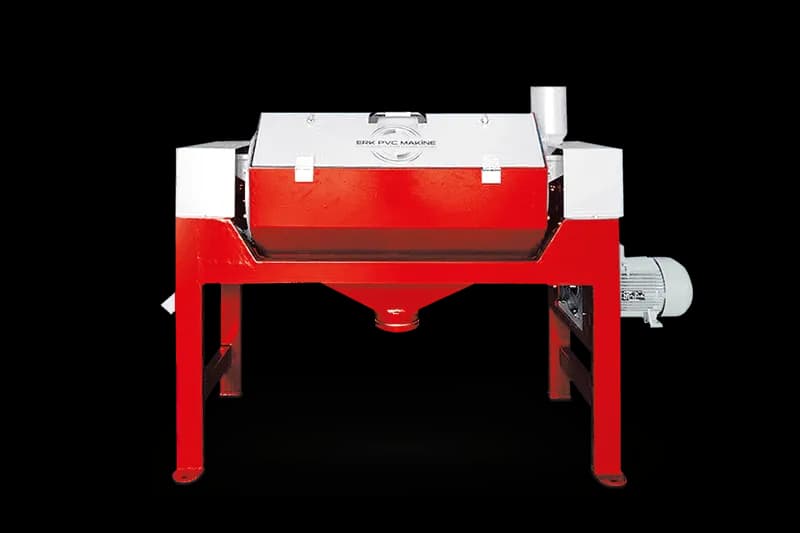
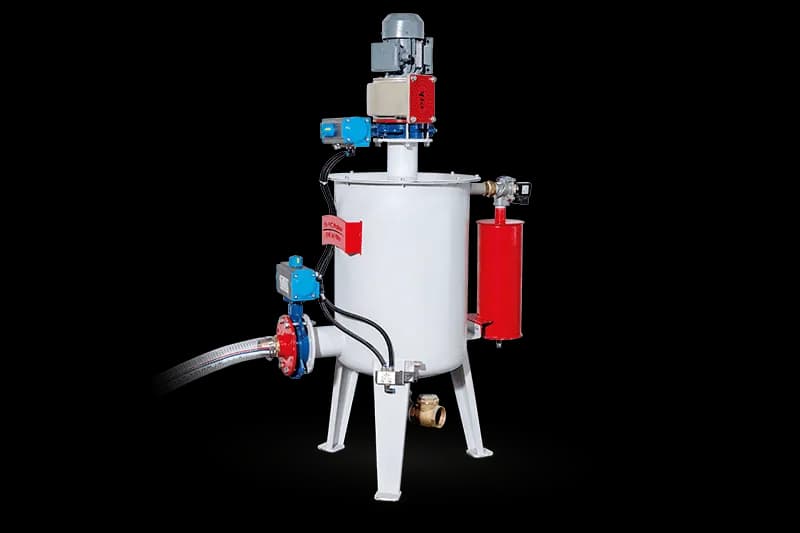
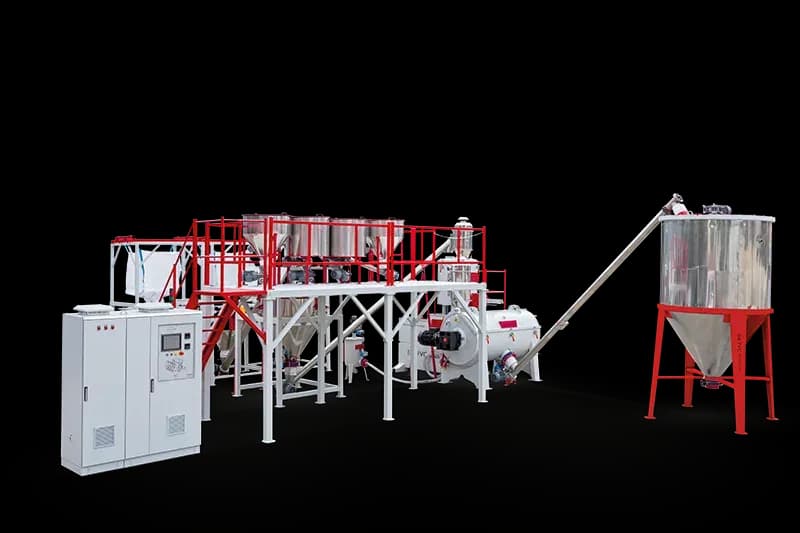
What to do: taking the steam out of the mixer reduces lumps at the source, which is what the EPM-JET filter and dehumidifier is designed for. To catch what remains before it reaches the extruder, a powder sieve is installed after the cooler. A growing amount of material at the sieve's reject outlet is an early sign that something has changed in the mixer.
2. Poor flow
Dry blend that flows poorly does not discharge cleanly from silos, bridges in hoppers and makes extruder feeding unsteady.
Likely causes:
- Lubricant and stabiliser not fully bonded to the resin, often because of early discharge.
- The batch leaving the cooler too warm. A typical target is around 40–50 °C; warmer blend can compact in the silo.
- Too much plasticiser, or plasticiser added too late, in flexible recipes.
- Long dwell times in silos or hoppers, and moisture pick-up.
What to do: log both the discharge temperature and the cooler outlet temperature. If poor flow shows up only on some batches, compare their temperature-time records with good batches.
3. Low bulk density
Low bulk density means the extruder screw is filled with less material per turn: output drops and pressure fluctuates.
Likely causes:
- Insufficient heating, so the resin particles never fully open and the additives do not bond.
- A worn impeller. Blade geometry directly affects heating time and bulk density, and worn blades move the material less effectively.
- The wrong impeller. Rigid and flexible PVC use different blade geometries; if your product range has changed, the current impeller may no longer fit.
- Addition order. Adding filler too early can pull part of the lubricant onto the filler.
What to do: if heating time has been creeping up, inspect the blades first. Replace them with original mixer blades where needed and measure bulk density again after the change.
4. Discolouration (yellowing, darkening)
Yellowing or a pinkish tint in the dry blend means the batch has been under too much thermal load.
Likely causes:
- A discharge temperature higher than the recipe needs.
- Long dwell time in the mixer, for example when the heater cannot discharge because the cooler is still full.
- Stabiliser added late or poorly dispersed.
- Heat-damaged wall build-up breaking off into the batch.
What to do: confirm the discharge temperature for the recipe, check whether the cooler is holding up the heater, and add vessel cleaning to the maintenance plan.
Simple quality checks
Problems are hard to fix without measuring them. A few simple checks that need no elaborate lab equipment make batch-to-batch differences visible:
- Bulk density: filling a container of known volume freely and weighing it is enough to follow the trend between batches. The change matters more than the absolute value.
- Flow time: the time a fixed amount of powder takes to run through a standard funnel shows deteriorating flow early.
- Visual check: a sample spread on a white surface shows lumps, colour differences and foreign matter at a glance.
- Sieve rejects: weighing what collects at the powder sieve's reject outlet each shift shows whether a lump problem is growing.
Storing these results alongside each batch's temperature log makes it much faster to find what changed when a problem appears. Taking samples from the same point in the same way each time keeps the results comparable.
Preventing problems at the source
Many dry blend problems can be designed out of the line:
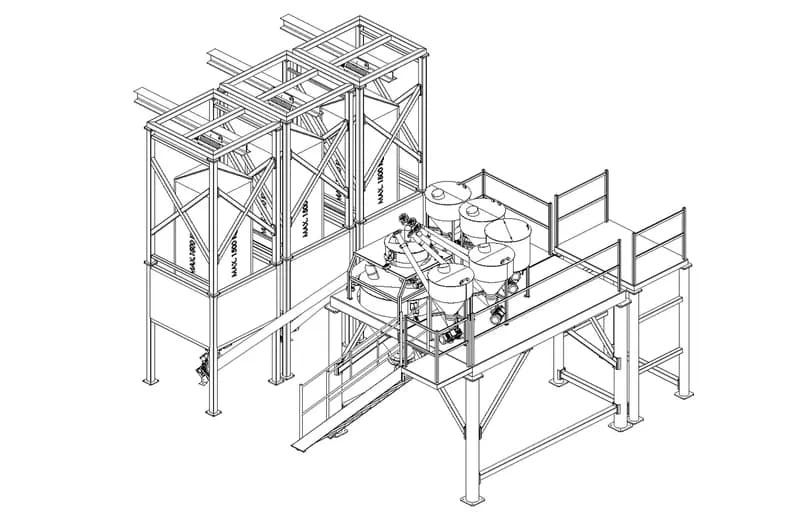
- Consistent weighing: with manual weighing, quantities and addition order can drift between batches; automatic dosing reduces that variation.
- Enough cooling capacity: a cooler that never keeps the heater waiting prevents both discolouration and lost cycles.
- Moisture extraction: taking steam out of the mixer reduces lumps at the source.
- Check screening: a sieve at the cooler outlet catches remaining lumps before they reach the extruder.
- Planned blade inspection: the slow effects of wear are caught early with regular checks.
Seasonal effects
Some dry blend problems get worse at certain times of year. In summer, warmer cooling water slows the cooler, so the blend goes to the silo warmer and flow problems can increase. When the cooler becomes the bottleneck the heater waits, and long dwell time raises the risk of discolouration. In humid periods, raw materials and filler stored in the open pick up more moisture, which means more steam and more lumps during heating. If problems arrive with the season, check cooling water temperature and raw material storage first.
A general troubleshooting checklist
- Find what changed. Raw material lot, supplier, recipe, season (cooling water temperature) or recent maintenance?
- Read the temperature logs. If the curve has changed for the same recipe, the cause is in the mixer.
- Check the impeller. Longer heating times, more vibration or more noise point to blade wear.
- Confirm moisture extraction. Blocked filter elements leave steam in the mixer.
- Watch the reject outlet. The amount collected on the sieve shows whether the problem is growing.
- Change one thing at a time and record the result of each change.
Bottom line
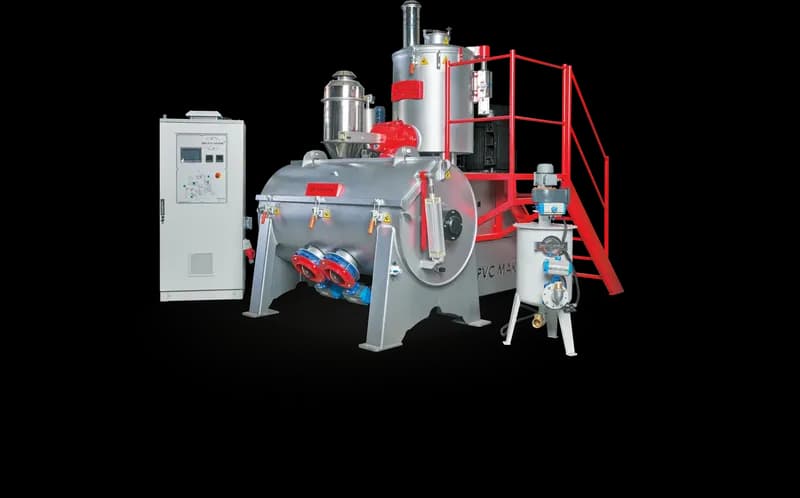
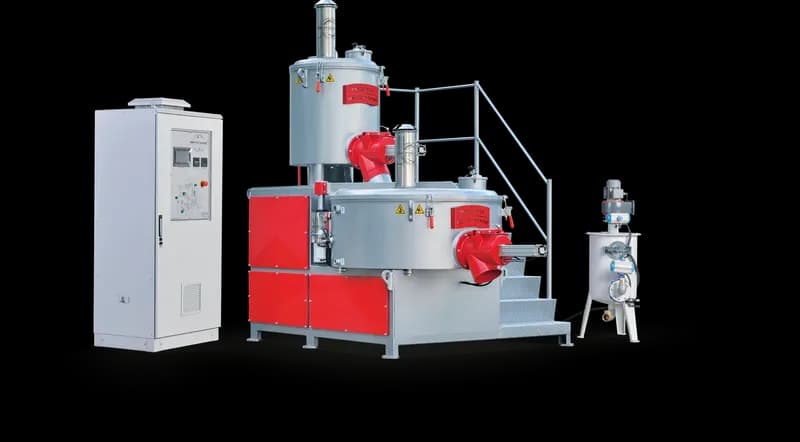
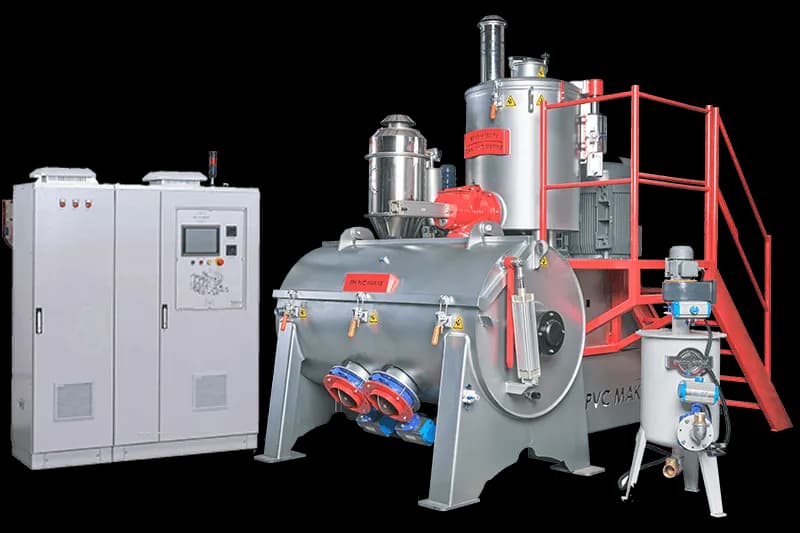
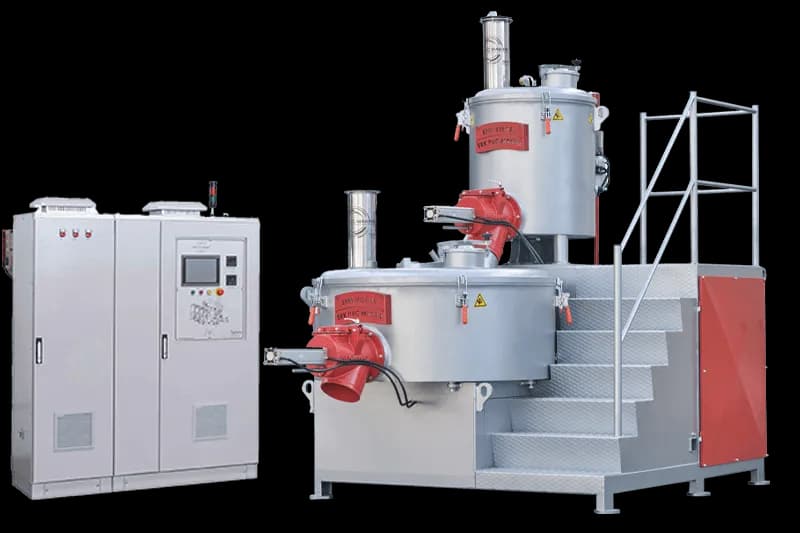
Most dry blend problems come down to four variables: temperature, addition order, moisture and impeller condition. Monitoring them, and putting the right equipment before and after the mixer, keeps most problems from reaching the extruder. To review moisture extraction and sieving for your EPM-H horizontal turbo PVC mixer or existing mixer, request a quote.
Frequently Asked Questions
Why does PVC dry blend form lumps?
The main causes are local concentration of liquid additives, moisture released during heating, build-up breaking off the vessel wall and, in flexible recipes, discharging before the plasticiser is absorbed. Moisture extraction reduces the source and a powder sieve removes the rest.
Why is my dry blend bulk density low?
Common causes are insufficient heating, a worn or unsuitable impeller and adding filler too early. If heating time has been increasing, check the blades first.
How can I improve dry blend flow?
Make sure the discharge temperature is high enough and that the batch leaves the cooler at a typical 40–50 °C rather than warmer. Long storage and moisture pick-up in silos and hoppers can also hurt flow.
Why does dry blend turn yellow?
Yellowing usually comes from overheating, long dwell time in the mixer or late or uneven stabiliser distribution. A cooler that keeps the heater waiting also adds thermal load.
Does a powder sieve fix dry blend problems?
A powder sieve stops lumps and foreign matter from reaching the extruder, but it does not remove the cause. The amount at the reject outlet is a useful early warning for problems in the mixer.