

Erk PVC Makine engineering teamUpdated:
How to read a PVC formulation: phr and additive groups
PVC formulations are written in phr, not percentages. What phr means, what the additive groups do and how to convert a formulation into kilograms for a mixer batch.
Contents6
What does phr mean?
PVC formulations are usually written in phr rather than percentages. phr stands for "parts per hundred resin" and gives the amount of each additive per 100 parts of PVC resin. The resin is always 100 phr; every other component is expressed against it.
"Stabiliser 3 phr", for example, means 3 kg of stabiliser for every 100 kg of PVC resin. The advantage is that additive levels stay fixed relative to the resin: adding or removing one ingredient does not change the phr values of the others, whereas in a percentage-based formulation every change shifts all the ratios.
Which groups does a PVC formulation contain?
The content depends on the product, but most PVC dry blend formulations include these groups:
Group | Role | Typical products |
|---|---|---|
PVC resin | The base of the formulation (100 phr). Its K value affects processing and mechanical properties | All |
Heat stabiliser | Prevents thermal degradation during processing | All |
Lubricants (internal and external) | Control fusion and sticking to metal surfaces | Profile, pipe, sheet |
Filler (e.g. calcium carbonate) | Affects cost and stiffness | Profile, pipe, flooring |
Impact modifier | Raises impact strength | Window profile, some pipes |
Processing aid | Improves fusion and melt strength | Profile, foam board |
Pigments and titanium dioxide | Colour and UV resistance | Profile, cable, flooring |
Plasticiser | Softens PVC and makes it flexible | Cable, hose, film (flexible PVC) |
Which additives are used, and how much, depends on the product standard, your raw material suppliers’ recommendations and your production experience. Erk PVC Makine does not develop formulations; it designs the equipment that applies your formulation correctly in dosing and mixing.
How do phr values convert to kilograms?
Because a mixer batch is weighed in kilograms, the formulation’s phr values have to be converted to batch weight. It takes two steps:
- Find the total phr: add up the phr values of all components (including 100 for the resin).
- Scale each component: amount in the batch = batch weight × (component phr ÷ total phr).
Worked example: to show the arithmetic, take a hypothetical formulation totalling 150 phr (this is not a recipe recommendation).
- PVC resin in a 300 kg batch: 300 × (100 ÷ 150) = 200 kg
- An additive at 3 phr in the same batch: 300 × (3 ÷ 150) = 6 kg
Run the same formulation in a 150 kg batch and every amount halves while the phr values stay the same. That is why storing formulations in phr makes it easy to produce the same product on mixers of different sizes.
How is batch weight chosen?
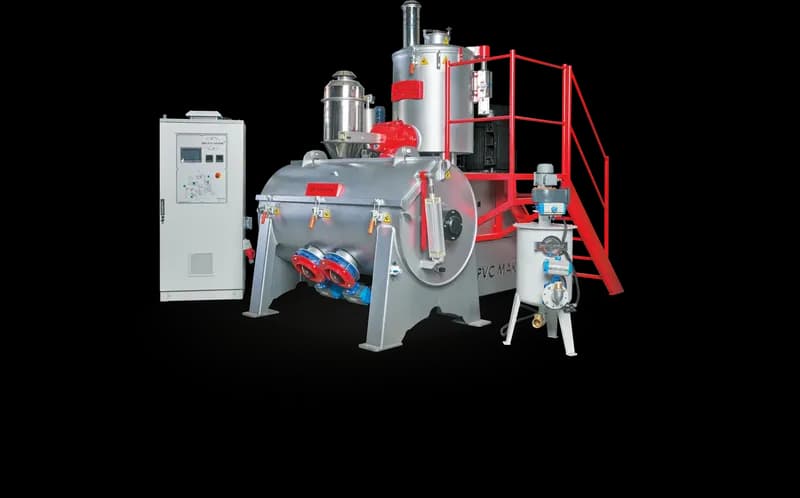
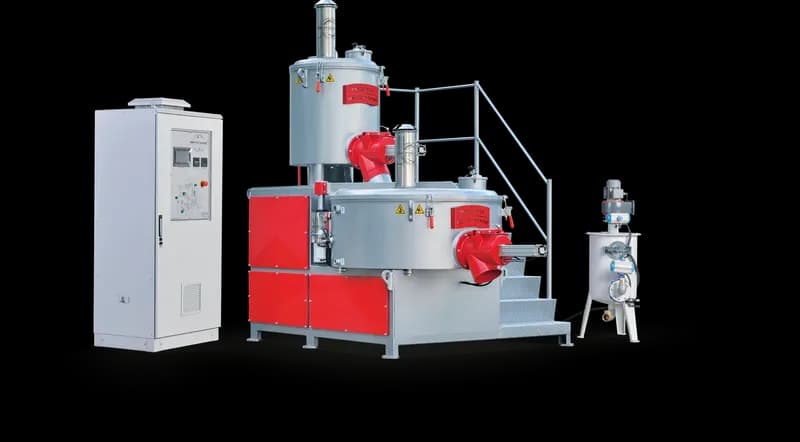
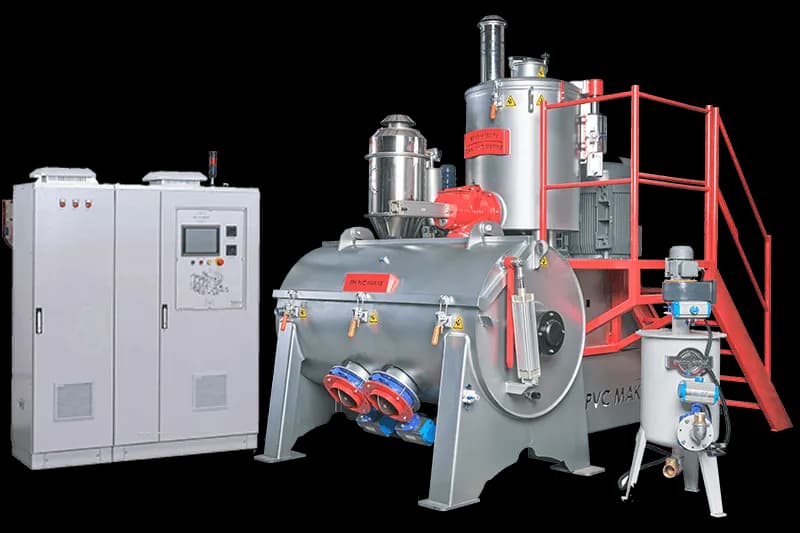
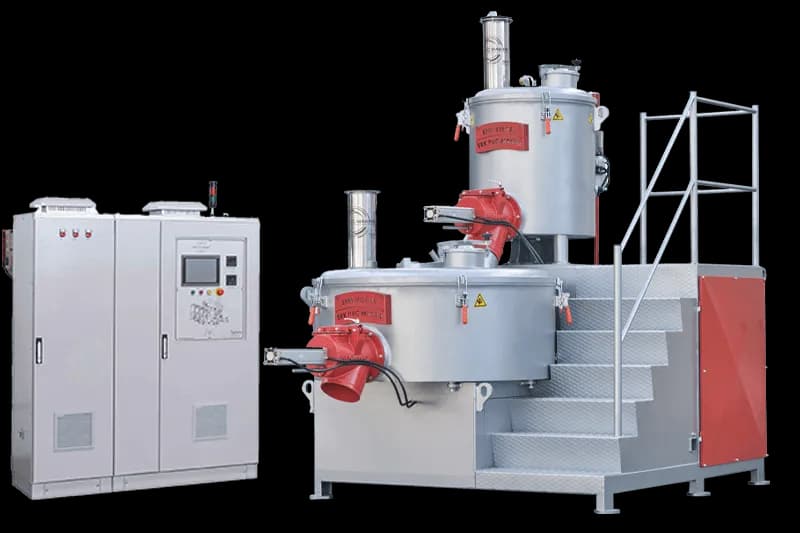
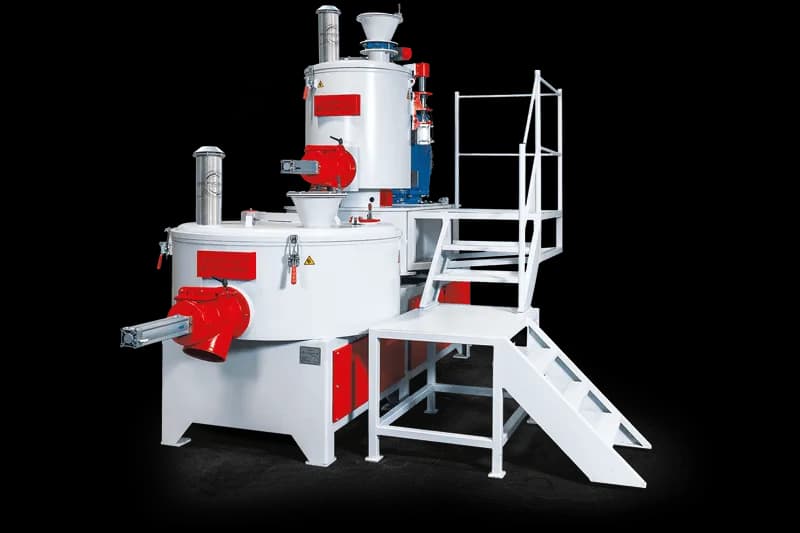
Batch weight depends on the mixer’s capacity and the bulk density of the blend. A highly filled formulation makes a heavier batch in the same volume, a light one a lighter batch. Erk’s EPM-H horizontal turbo PVC mixer series works with 150–500 kg per batch and the EPM-V vertical turbo PVC mixer series with 100, 150 and 200 kg batches. To go from batch weight to hourly output, see PVC mixer capacity calculation.
Moving the formulation into dosing
- Small amounts: additives below 1 phr may be only a few hundred grams even in a large batch. Weighing them accurately is the most critical part of the formulation.
- Liquids: plasticisers and liquid stabilisers are weighed by a separate automatic liquid dosing system and added to the mixer at the right time.
- Addition order: the order and temperature at which additives go into the mixer affect blend quality. See PVC additive addition order.
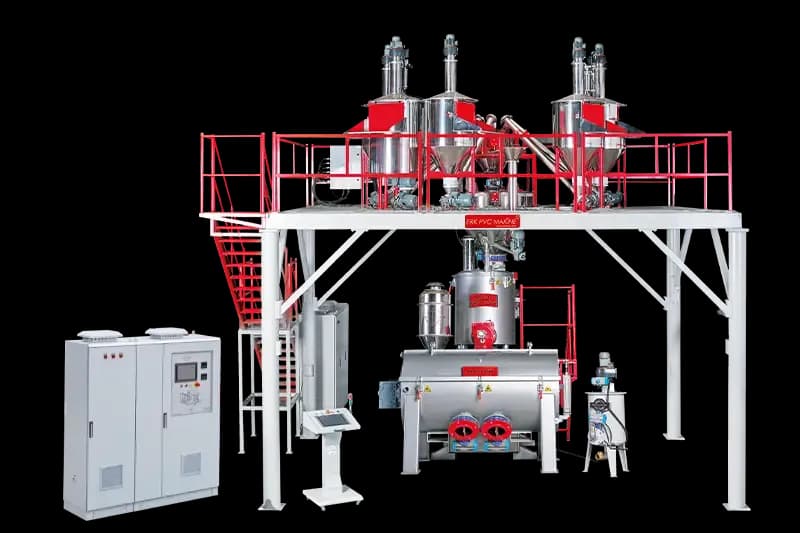
- Stored recipes: the automatic powder dosing system stores formulations once; on a product change only the recipe is selected, and every batch is weighed to the same ratios.
Conclusion
phr is the common language of PVC formulations: the resin is always 100, additives are written against it and converted to batch weight with a simple ratio. Applying the formulation identically in every batch depends on accurate weighing and a sound mixing process. For a dosing and mixing line that fits your formulation, contact us.
Frequently Asked Questions
What does phr mean?
phr means "parts per hundred resin", the amount of an additive per 100 parts of resin. PVC resin counts as 100 phr; 3 phr stabiliser, for example, means 3 kg of stabiliser per 100 kg of resin.
How do I convert phr to a percentage?
Divide the component’s phr by the formulation’s total phr and multiply by 100. In a formulation totalling 150 phr, 100 phr of resin is about 66.7 percent of the blend.
How is each component’s amount in a mixer batch calculated?
Amount = batch weight × (component phr ÷ total phr). The phr values stay the same when the batch weight changes.
Does Erk PVC Makine develop formulations?
No. Formulations are set by the customer’s product standard and raw material suppliers’ recommendations. Erk designs the dosing and mixing line that weighs and blends the formulation correctly in every batch.