

Erk PVC Makine engineering teamUpdated:
Should you buy a used or a new PVC mixer?
A used hot-cold mixer can be a sound investment under the right conditions and an expensive problem under the wrong ones. The real advantages, the risks, what to inspect before you buy and how total cost compares.

Contents9
The short answer
A used PVC mixer can make sense when you find a machine with a documented history, a capacity that matches your needs and the chance to test it under load. If the history is unknown, the capacity does not quite fit or spare parts are hard to get, the low purchase price can disappear quickly into refurbishment and downtime. Decide on total cost of ownership and production risk, not on purchase price.
We write this as a mixer manufacturer, so we have tried to set out the strengths and weaknesses of both options plainly.
The real advantages of a used mixer
- Lower initial investment: the purchase price is usually well below that of a new machine.
- Availability: if the machine is ready, there is no wait for manufacturing.
- Proven design: a well-maintained, known model has a track record in the field.
- Good enough for some roles: a backup line, a low-volume secondary product, trial production or temporary capacity.
These advantages are real, and for some plants a used machine genuinely is the right choice.
The risks
- Unknown history: which recipes it ran, for how many hours and under what maintenance is often undocumented.
- Wear: with highly filled calcium carbonate recipes, blades, vessel wall and discharge valve wear faster. A worn impeller directly affects heating time, energy use and dry blend quality.
- Capacity mismatch: too small and it becomes your bottleneck; too large and it runs inefficiently.
- Recipe fit: rigid and plasticised PVC use different blade geometries. An impeller chosen for the previous owner's recipe may not suit yours.
- Ageing electrics and controls: panels, drives and sensors may be outdated and unable to talk to your dosing and line controls.
- Safety: lid interlocks, emergency stops and guards may be missing or bypassed.
- Spare parts: if the maker is no longer active or the model is old, parts become hard to source.
- No support: installation, commissioning and operator training are rarely part of the deal.
Inspection checklist before you buy
If you are assessing a used hot-cold mixer, check at least the following on site, or have an expert do it:
Area | What to look for |
|---|---|
Impeller and blades | Edge wear, cracks, balance, hub fixing |
Vessel wall | Wear marks, scoring, dents, weld repairs |
Bearings and seals | Noise, vibration, leaks, heat |
Discharge valve | Sealing, condition of the pneumatic cylinder |
Cooler jacket | Water leaks, scale, corrosion |
Motor and drive | Nameplate data, winding condition, inverter if fitted |
Temperature measurement | Accuracy and position of the thermocouple |
Panel and safety | Lid interlock, emergency stop, wiring, diagrams |
Documentation | Manual, electrical drawings, parts list |
The most valuable test is running the machine under load with a real recipe. In typical applications the heating mixer brings the blend to roughly 110–125 °C and the cooler takes it down to about 40–50 °C. How long it takes to get there, the noise and vibration under load and how the discharged blend looks will tell you more than any paperwork.
Count the hidden costs
The true cost of a used mixer is more than its price:
- Dismantling, transport and reassembly
- Replacing wear parts such as blades, bearings, seals and valve
- Updating panel, drive and sensors
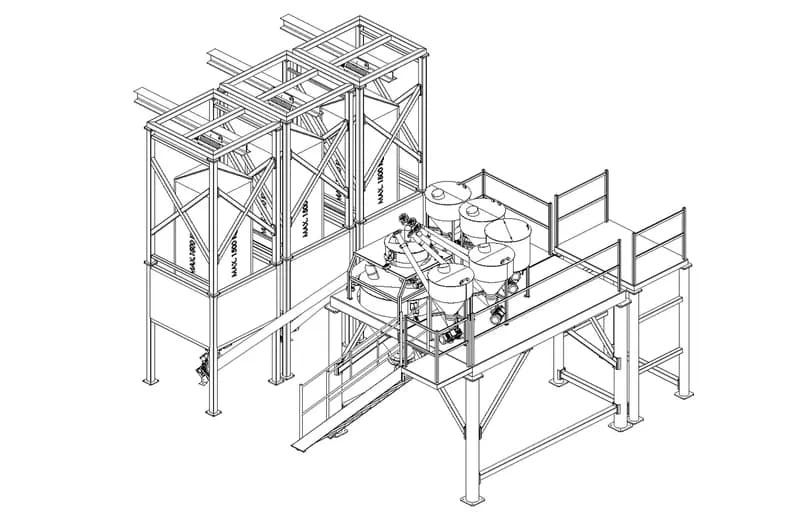
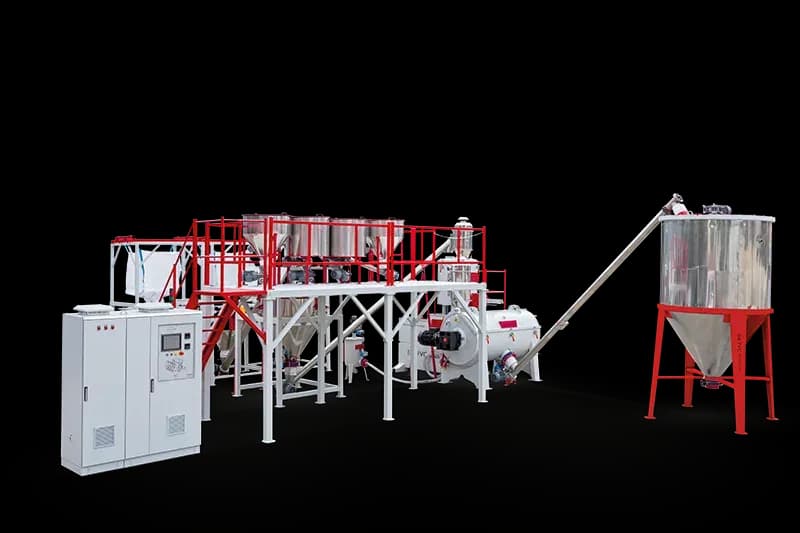
- Adapting it to your dosing, moisture extraction and feeding systems
- Commissioning and operator training
- Lost production when something unexpected fails
Added up, the gap between the two options can be much smaller than it first appears. Sometimes it stays large, which is exactly why the sum has to be done for each project.
Questions to ask the seller
Asking these before you travel to see the machine saves time:
- When was it built, how many owners has it had and when did it last run?
- Which recipes did it run: rigid or plasticised, highly filled or not?
- When were blades, bearings and seals last replaced, and are there records?
- Why is it for sale: a capacity upgrade, a line closure or a breakdown?
- Can it be test-run under load on site?
- Are electrical drawings, the manual and a parts list available?
Every question without a clear answer is a risk that belongs in your cost calculation.
New mixer: pros and cons
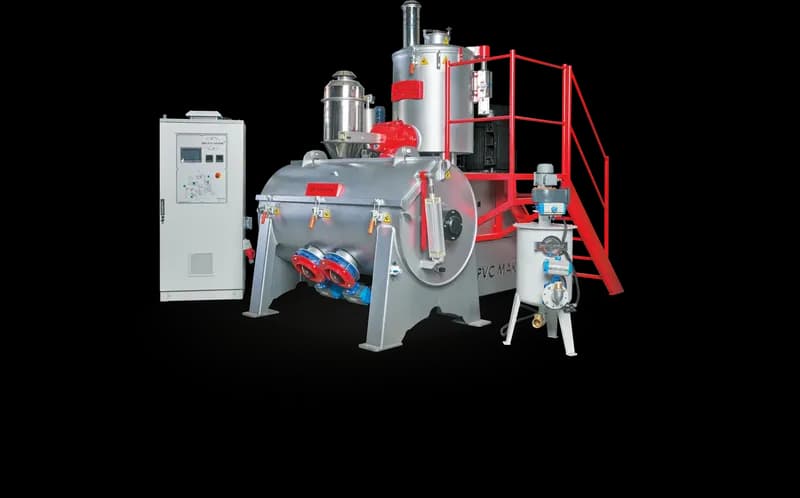
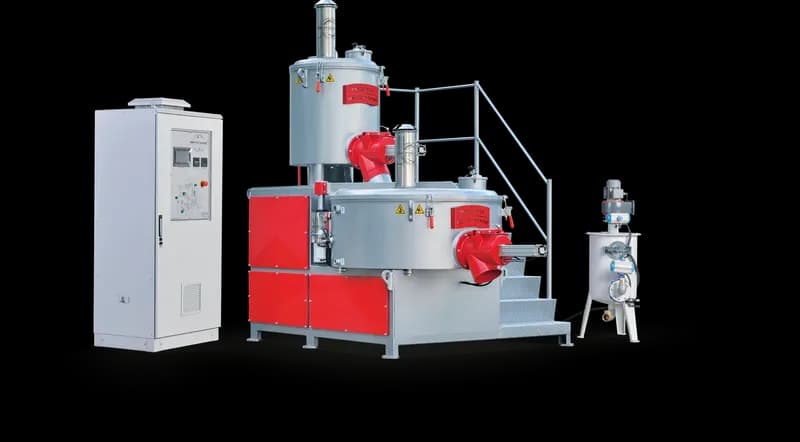
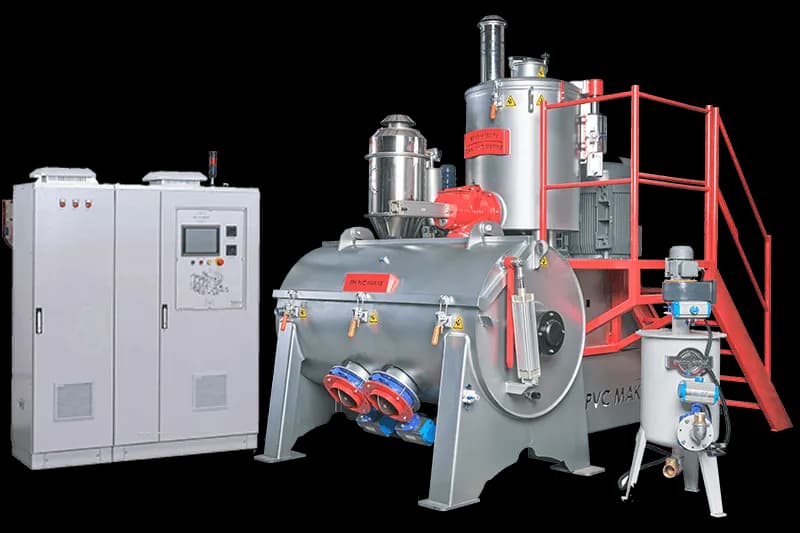
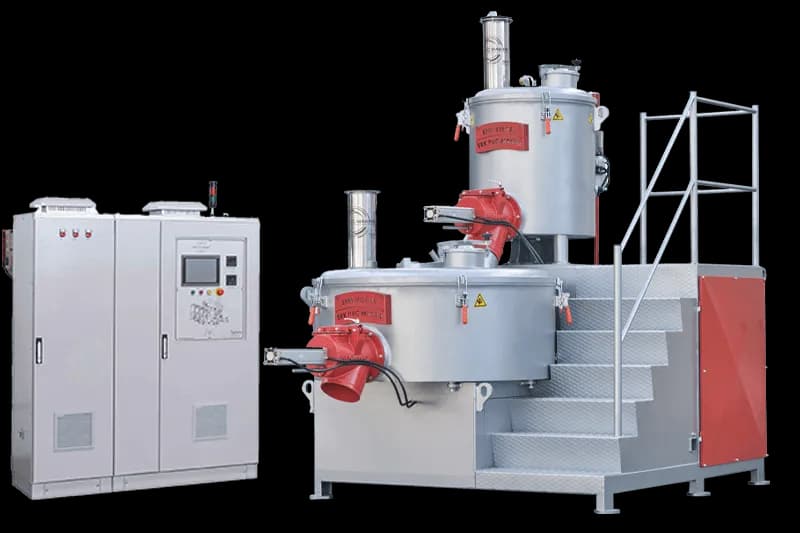
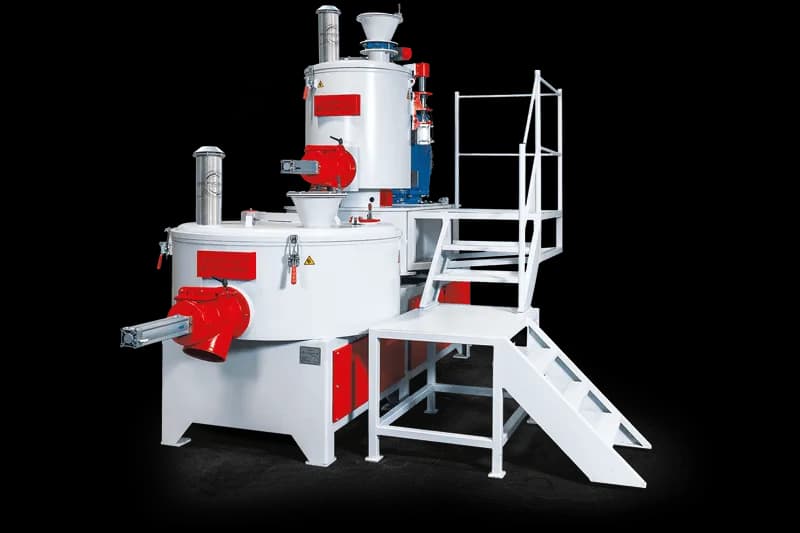
Pros: capacity and impeller are chosen for your recipe; the mixer is designed together with dosing, moisture extraction and feeding; it comes with current documentation, installation, commissioning, operator training and spare parts support. As an example, Erk's EPM-H horizontal hot-cold mixer series runs 150–500 kg per batch at 4–6 batches per hour, and the EPM-V vertical series 100–200 kg per batch at 4–6 batches per hour. Real hourly output depends on the formulation and should be treated as an approximate range.
Cons: the initial investment is higher, and building and delivering the machine takes time. For a short-term or uncertain capacity need, a new line is not always the most sensible choice.
Which option fits which situation?
Situation | Usually the better fit |
|---|---|
Main production line, high and continuous output | New |
Backup line or temporary capacity | Used is worth considering |
Highly filled, abrasive recipes | New or thoroughly refurbished |
Fully automated line integration | New |
Tight budget, machine with known history | Used can make sense |
Making the decision
Start with your real requirement: hourly dry blend consumption, recipe type and future extruder plans. Then compare the full cost of the used candidate with a new machine of the same scope. We explain what drives the price of a new mixer in our PVC mixer price guide.
Whichever route you take, replacing worn blades on time is the foundation of blend quality. Original mixer blades for Erk mixers are supplied from stock.
If you would like a like-for-like comparison with a new mixer, share your recipe and capacity needs and we will prepare a clearly scoped quotation.
Frequently Asked Questions
Is buying a used PVC mixer a good idea?
It can be, for a machine with a documented history, the right capacity and the chance to test it under load. Decide on total cost, including refurbishment, adaptation and downtime, not on purchase price alone.
What should I check first on a used mixer?
Impeller and blade wear, the vessel wall, bearings, the discharge valve and the cooler jacket are the priorities. The most valuable test is running the machine under load with a real recipe.
What are the hidden costs of a used mixer?
Dismantling and transport, replacing wear parts, updating panel and sensors, adapting it to your line, commissioning, and lost production if something fails.
Will the previous owner’s impeller suit my recipe?
Not necessarily. Rigid and plasticised PVC use different blade geometries, and an impeller chosen for another recipe can lengthen heating time and reduce blend quality.
What drives the price of a new PVC mixer?
Batch capacity, motor power, materials, automation level and any dosing, moisture extraction and feeding equipment in scope. Request a quote for current pricing.
