

Erk PVC Makine engineering teamUpdated:
What is metallic bonding in powder coating?
Bonding fixes metallic and pearlescent pigment to powder coating particles at a controlled temperature. How it differs from dry blending, how the process runs, the faults to avoid and where it fits in the line.

Contents9
What is metallic bonding?
Metallic bonding is a mixing process in which aluminium, bronze or pearl-effect pigment flakes are physically attached to powder coating particles whose surface has been softened slightly at a controlled temperature. The bonded pigment travels with its particle during application, so the metallic effect stays more consistent from part to part and reclaimed powder can be reused.
Bonding is not a chemical reaction. It is a physical, heat-assisted adhesion between pigment and particle, which is why the result depends so heavily on how precisely temperature, agitator speed and time are controlled.
Why the pigment goes in after grinding
Powder coating is made by melt-mixing a premix of resin and hardener, pigments, fillers and additives in an extruder, cooling it and grinding it into a fine powder. Metallic and pearlescent pigments stay out of these steps: the shear in the extruder and the impact in the mill break the thin flakes that create the effect and kill the sparkle. The effect pigment is therefore added to the base powder after grinding and classifying.
At that point there are two options: simply mix the pigment into the base powder (dry blending), or bond it to the particles.
The problem with dry blending: separation
When pigment is only dry blended into the powder, flakes and coating particles stay independent. In electrostatic spraying they charge differently and reach the part in different proportions. The consequences are familiar to every applicator:
- Colour and gloss variation from gun to gun and across a single part, even within one batch.
- Reclaimed powder from the booth has a shifted pigment ratio and no longer matches.
- Results become even less predictable as spray settings, distance and booth conditions change.
Note: in the PVC industry "dry blend" means something else: the free-flowing compound of resin and additives prepared in a hot-cold mixer. See what is PVC dry blend for that topic.
How bonding is done
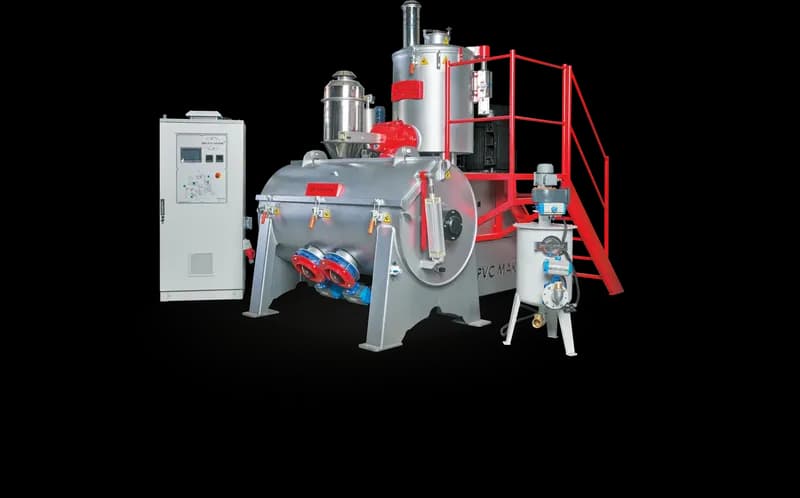
Bonding runs batch by batch in a mixer designed with controlled heating and cooling. The general sequence is:
- Charging: the base powder and effect pigment are weighed to the recipe and loaded into the mixer.
- Controlled heating: the agitator keeps the powder moving while the temperature is raised gradually towards the resin's softening range. That range differs for polyester, epoxy and hybrid systems.
- Bonding: holding the temperature in the target window, the flakes adhere to the softened particle surfaces. Agitator speed is set so the flakes are not broken.
- Cooling: once bonding is complete, the batch is cooled quickly to lock the bond before particles stick together.
- Sieving: the cooled product passes a sieve to remove lumps and oversize particles before packing.
How the end point is determined, for example by temperature and time, is agreed per recipe and production target.
Dry blending vs bonding
| Dry blending | Bonding |
|---|---|---|
Process | Simple mixing | Controlled heating, bonding, cooling |
Pigment and particle | Separate | Attached |
Effect on the line | Variable | More stable |
Reclaimed powder | Usually a different effect | Reusable |
Process risk | Low | Lumps if temperature is wrong |
Dry blending is fast and cheap, and can be enough for undemanding or short-run applications. For architectural and decorative metallic ranges, bonding is the method widely preferred across the industry.
Common bonding faults
- Under-bonding: if the temperature is too low or the hold too short, part of the pigment stays free and the product behaves like a dry blend.
- Overheating and agglomeration: above the softening window, particles fuse into lumps and the batch can be lost.
- Flake damage: too much speed or time breaks the flakes and dulls the effect.
- Slow cooling: if cooling is delayed after bonding, particles keep sticking together.
- Batch-to-batch drift: if each batch does not follow the same temperature profile, colour consistency suffers.
The common cure is a repeatable temperature and speed profile for every batch. An optional frequency inverter (FV) drive helps match agitator speed to the sensitivity of the pigment.
How bonding quality is judged
The way to tell good bonded product from poor is to look at it under conditions close to real application. Producers generally check:
- Free pigment: the less unbonded pigment, the less separation on the line.
- Lumps and oversize: how much material stays on the sieve shows how well temperature was controlled.
- Spray trials: comparing the effect at different gun settings and on different part geometries.
- Reclaim test: whether powder collected from the booth gives the same effect as fresh product.
- Batch consistency: comparing colour and gloss of samples from different batches.
These results feed straight back into the temperature window, agitator speed and time settings.
Starting a new formulation
Before moving a new pigment or base powder into production, a small-scale trial is the safest way to find the right temperature window and time. A laboratory mixer can be used for this kind of R&D work. Watching free pigment, lump formation and the effect of reclaimed powder during trials helps fix the production settings.
Where bonding sits in the line
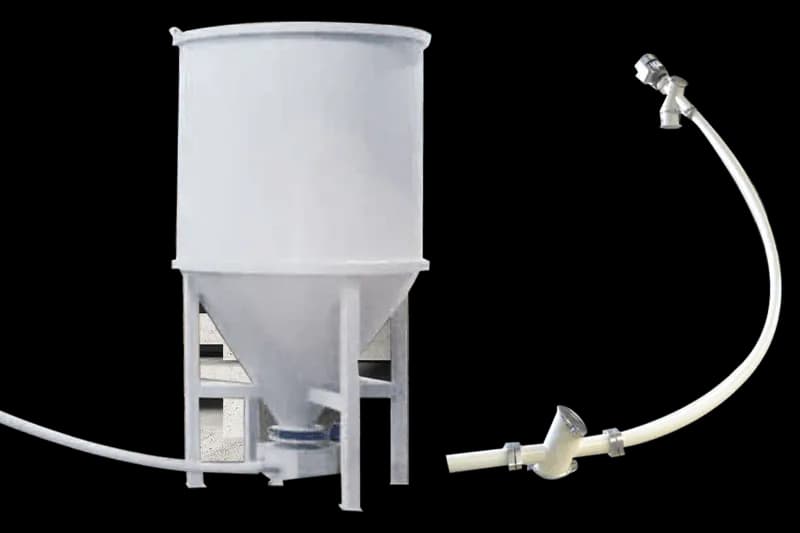
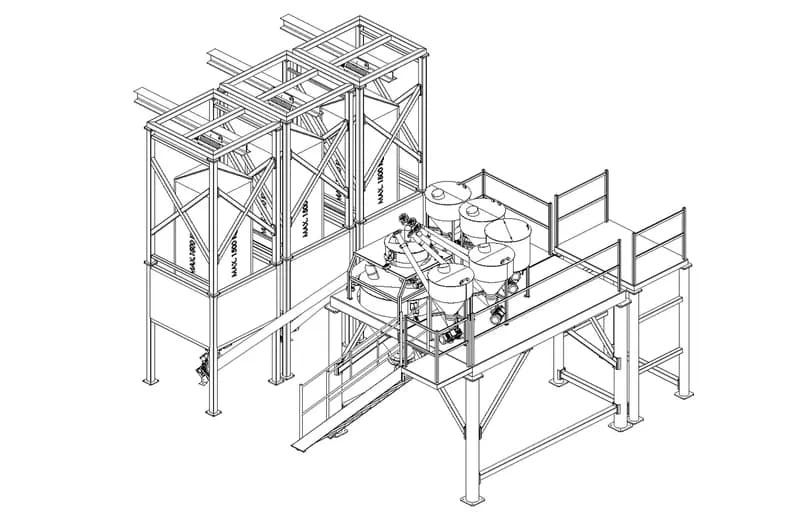
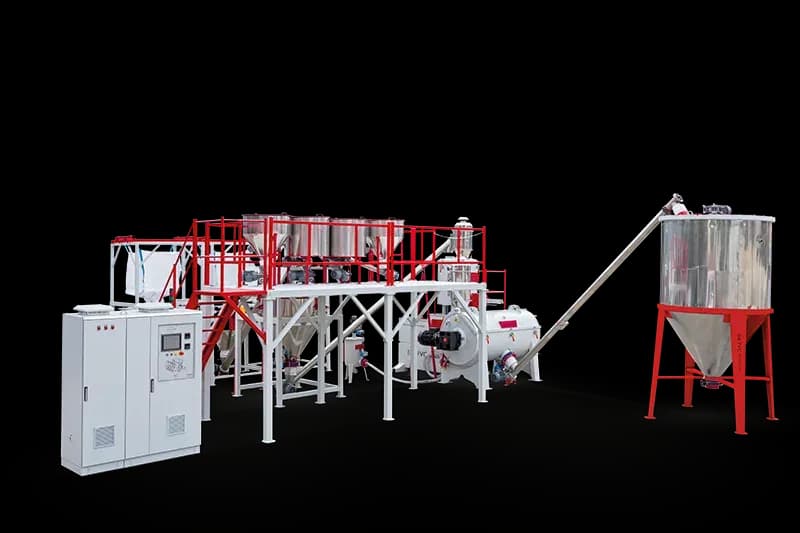
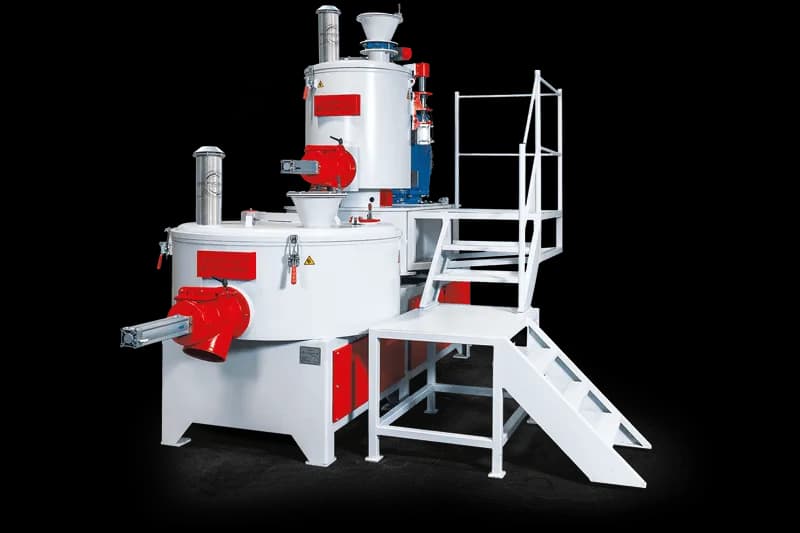
Bonding is the step after grinding and classifying. A typical finishing line consists of weighing base powder and pigment, the metallic bonding mixer, a powder sieve and dust-free transfer to the packing hopper. See our powder coating industry page for the full line and what Erk supplies.
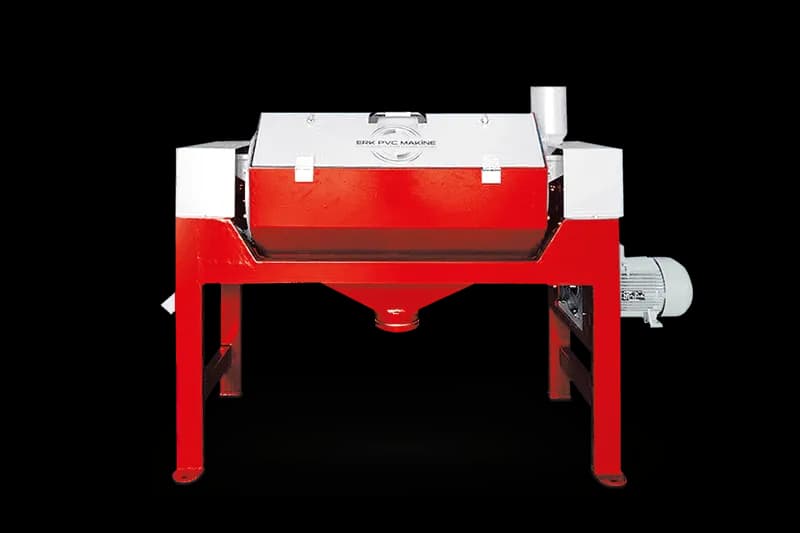
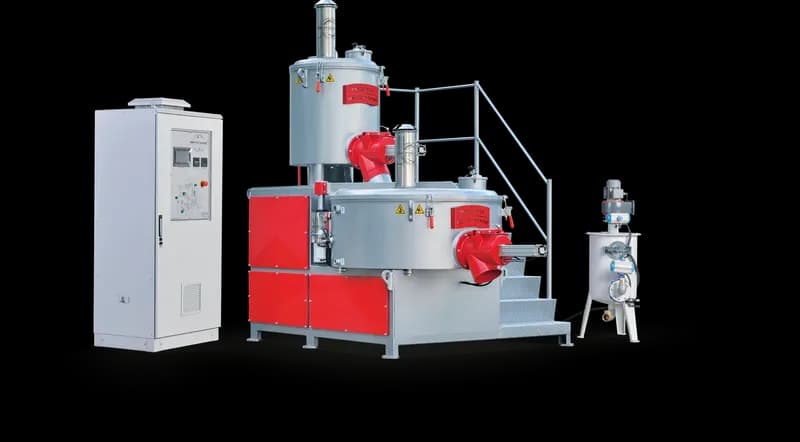
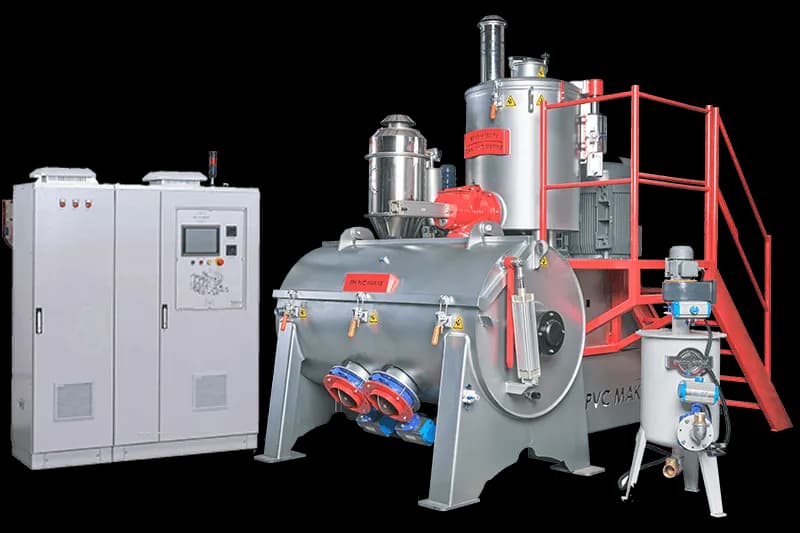
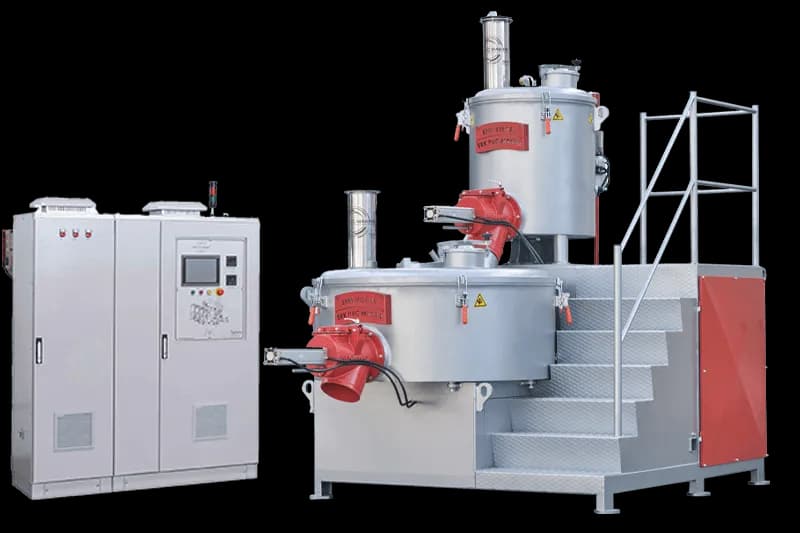
Erk PVC Makine does not build powder coating extruders, mills, classifiers or premix mixers. We build the bonding mixer, sieving, flexible screw feeding and lab-scale mixing equipment at our factory in Ergene, Tekirdağ, and provide installation, commissioning, operator training, remote support and spare parts.
Share your base powder, pigment and target output, and we will prepare a quotation for your bonding mixer.
Frequently Asked Questions
What is metallic bonding?
Metallic bonding physically attaches aluminium, bronze or pearl-effect pigment flakes to the surface of powder coating particles at a controlled temperature. The bonded pigment travels with its particle, so the effect stays more consistent on the line.
What is the difference between bonding and dry blending?
In dry blending, pigment and powder particles stay separate and can split during electrostatic spraying. Bonding attaches the pigment to the particle, giving a more stable colour and reusable reclaim.
Why is metallic pigment not added in the extruder?
Extruder shear and mill impact break the thin pigment flakes that create the effect and destroy the sparkle. That is why effect pigments are added after grinding.
What causes lumps during bonding?
If the temperature goes beyond the resin softening window, or cooling is delayed, powder particles stick together. Precise, repeatable heating and fast cooling reduce this risk.
Can pearlescent pigments be bonded too?
Yes. Bonding is used for pearlescent effect pigments as well as aluminium and bronze metallics. Agitator speed is set so that delicate flakes are not damaged.