

Mixing and Dosing for PVC Cable Compounds
From plasticiser dosing to granule sieving: the equipment in front of your cable compound extruder.

Erk PVC Makine designs and installs mixing, dosing and feeding systems for PVC cable compound production. The compounding extruder, pelletiser and cable extrusion line come from other suppliers; we supply the dosing, hot-cold mixing, moisture extraction and feeding steps in front of them, plus granule sieving after the pelletiser, and we work with any extruder brand.
Cable compound blend requirements
Cable insulation and sheathing are made from soft (plasticised) PVC compound. A typical cable formulation combines PVC resin with plasticiser, heat stabiliser (in liquid or powder form), filler, lubricants and, where required, flame retardants or pigments. The exact make-up depends on whether you produce insulation, sheathing or bedding compound and on the standard you work to.
The key difference from rigid PVC is that a large share of the blend is liquid. The plasticiser has to be fully absorbed by the resin particles. If absorption is incomplete, the blend stays wet and sticky, bridges in silos and conveyors and causes uneven feeding at the compounding extruder. Accurate liquid weighing, adding liquids at the right moment and cooling the batch into a dry, free-flowing dry blend are therefore what make or break a cable compound line.
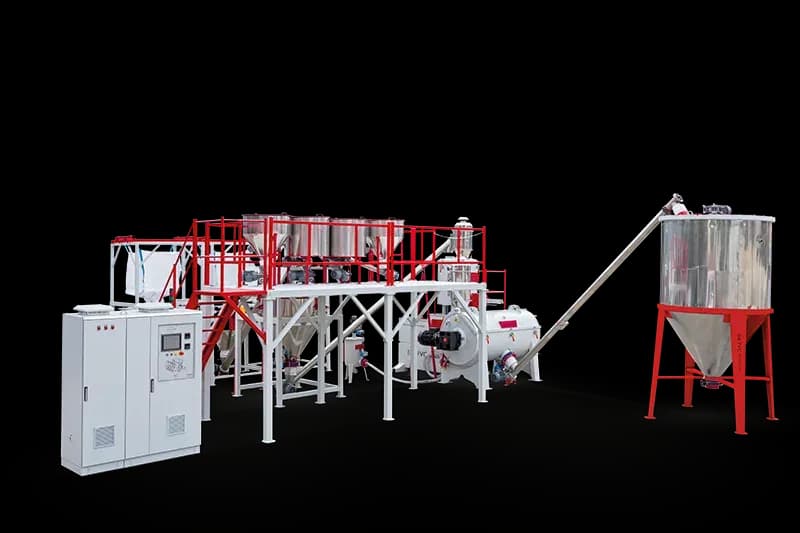
Recommended line steps
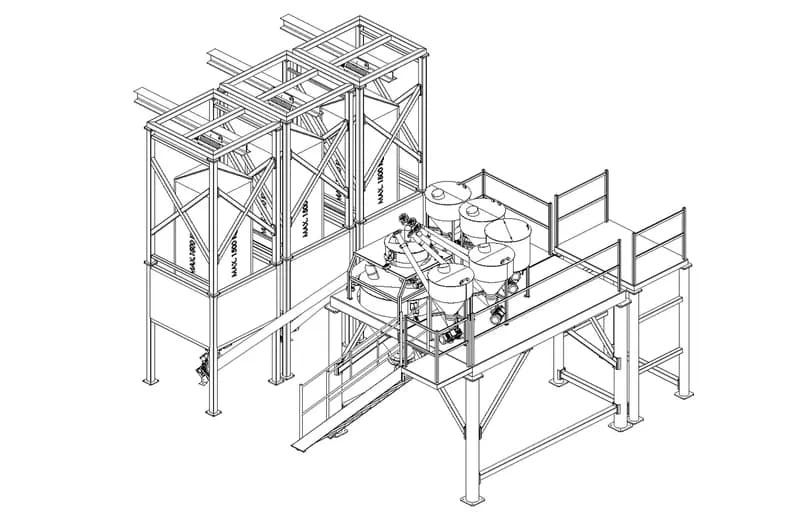
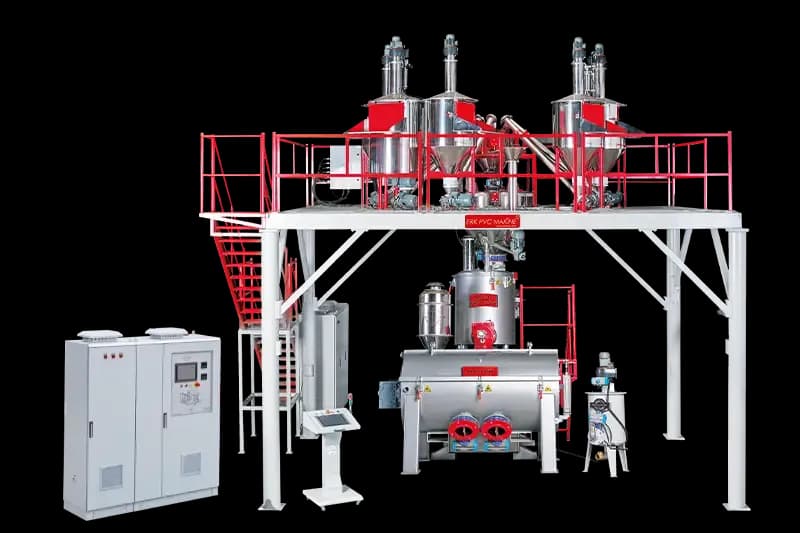
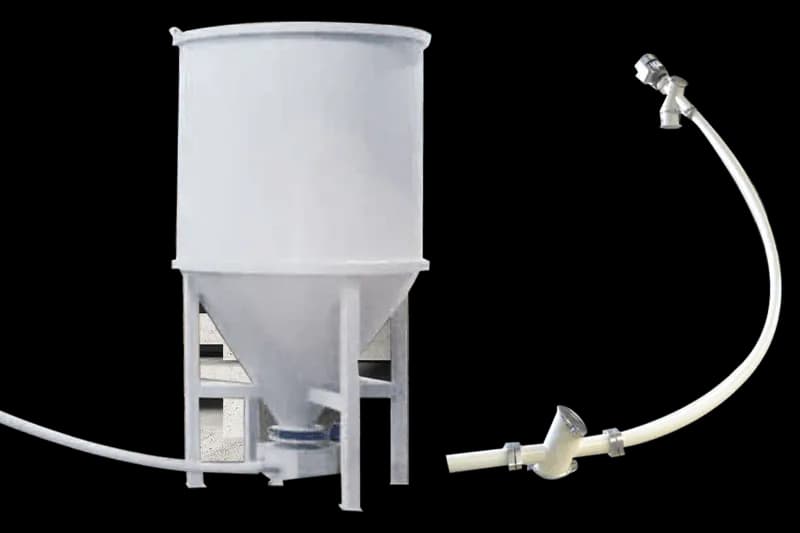
- Powder dosing: PVC resin, filler and powder additives are weighed to the recipe by the automatic powder dosing system.
- Liquid dosing: Plasticisers and liquid stabilisers are weighed gravimetrically by the automatic liquid dosing system, managed from the same recipe as powder dosing.
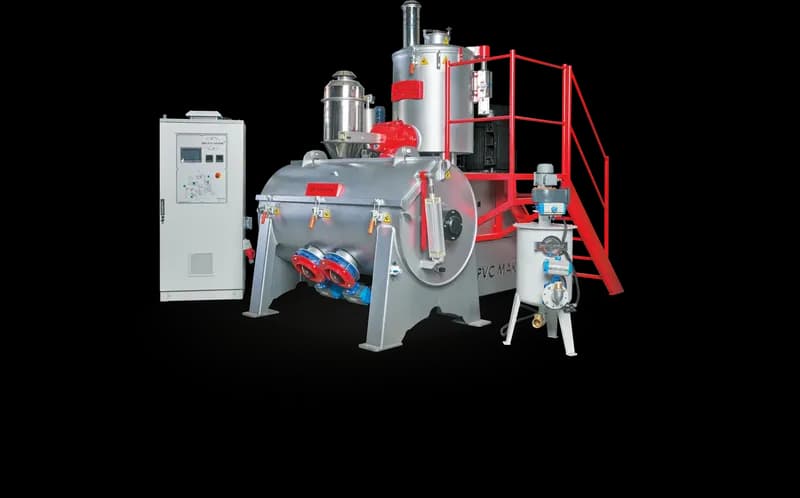
- Hot-cold mixing: In the heating mixer the blend warms up through friction — typically to about 110–125 °C — and the plasticiser is absorbed. The cooler then brings it down to a typical 40–50 °C.
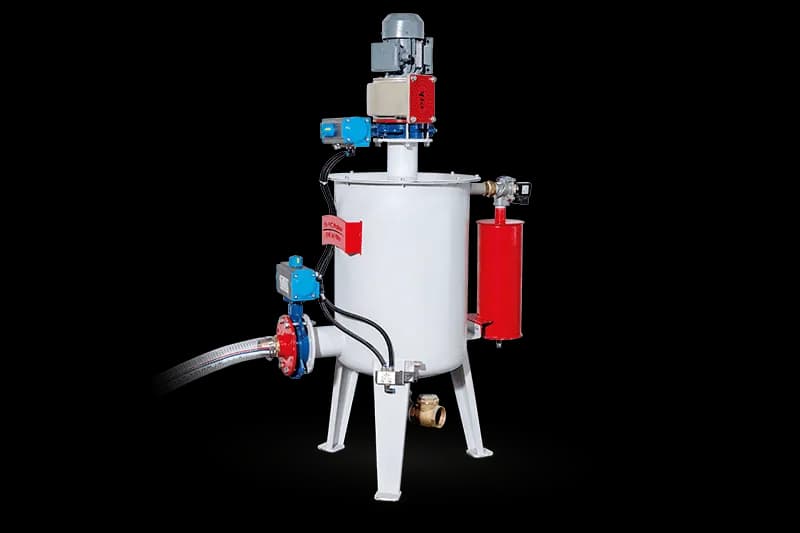
- Moisture extraction: Moisture released in the heating mixer is removed by the EPM-JET jet filter and dehumidifier.
- Feeding: A flexible screw conveyor carries the dry blend, enclosed and dust-free, to the compounding extruder hopper or an intermediate silo.
- Granule sieving: Compound from the pelletiser passes a granule sieve that removes oversize and fines before packing or the cable line.
Recommended equipment
Line step | Erk equipment | Why |
|---|---|---|
Powder weighing | The same recipe for resin, filler and powder additives in every batch | |
Liquid weighing | Plasticisers and liquid stabilisers weighed by mass | |
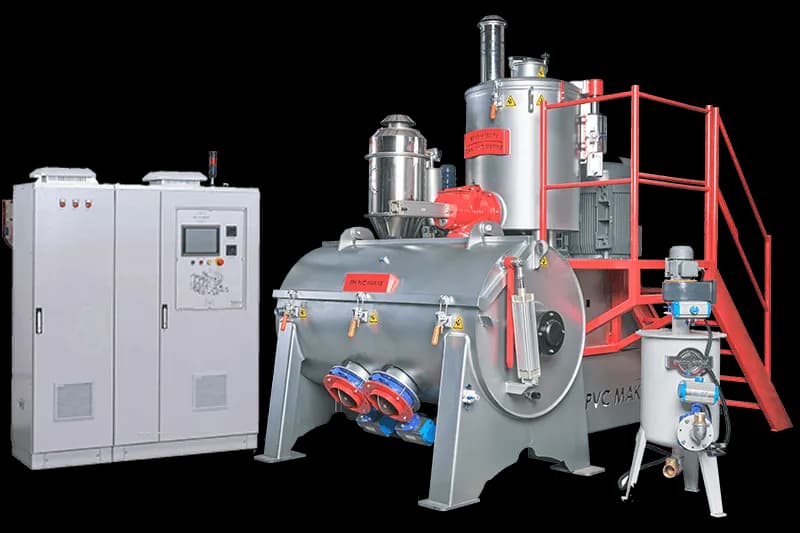
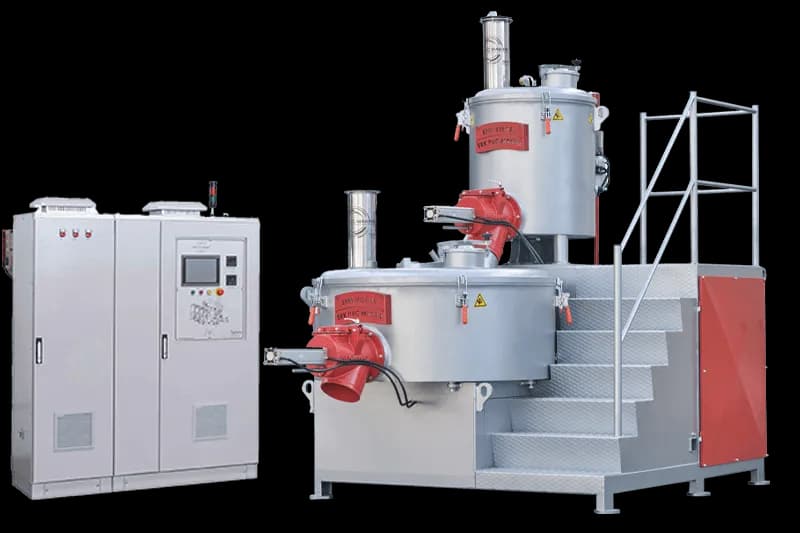
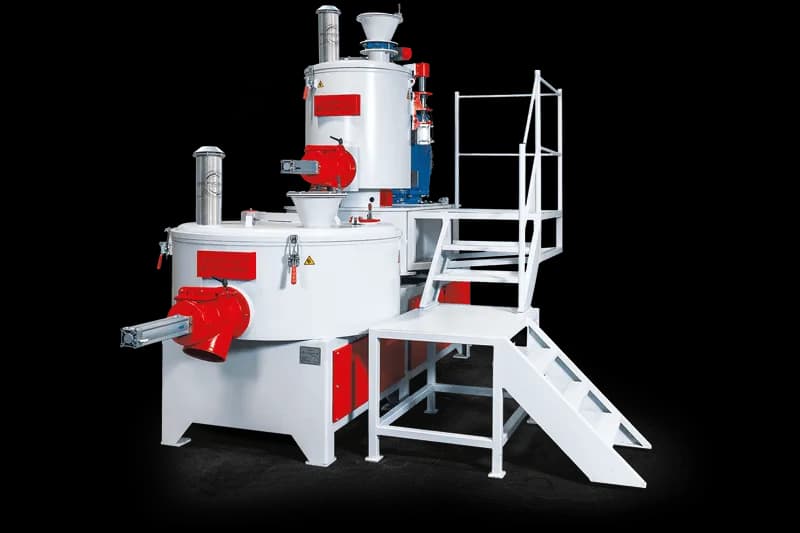
High-output mixing | 150–500 kg per batch, 4–6 batches per hour | |
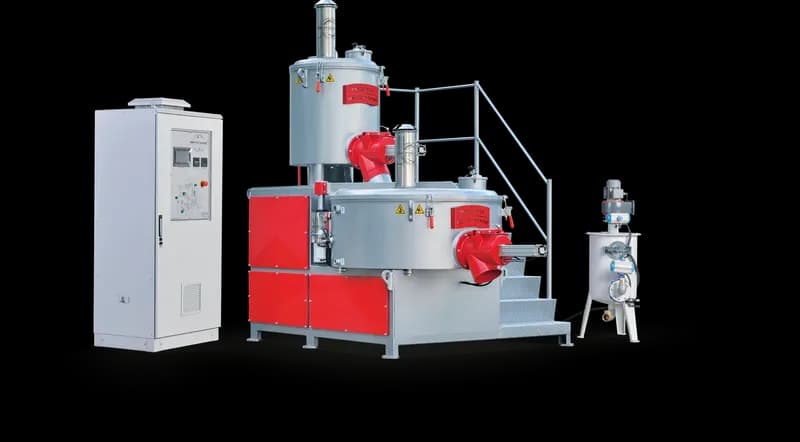
Compact mixing | 100–200 kg per batch, 4–6 batches per hour | |
Moisture extraction | Removes moisture from the heating mixer | |
Extruder feeding | Enclosed, dust-free conveying | |
Granule control | Separates oversize and fines | |
Formulation work | New recipe trials and R&D |
In both mixer series the impeller geometry is selected for plasticised PVC, and an optional frequency inverter (FV) lets you match speed to each recipe.
Quality factors
- Plasticiser absorption: adding liquids in the right order and at the right temperature is the precondition for a dry, free-flowing blend.
- Temperature control: discharge temperature should be the same in every batch; insufficient cooling can make the blend lump in the silo.
- Moisture: moisture left in the blend comes back as defects in the compound and on the cable surface.
- Homogeneity: even distribution of stabiliser and flame retardant drives consistent electrical and mechanical properties.
- Contamination and granule size: enclosed conveying and granule sieving keep foreign matter and off-size pellets out of the line.
Sizing example
Example: Assume a hypothetical cable compound plant with 2 compounding extruders, each consuming about 300 kg/h of plasticised dry blend. The figures are assumptions, not customer data.
- Total consumption: 2 × 300 = 600 kg/h
- With a 20% margin: about 720 kg/h
- Batch size: at 4 batches/h, about 180 kg/batch
This falls on the top model of the EPM-V vertical series (100–200 kg/batch, 4–6 batches/h, about 400–1200 kg/h): the EPM-V200 gives about 800 kg/h at 4 batches per hour. Because plasticiser absorption can lengthen the cycle, it is prudent to plan for fewer batches per hour and to also consider the EPM-H horizontal series (150–500 kg/batch, about 600–3000 kg/h). Alongside the mixer, plan for powder and liquid dosing, EPM-JET, flexcon screw conveying and a granule sieve.
To run the numbers for your own plant, use the capacity calculator or send us your data via the quote page.
What Erk supplies and what other suppliers supply
Erk PVC Makine does not build extruders. The compounding extruder, pelletiser and cable extrusion line come from the supplier of your choice. We supply the dosing, mixing, moisture extraction, feeding and sieving equipment — manufactured at our factory in Ergene, Tekirdağ (head office in Istanbul) — together with installation, commissioning, operator training, remote support and spare parts. Our line connects to your existing or new extruder, whatever the brand.
For similar soft and highly filled formulations, see PVC flooring; for colour concentrates, see masterbatch.
Request a line layout
Send us your formulation and target hourly output, and we will send you a line layout with an equipment list. To put your line together step by step, you can also use our line configurator.
To receive a line layout and quotation for your cable compound line, request a quote.
Products


Frequently Asked Questions
Which mixer size do I need for my cable compound output?
The EPM-H horizontal series handles 150–500 kg per batch at 4–6 batches per hour; the EPM-V vertical series handles 100–200 kg per batch at 4–6 batches per hour. Batch size multiplied by batches per hour should exceed what your compounding extruders consume. Highly plasticised recipes can lengthen the cycle, so we size the mixer together with your formulation.
What is a typical cable PVC formulation and dosing order?
A typical formulation contains PVC resin, plasticiser, heat stabiliser, filler, lubricants and, where needed, flame retardant and pigment. Resin and powder additives usually go into the heating mixer first, plasticisers and liquid stabilisers are added at the right stage as the blend heats up, and filler is added once absorption has progressed. The exact order is set with you during commissioning.
Can your line feed my existing compounding extruder (any brand)?
Yes. Erk PVC Makine does not build extruders, so our dosing, mixing and feeding line is engineered to connect to any brand of compounding extruder or an intermediate silo. The feed point, hopper height and layout are planned around your existing plant.
How do you speed up plasticiser absorption and keep the soft PVC blend dry and free-flowing?
We weigh the plasticiser gravimetrically and add it to the heating mixer at the right temperature and in the right order. An impeller geometry selected for plasticised PVC supports frictional heating and absorption. Once absorption is complete, the cooler brings the blend down to a typical 40–50 °C, giving a free-flowing dry blend that does not lump in silos or conveyors.
Do you supply the full line from silo to extruder hopper?
Yes. We supply powder and liquid dosing, hot-cold mixing, moisture extraction, extruder feeding and granule sieving after the pelletiser from one source, and we handle installation and commissioning. The extruder and pelletiser come from the supplier you choose.
Request a Quote
Fill in the form and our sales engineers will get back to you within one business day.