

Mixing and Dosing Systems for PVC Pipe Production
Gravimetric dosing, turbo mixing and extruder feeding for high-filler PVC pipe dry blend.
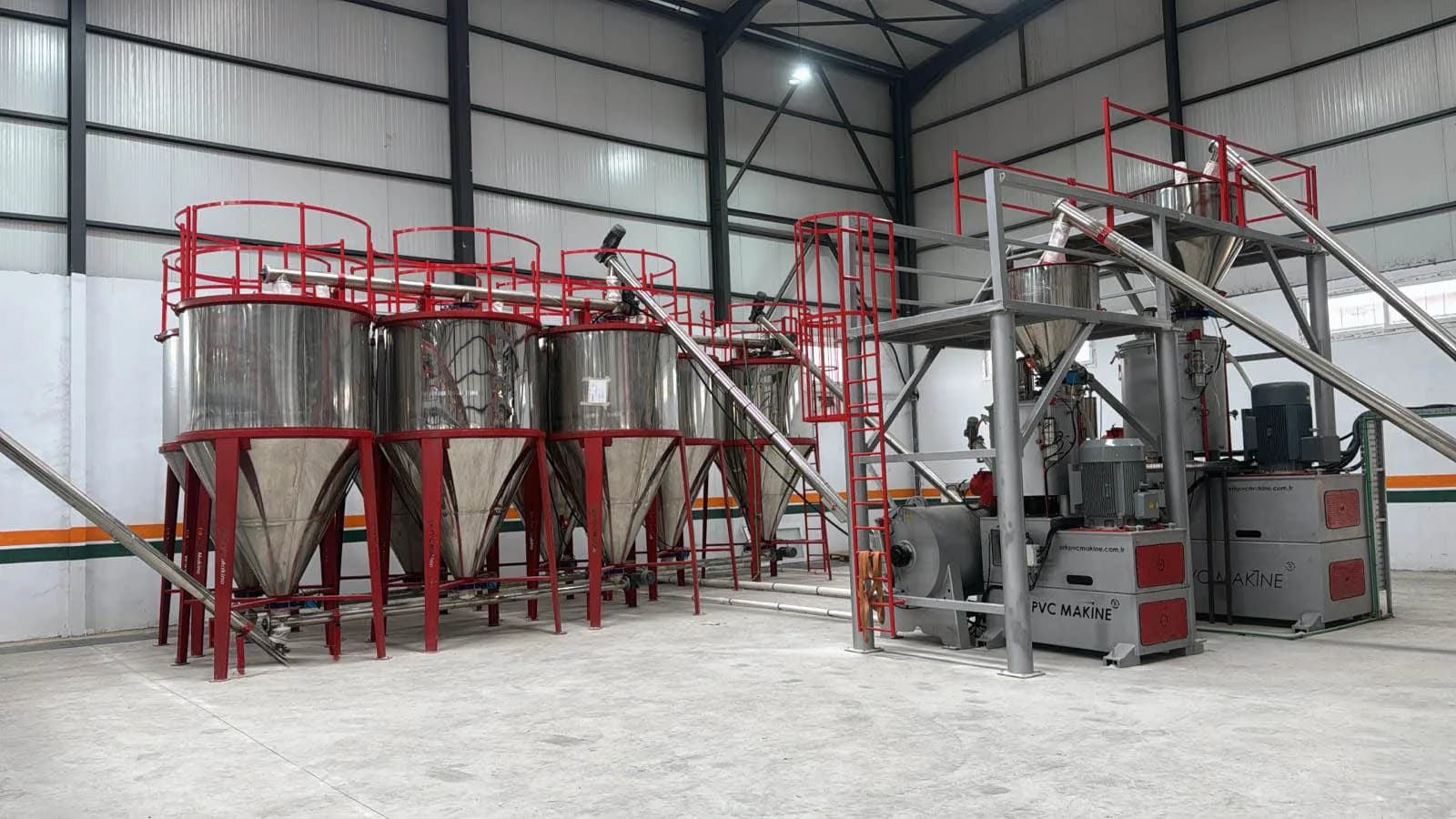
PVC pipe dry blend requirements
From pressure water pipe to sewer and drainage pipe, PVC pipe is one of the highest-tonnage rigid PVC applications. Pipe lines run continuously for long periods, so the extruder needs the same dry blend hour after hour. That is where Erk PVC Makine comes in: we build mixing, dosing and feeding systems for PVC pipe production. The extruder comes from your extrusion-line supplier.
A typical pipe formulation contains:
- PVC resin (suspension grade)
- Heat stabiliser
- Calcium carbonate (CaCO₃) filler, at high loadings especially in non-pressure pipe
- Lubricants and processing aid
- Impact modifier in some grades
- TiO₂ and pigments for colours such as grey or orange
Pressure and non-pressure pipe formulations differ markedly. As filler loading rises the blend gets heavier and cycle time and motor load change, which directly affects mixer selection.
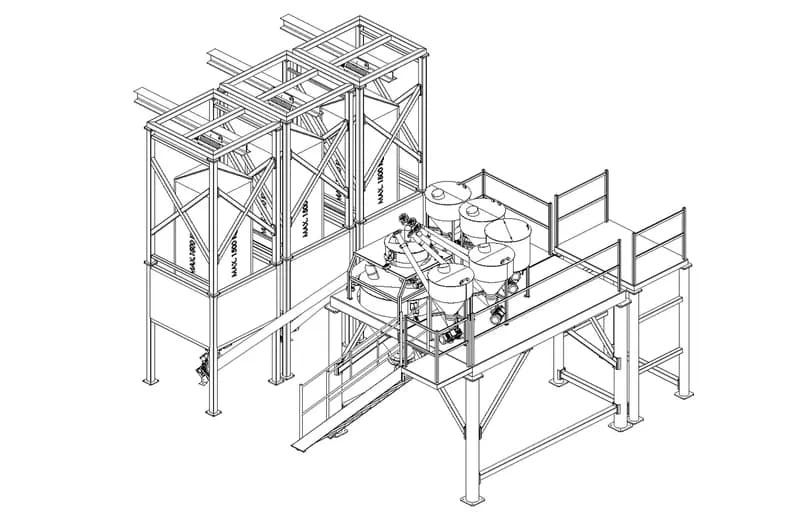
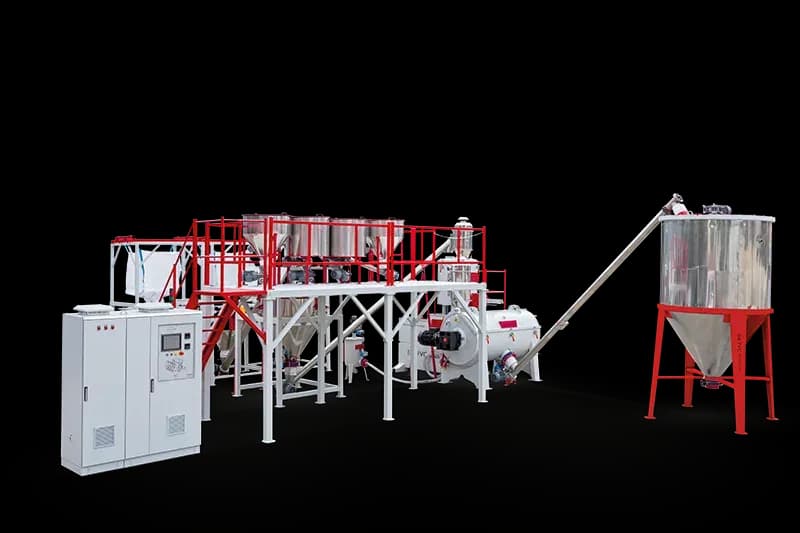
Recommended line: from dosing to extruder feeding
- Dosing: resin, calcium carbonate and additives are weighed gravimetrically by the automatic powder dosing system. High-tonnage filler and small-quantity stabiliser are weighed accurately in the same recipe, without relying on the operator.
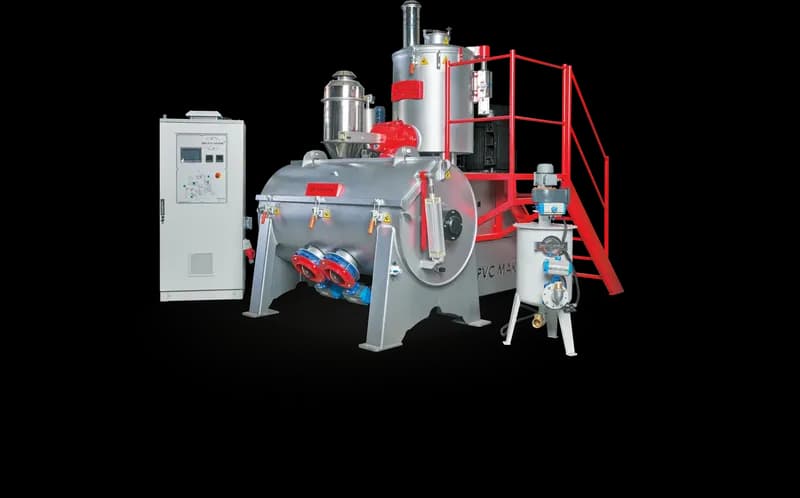
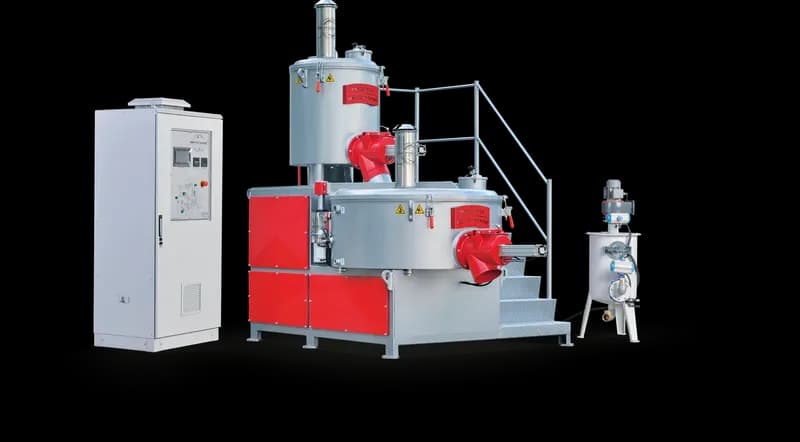
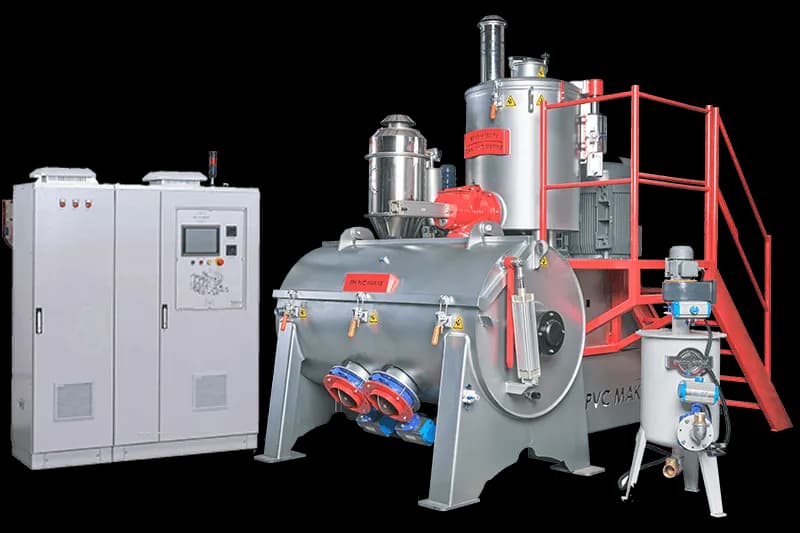
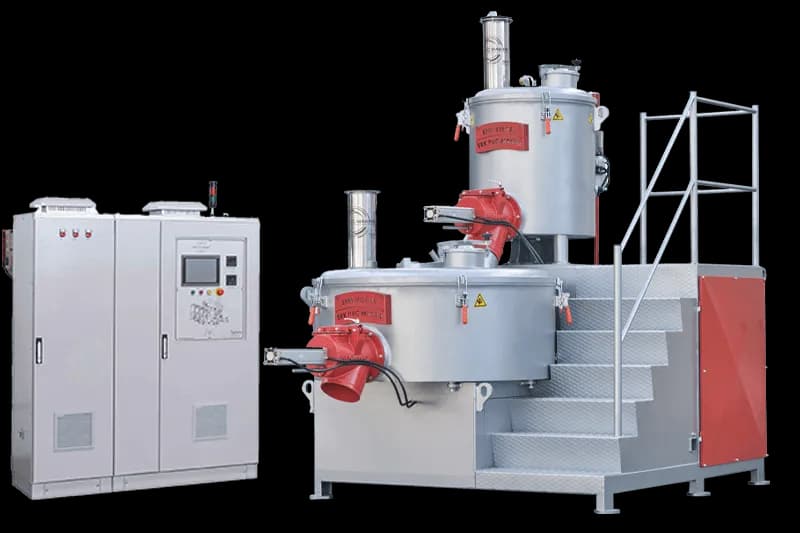
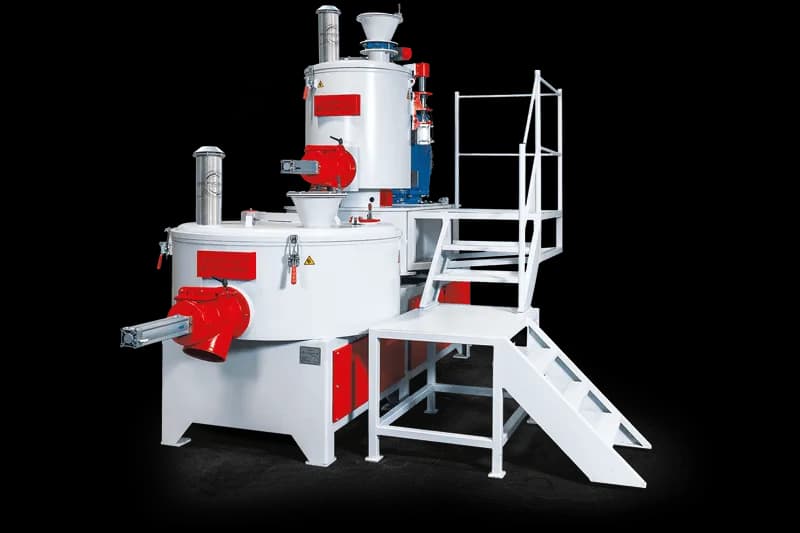
- Hot-cold mixing: the heating mixer typically takes the blend to 110–125 °C and the cooler brings it down to about 40–50 °C. Choose the EPM-H horizontal turbo mixer for large pipe lines or the EPM-V vertical turbo mixer for mid-sized lines.
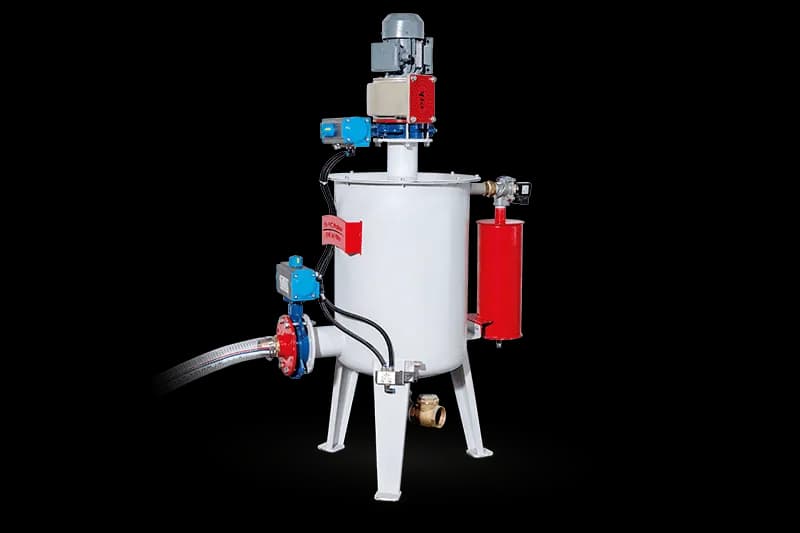
- Moisture extraction: the EPM-JET filter and dehumidifier removes the steam and moisture released during heating.
- Sieving: the powder sieve separates agglomerates and foreign matter before extrusion.
- Conveying and feeding: the flexcon flexible screw conveyor gives dust-free, loss-free transfer, with wear-resistant alloys for abrasive, highly filled blends.
Recommended equipment
Line step | Erk equipment | Why |
|---|---|---|
Weighing | Weighs large and small components accurately in one recipe | |
Mixing (high output) | 150–500 kg per batch, 4–6 batches per hour; 450–1250 L heater | |
Mixing (medium output) | 100–200 kg per batch, 4–6 batches per hour | |
Moisture extraction | Reduces agglomeration and surface defects | |
Sieving | Removes lumps and foreign matter | |
Conveying / feeding | Wear-resistant, dust-free transfer of abrasive powders | |
Spare parts | Original blades from stock for filler-driven wear |
The mixer must deliver more than the combined hourly consumption of every extruder it feeds. Highly filled blends are denser, so batch weight and bowl volume are assessed together.
Quality factors in pipe production
- Homogeneity: uneven filler distribution shows up as variation in wall thickness and mechanical strength.
- Temperature: the same discharge temperature every batch is a precondition for consistent gelation in the extruder. We choose the impeller geometry for rigid PVC based on our field experience.
- Moisture: moisture turns into bubbles and roughness on the inner and outer pipe surface.
- Contamination: foreign matter can create weak points, which matters most in pressure pipe.
- Bulk density: stable bulk density lets the extruder run at constant output and weight per metre.
Sizing example
Example: Assume a hypothetical pipe plant with 3 extruders, each consuming an average of 350 kg/h of dry blend. These figures are illustrative assumptions, not customer data.
- Total consumption: 3 × 350 = 1050 kg/h
- With a 15% margin: about 1210 kg/h
- Batch size: at 4–6 batches/h, about 200–300 kg/batch
This corresponds to a mid-size model in the EPM-H horizontal hot-cold series (150–500 kg/batch, about 600–3000 kg/h). A smaller plant with a single extruder needing about 300 kg/h may be served by the EPM-V vertical series (100–200 kg/batch, 4–6 batches/h, about 400–1200 kg/h). On a pipe line the mixer is usually combined with automatic powder dosing, EPM-JET, a powder sieve and flexcon screw conveying.
To run the numbers for your own plant, use the capacity calculator or send us your data via the quote page.
Turnkey upstream line: who supplies what
Your extrusion-line supplier: the extruder, die, vacuum calibration and cooling tanks, haul-off, cutting and belling units.
Erk PVC Makine: everything in front of the extruder. Dosing, hot-cold mixer, moisture extraction, sieving, conveying and extruder hopper feeding, including installation, commissioning, operator training, remote support and spare parts. Our equipment is manufactured at our factory in Ergene, Tekirdağ (head office in Istanbul).
Our line can feed any brand of extruder. See the equivalent line for PVC profile production, or soft PVC applications on the cable compound page.
Request a line layout
Send us your pipe formulation and the hourly output of your extruders, and we will send you a line layout and equipment list. You can also define the line step by step in our line configurator.
For a line layout and a price for your pipe line, request a quote.
Products

Frequently Asked Questions
Which mixer size do I need for my pipe line?
The mixer's hourly output (batch size × batches per hour) must exceed the combined consumption of the extruders it feeds. The EPM-H horizontal series handles 150–500 kg per batch at 4–6 batches per hour; the EPM-V vertical series handles 100–200 kg per batch at 4–6 batches per hour. Because high-filler recipes are denser, we check bowl volume and motor rating against your formulation.
What is a typical PVC pipe formulation, and in what order should it be dosed?
A typical pipe formulation contains PVC resin, heat stabiliser, CaCO₃ filler, lubricants, processing aid and pigments, with impact modifier in some grades. Non-pressure pipe usually carries more filler. Addition order follows the recipe and your raw-material suppliers' recommendations, and we configure the automatic dosing system to match.
Can your line feed my existing extruder?
Yes. Because we do not build extruders, our line can feed any make of extruder. We engineer the hopper connection, conveying distance and control integration around your plant, and we can plan for several extruders to be fed from one mixing line.
How do you prevent sticking to the bowl wall and keep gelation consistent at high filler loadings?
Sticking usually comes from moisture, overheating and residue building up on the bowl wall. The EPM-JET dehumidifier draws off the steam produced during heating, which reduces agglomeration and wall build-up. Discharging every batch into the cooler at the same temperature gives the blend the same thermal history, so it gels consistently in the extruder. High filler accelerates blade wear, so we recommend checking blades against run hours; worn blades lengthen the cycle. We supply original blades from stock.
Do you supply the full line from raw-material intake to the extruder hopper?
Yes. With automatic powder and liquid dosing, a hot-cold turbo mixer, the EPM-JET dehumidifier, a powder sieve and flexcon conveying, we deliver the line in front of the extruder on a turnkey basis, including installation, commissioning, training, remote support and spare parts. The extruder and downstream equipment come from your extrusion-line supplier.
Request a Quote
Fill in the form and our sales engineers will get back to you within one business day.