

Mixers, Moisture Extraction and Dosing for WPC
The line that turns wood flour and PVC into a homogeneous, moisture-free blend before the extruder.
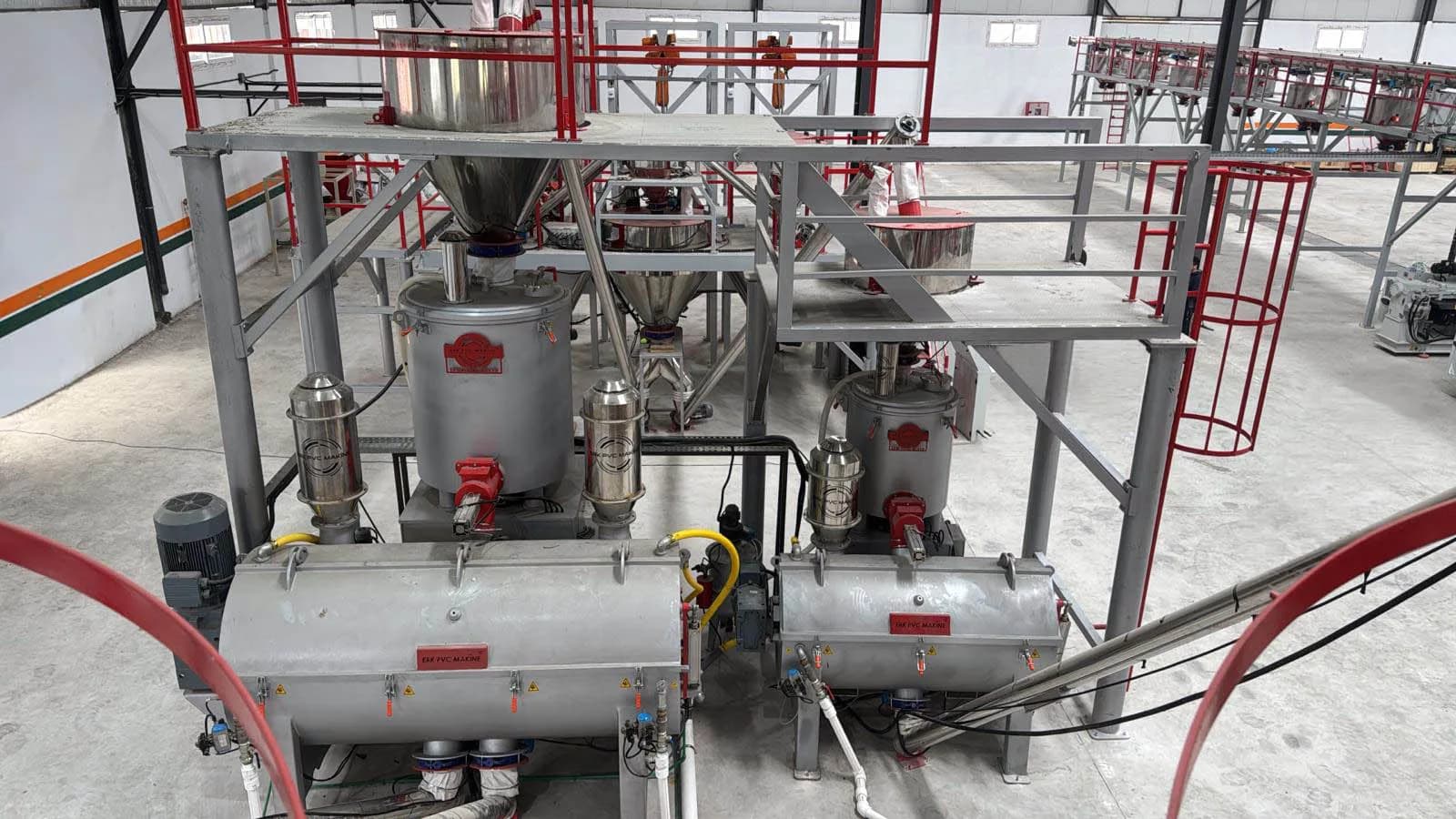
Erk PVC Makine designs and installs mixing, moisture extraction, dosing and feeding systems for WPC (wood-plastic composite) production. The WPC extruder, the wood flour dryer and the downstream equipment come from other suppliers; we supply the raw material preparation line in front of the extruder and work with any extruder brand.
Why is WPC blending demanding?
WPC is made of PVC resin, wood flour (wood fibre), stabilisers, lubricants, coupling agents and colour additives. Wood flour makes the blend different from an ordinary PVC dry blend:
- Moisture: wood flour carries moisture and picks it up from the air. As the temperature rises in the heating mixer, this moisture is released as vapour. If it stays in the vessel it falls back into the batch, causing lumps, gas bubbles in the extruder and surface defects.
- Low bulk density: wood flour is light and bulky. Mixer charging and dosing must be set by weight, not by volume.
- Dust: fine wood flour raises dust easily. Open conveying and manual feeding mean material loss as well as cleaning and safety problems.
- Segregation: components with very different densities can separate on long, open routes.
So the real job in a WPC line is to make sure that the blend entering the extruder has the same proportions in every batch, is homogeneous and free of moisture.
Recommended line steps
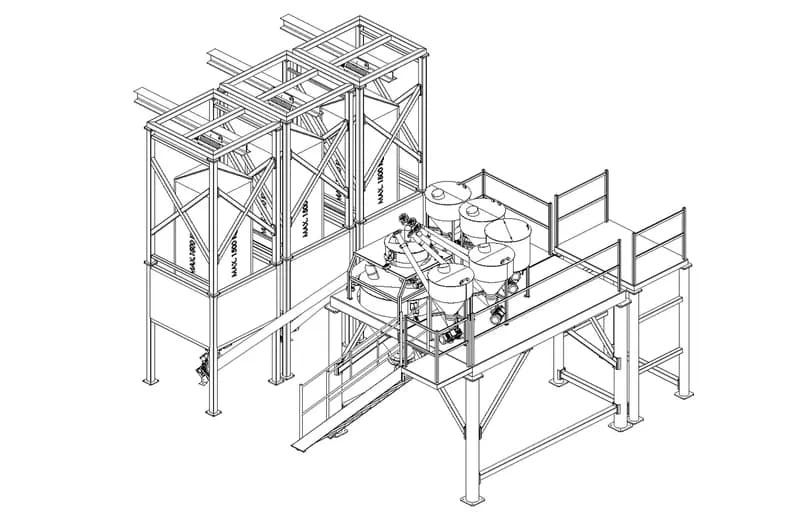
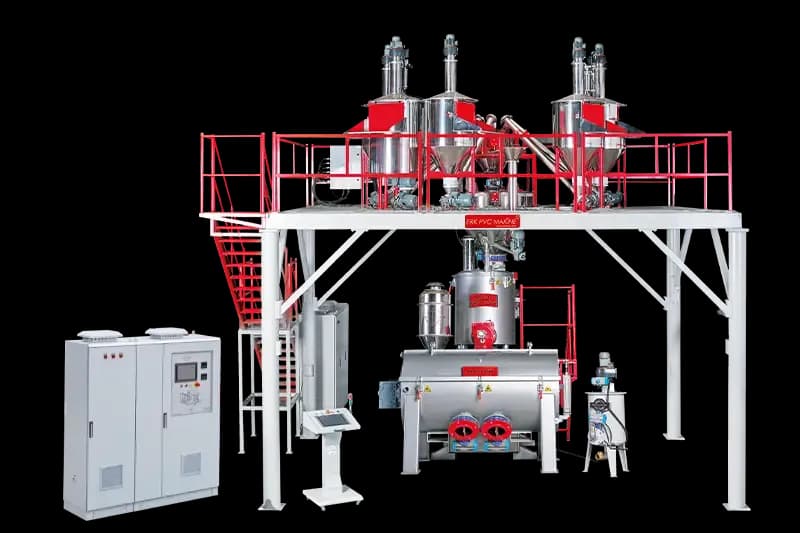
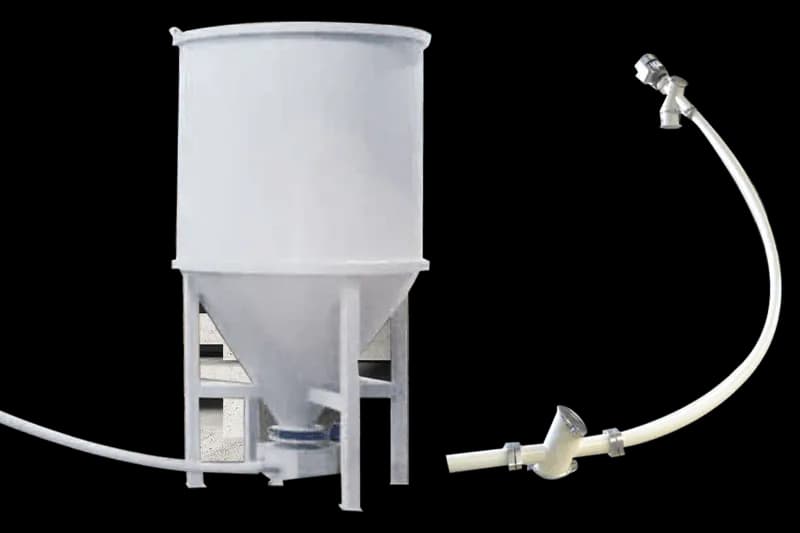
- Dosing: PVC resin, wood flour and powder additives are weighed to the recipe by automatic powder dosing.
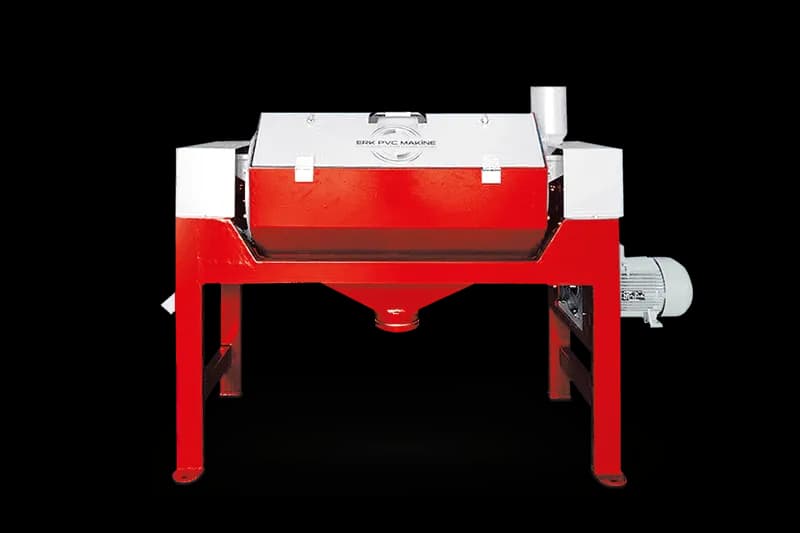
- Hot mixing: the heating turbo mixer warms the components by friction and spreads the additives over the resin and wood flour.
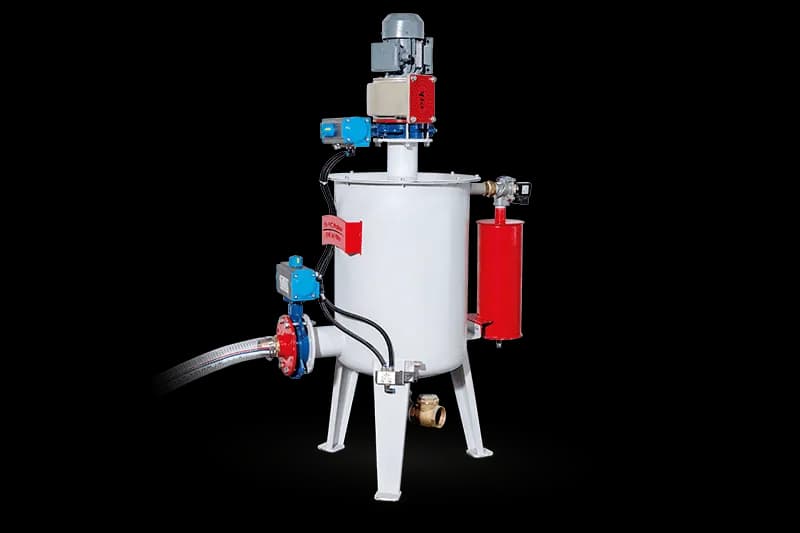
- Moisture extraction: the EPM-JET filter and dehumidifier draws off the vapour and dust released during heating while the mixer runs.
- Cooling: the blend cools down to storage temperature in the cooling mixer without lumping.
- Check screening: a powder sieve removes lumps and foreign matter before they reach the extruder.
- Feeding: a flexible screw conveyor carries the blend to the extruder hopper, closed and dust-free.
Recommended equipment
Step | Erk equipment | Role in WPC |
|---|---|---|
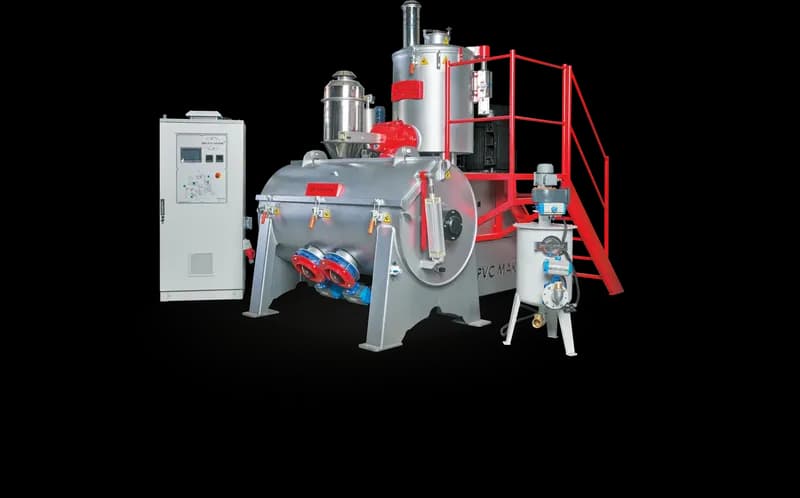
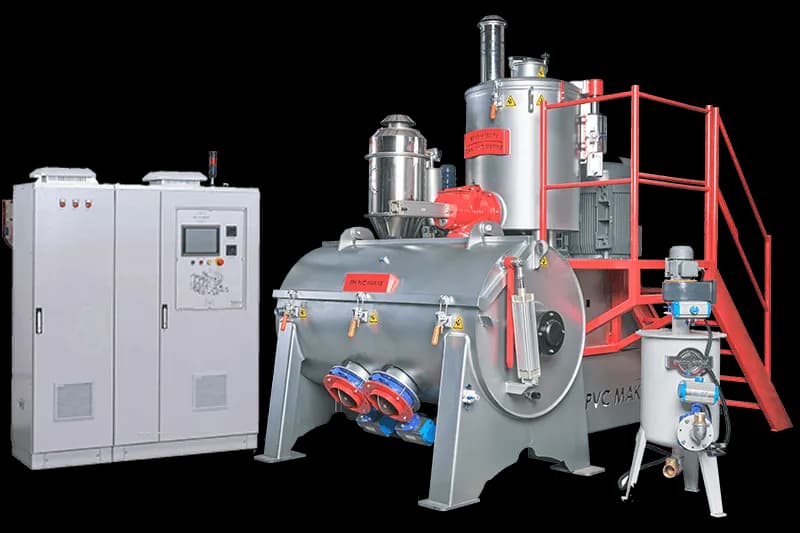
Hot-cold mixing | Homogeneous blending and controlled cooling for large batches | |
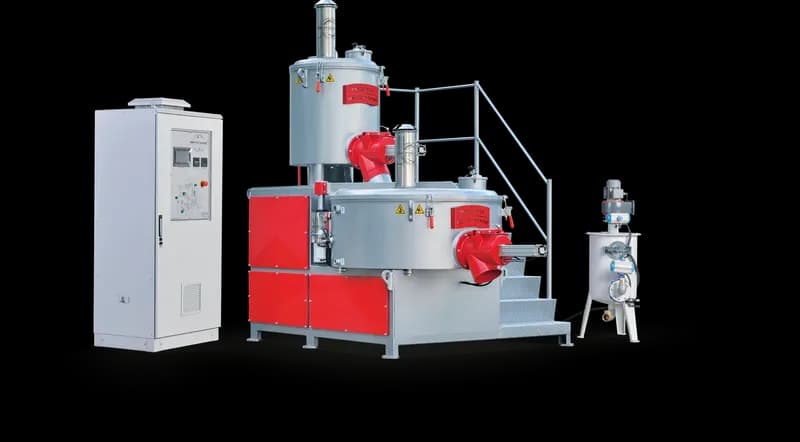
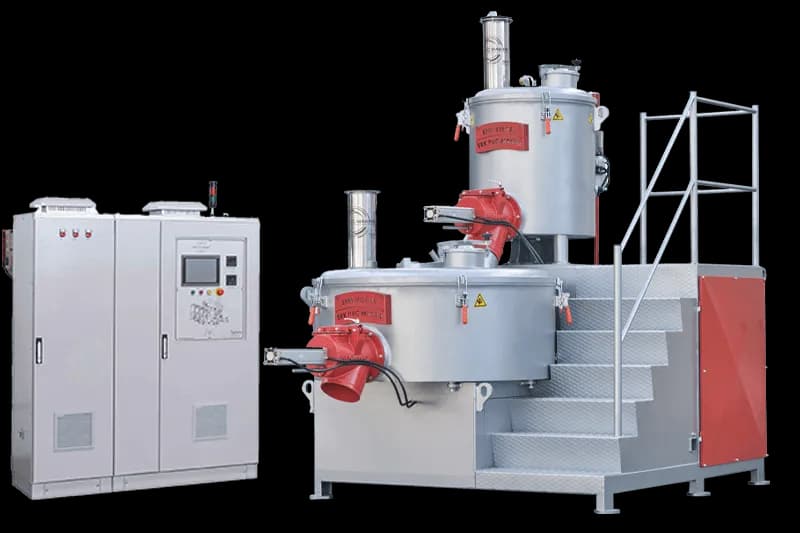
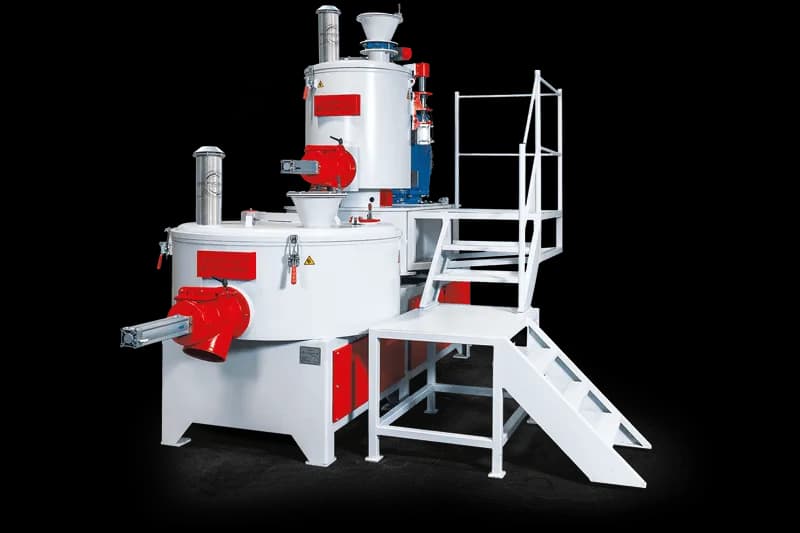
Hot-cold mixing | Compact layout where space is limited | |
Moisture extraction | EPM-JET filter and dehumidifier | Extracts moisture and dust released from wood flour in the mixer |
Dosing | Automatic powder dosing | Weighs light wood flour to the recipe |
Screening | Powder sieve | Removes lumps and foreign matter |
Feeding | Flexible screw conveyor | Closed, dust-free conveying |
Mixer type and size depend on your recipe, the wood flour content and the hourly consumption of your extruder. The difference between horizontal and vertical coolers is explained in horizontal or vertical cooler mixer.
What matters for quality
- Wood flour moisture: moisture extraction in the mixer removes the moisture released during heating; it does not replace control of the wood flour’s moisture before it enters the mixer.
- Impeller and wear: wood flour and mineral fillers wear the blades. Blade geometry is chosen for the recipe, and balance and edge wear are checked regularly. See mixer blades.
- Temperature profile: wood flour is heat-sensitive; the heating mixer’s target temperature and discharge timing are set together with the recipe. General principles are in hot mixer temperature profile.
- Closed conveying: moving the blend in open containers after the mixer lets it pick up moisture and lose dust; closed feeding is preferable.
What Erk supplies and what other suppliers supply
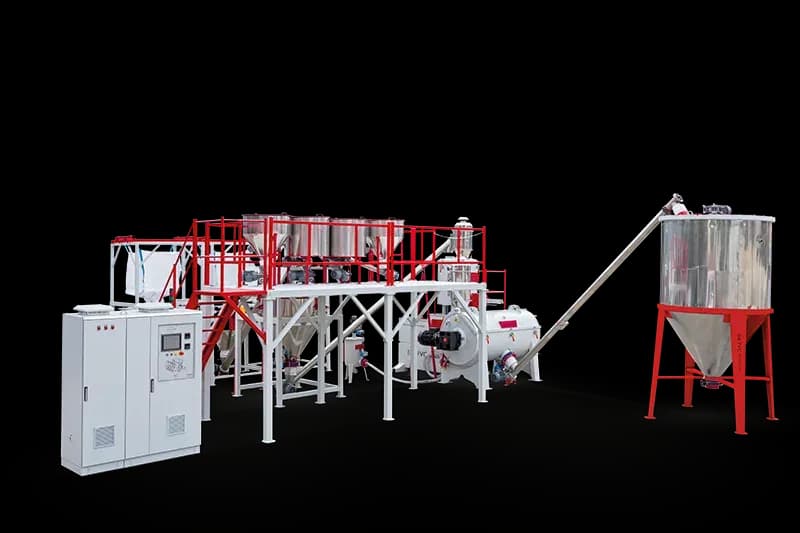
Erk designs, builds in its own factory, installs and commissions the raw material preparation line: dosing, hot-cold mixing, in-mixer moisture extraction, screening and extruder feeding. The WPC extruder, die, wood flour drying and the downstream cutting, calibration and surface finishing equipment come from your line supplier. Installation, operator training, remote support and spare parts are part of our scope.
Request a line proposal
Tell us your WPC product (decking, panel, profile), the wood flour content of your recipe, your target output and your existing equipment, and we will prepare a line layout and quotation. Use the quote request form or Build Your Project.
Products
Frequently Asked Questions
Which mixer is used for WPC blends?
PVC-based WPC blends are usually prepared in a hot-cold turbo mixer: the heating mixer spreads the additives over the resin and wood flour, and the cooling mixer cools the blend without lumping. Erk’s EPM-H and EPM-V series are used for WPC applications.
Why is moisture extraction in the mixer needed for WPC?
Wood flour carries moisture. If the moisture released as the heating mixer warms up stays in the vessel, it falls back into the batch and causes lumps, gas bubbles in the extruder and surface defects. EPM-JET extracts that moisture and dust while the mixer runs.
How is wood flour dosed?
Because wood flour is light and bulky, it should be dosed by weight rather than by volume. The automatic powder dosing system weighs wood flour and the other components to the recipe and sends them to the mixer.
Does Erk supply the WPC extruder?
No. Erk supplies the dosing, mixing, moisture extraction, screening and feeding line in front of the extruder and works with any extruder brand. The extruder and downstream equipment come from your line supplier.
Can I produce WPC with my existing PVC mixer?
That depends on your mixer’s capacity, impeller design and moisture extraction. Share your mixer details and recipe and we will assess together whether adding moisture extraction or dosing to your existing mixer is enough.
Request a Quote
Fill in the form and our sales engineers will get back to you within one business day.