

Tubular Screw Conveyor
A rigid screw conveyor that moves powder and granules horizontally or on an incline with a flight turning on a shaft inside a closed tube; from below silos to hopper and mixer feeding.
Highlights
What is a tubular screw conveyor?
A tubular screw conveyor is a rigid conveyor that moves powder and granular material with a flight turning on a shaft inside a closed tube. As the screw turns, the material advances along the casing and leaves through the outlet.
Because it is closed, the material never touches the surrounding air: dust stays out of the plant, less raw material is lost and the material is protected from moisture and foreign matter. Tubular screw conveyors suit straight, fixed routes, especially below silos and for high-throughput transfers.
Where is it used?
- Below silos: transferring raw material from a silo to a dosing hopper, a mixer or the next conveyor.
- Between hoppers: horizontal or inclined transfer between buffer hoppers, scales and mixers.
- After the mixer: carrying dry blend to a silo or buffer hopper.
- Other industries: conveying powder and granular materials beyond plastics and PVC lines.
Design
- Casing: the tube that keeps the material enclosed.
- Flight and shaft: the flight that moves the material and the shaft that carries it. The flight form is chosen for the material’s flow behaviour.
- Bearings and seals: the bearings at each end of the shaft and the seals at the casing entries.
- Inlet and outlet: connection points to silos, hoppers and other equipment.
- Drive: motor and gearbox, with speed control where needed.
What to consider
- Material: bulk density, flow behaviour, particle size, abrasiveness (for example high calcium carbonate content) and moisture condition.
- Throughput: the hourly quantity. Screw diameter, pitch, speed and fill level determine throughput. Use the calculator on our screw conveyor capacity calculation page to work it out with your own figures.
- Route: total length and inclination. The steeper the incline, the less the same screw conveys.
- Wear: for abrasive materials, wear-resistant options for the casing and flight are assessed for the material.
- Maintenance and cleaning: how often products and recipes change affects inspection openings and access.
Tubular, flexible or U-trough?
Tubular screw conveyors are strong on straight, fixed, high-throughput routes. On curved routes and for extruder hopper feeding the flexible screw conveyor leads, and for horizontal collecting and distributing the U-trough screw conveyor. For a detailed comparison, see types of screw conveyor and flexible or rigid screw conveyor?
Line integration and after-sales
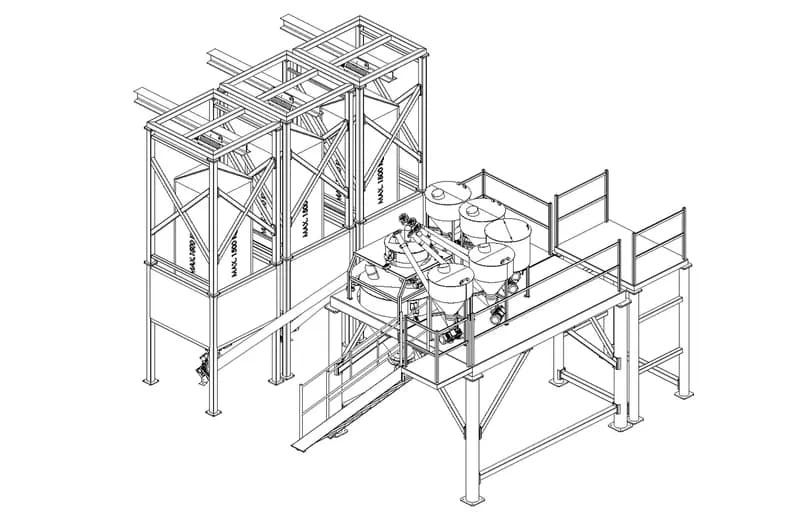
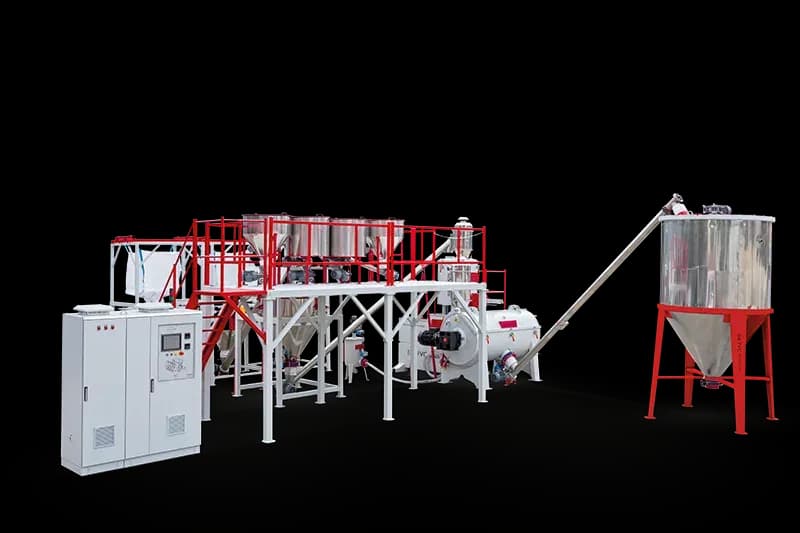
The tubular screw conveyor is designed in the same layout as silos, the big bag discharge station, automatic powder dosing and the mixer. Our screw conveyors are built at our factory in Ergene, Tekirdağ; installation, commissioning, operator training, remote support and spare parts are provided.
For a quotation, send us the material, your hourly demand, the length and inclination of the route, and the inlet and outlet points.
Downloads
Frequently Asked Questions
What is the difference between a tubular and a flexible screw conveyor?
In a tubular screw conveyor the flight turns on a shaft in a straight casing; it suits straight, fixed, high-throughput routes. In a flexible screw conveyor a shaftless spiral turns in a flexible tube; the route can curve and it leads at feed points such as extruder hoppers.
Can a tubular screw conveyor convey on an incline?
Yes, but the steeper the incline, the less the same screw conveys. Inclination, throughput and material are assessed together to size the screw.
Which materials can it convey?
PVC resin, fillers such as calcium carbonate, dry blend and granules, as well as powder and granular materials in other industries. Suitability depends on the material’s flow behaviour, abrasiveness and moisture condition.
How is the throughput of a screw conveyor determined?
Throughput depends on screw diameter, pitch, speed, fill level, inclination and the material’s bulk density. You can find an approximate figure with our screw conveyor capacity calculator and settle the exact size with us at quotation stage.
Get a Quote
Request a Quote
Fill in the form and our sales engineers will get back to you within one business day.