

Erk PVC Makine engineering teamUpdated:
Types of screw conveyors: which screw goes where?
Tubular, U-trough, flexible and feeder screws work on the same principle but are built for different jobs. Their design, strengths and selection criteria in one table.

Contents9
How does a screw conveyor work?
A screw conveyor moves powder and granular material with a spiral flight turning inside a casing. As the flight turns it pushes the material ahead of it, from inlet to outlet. This simple principle splits into different types depending on the casing shape, whether the flight sits on a shaft, and what job the screw does.
How much a screw conveys depends on its diameter, pitch, speed, fill level and inclination. We explain the relationship with a formula and calculator in screw conveyor capacity calculation.
Tubular screw conveyor
In a tubular screw conveyor the flight on a shaft turns inside a closed tube. Because the casing is fully closed, dust stays in and the material is protected.
- Strength: enclosed conveying, inclined conveying, high throughput.
- Typical use: discharge below silos, transfer between hoppers and after the mixer.
- Limit: the route must be straight; if the layout changes, the conveyor has to change too.
U-trough screw conveyor
In a U-trough screw conveyor the flight turns in a covered, U-shaped trough. Opening the cover gives easy access.
- Strength: horizontal conveying, collecting from and distributing to several points, easy maintenance.
- Typical use: horizontal transfer between hoppers and machines, collecting and distributing lines.
- Limit: efficiency drops on steep inclines; where fully enclosed conveying is needed, a tubular screw is preferred.
Flexible (spiral) screw conveyor
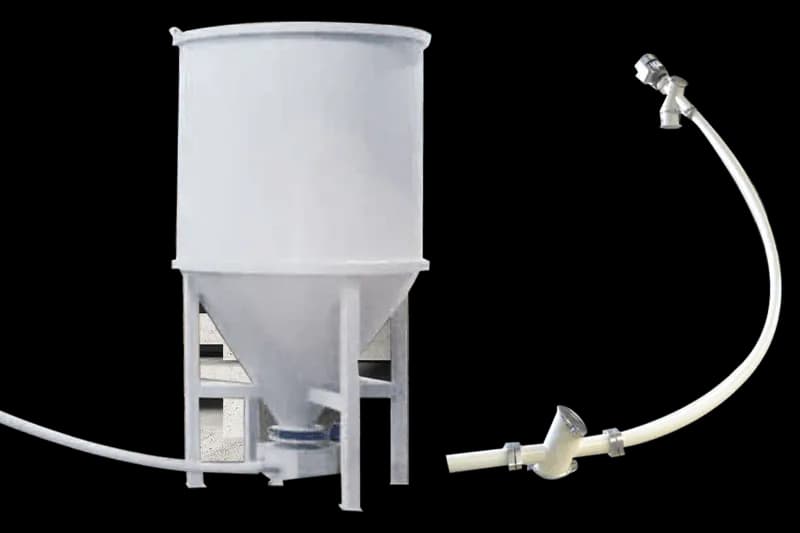
In a flexible screw conveyor a shaftless spiral turns inside a flexible tube. Because the tube can bend, the route can go around obstacles. It is also known as Flexcon or spiral conveyor.
- Strength: curved routes, horizontal and vertical sections in one line, enclosed and dust-free conveying.
- Typical use: feeding from a buffer hopper to an extruder hopper or a mixer.
- Limit: on very long, very high-throughput lines a rigid screw or another method may suit better.
Vertical and inclined screws
Screws can run inclined and vertical as well as horizontal. But as the incline increases, material starts to slip back and the same screw conveys less. Vertical conveying usually needs higher speed and a design to match. In a flexible screw, inclined and vertical sections can be combined in one line.
Feeder and dosing screws
A screw feeder is a short screw used not to convey over distance but to control how much material leaves a hopper. In gravimetric dosing it feeds each raw material into the weigh hopper and slows down near the target for fine feeding.
Shafted and shaftless screws
- Shafted screw: the flight is welded to a central shaft. Most tubular and U-trough screws are built this way; common for free-flowing powders and granules.
- Shaftless screw: there is no central shaft; the flight works through its own stiffness. The flexible screw belongs to this group. With no shaft, sticky materials cannot wrap around it.
Which screw where? Selection table
Need | Best fit |
|---|---|
High-throughput, enclosed conveying below a silo | Tubular screw conveyor |
Horizontal collecting and distributing, easy maintenance | U-trough screw conveyor |
Curved route, extruder hopper feeding | Flexible screw conveyor |
Controlled feeding of a scale or hopper | Screw feeder |
Long route with many points | Pneumatic conveying (vacuum conveying of powders) or a chain conveyor |
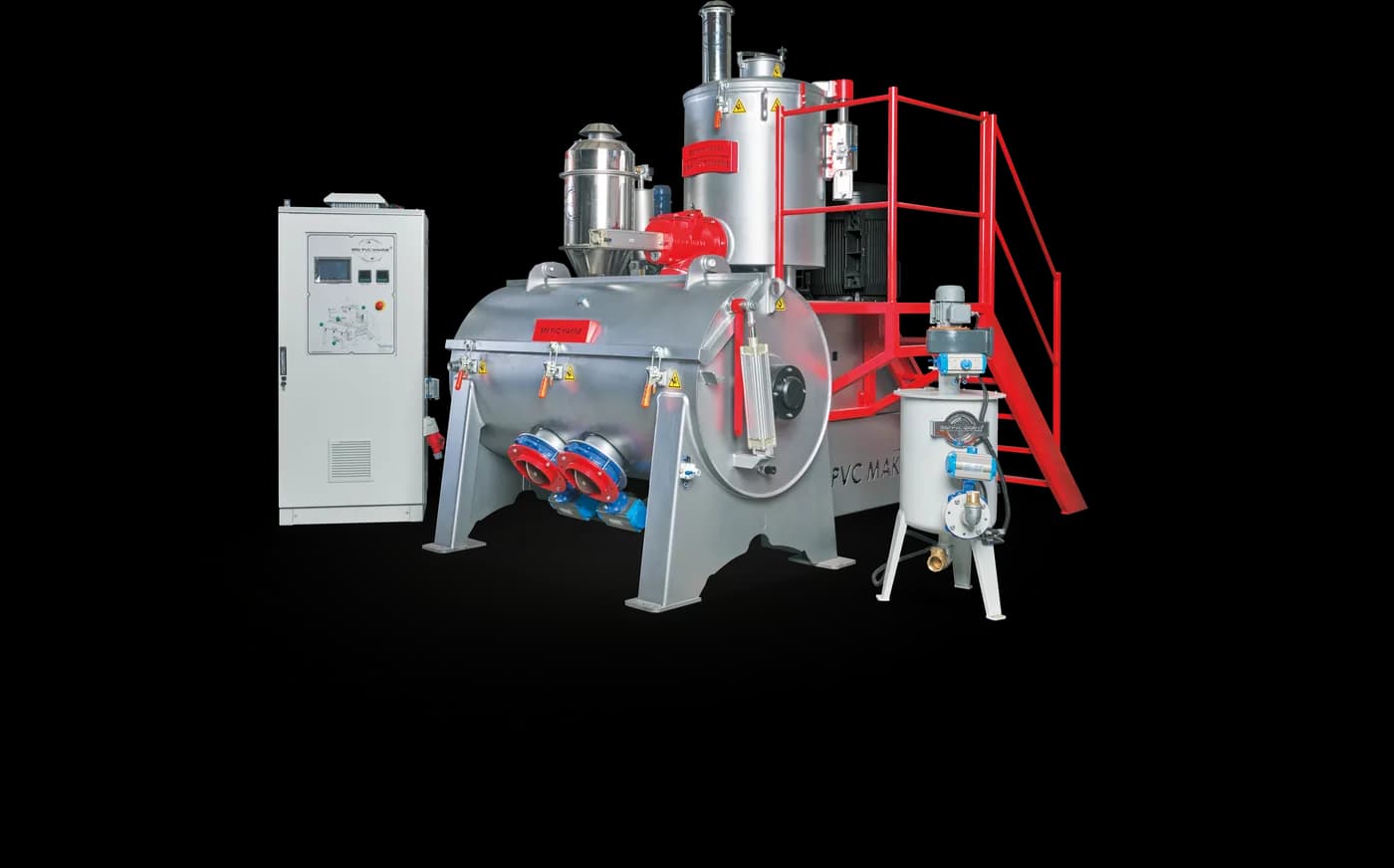
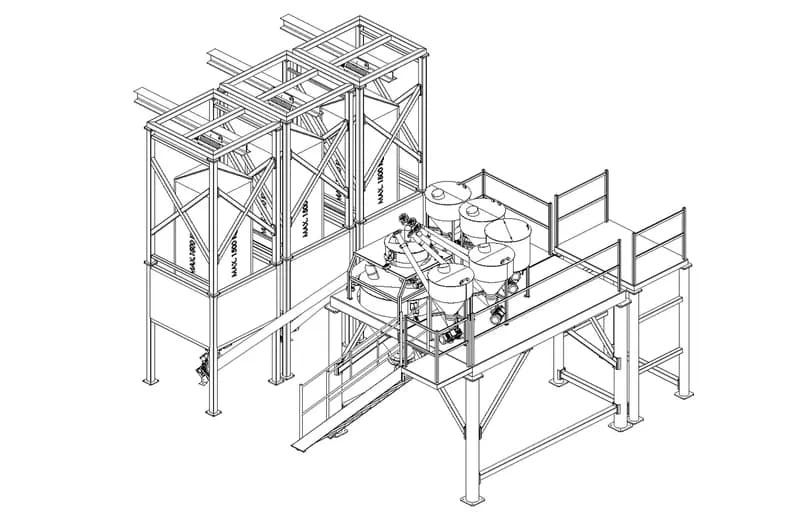
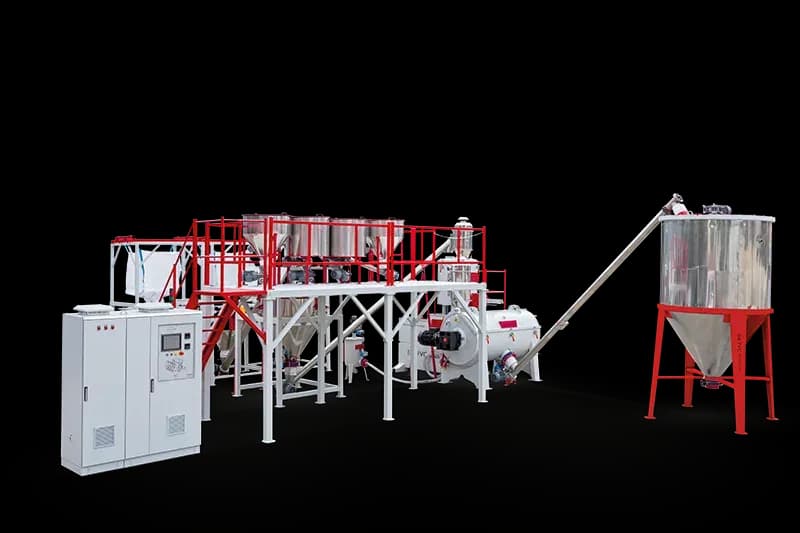
In a PVC line most of these types work together: a tubular screw below the silo, a screw feeder in dosing, a flexible screw after the mixer. For a detailed comparison of flexible and rigid screws, see flexible or rigid screw conveyor?
Which screws does Erk build?
Erk PVC Makine builds flexible, tubular and U-trough screw conveyors and screw feeders at its factory in Ergene, Tekirdağ. Besides PVC lines, our screws convey powder and granules in other industries. All types are on our extruder feeding and screw conveyors page. Send us your material, throughput and route and we will choose the right type with you.
Frequently Asked Questions
What types of screw conveyor are there?
The most common are tubular, U-trough, flexible and feeder screws. Screws are also divided into shafted and shaftless designs, and they can run horizontal, inclined or vertical.
What is the difference between a tubular and a U-trough screw?
A tubular screw has a closed tube casing and suits inclined and fully enclosed conveying. A U-trough screw has a covered trough and suits horizontal conveying, collecting and distributing and easy maintenance.
When is a flexible screw conveyor the right choice?
When the route curves, horizontal and vertical sections meet in one line and enclosed, dust-free conveying is needed. Its most common job is feeding from a buffer hopper to an extruder hopper.
Is a screw feeder the same as a screw conveyor?
No. A screw conveyor moves material; a screw feeder is a short feeder that controls how much material is delivered, and when.