

Erk PVC Makine engineering teamUpdated:
What is a liquid dosing system? Plasticiser dosing in PVC
In flexible PVC the plasticiser can be one of the largest components of the batch. Here is why liquids should be weighed rather than metered by volume, when they go into the hot mixer and how temperature and viscosity affect dosing.

Contents8
What is a liquid dosing system?
A liquid dosing system draws the liquid components of a PVC recipe, such as plasticisers, epoxidised soybean oil (ESBO) and liquid stabilisers, from their own tanks, measures each one against the recipe target and adds it to the hot mixer at the right point in the cycle. On PVC dry blend lines the measurement is best done gravimetrically, by mass, because the density and flow of these liquids change with temperature while the recipe is written in mass ratios.
In rigid PVC the liquid share is usually small. In flexible PVC the plasticiser can be one of the largest components of the batch, and it directly sets the hardness, flexibility and surface quality of the product.
Which liquids go into PVC formulations?
Liquid additives fall broadly into three groups:
- Plasticisers: the main liquids that make PVC flexible. DOTP and DINP are common examples, and in some markets regulation has pushed a shift towards non-phthalate types. Plasticiser type and level define the hardness grade.
- Liquid stabilisers: liquid Ca/Zn or Ba/Zn systems for heat stability. Their share of the recipe is small, which is exactly why getting the right amount into every batch matters.
- ESBO (epoxidised soybean oil): used both as a co-stabiliser and as a secondary plasticiser.
Depending on the recipe there may be other liquid processing aids. Which liquids you use, and at what level, depends on the product and on your additive supplier's guidance.
When do liquids go into the hot mixer?
When a liquid goes in matters as much as how much goes in. The usual practice is:
- Resin and stabiliser warm up first. As the resin grains heat, their porous structure opens and becomes ready to take in liquid.
- Plasticiser is added once the resin is warm. Pre-heated resin absorbs it faster and more evenly. Adding plasticiser to cold resin raises the risk of lumps.
- The batch looks wet during absorption. As the liquid is drawn into the grains, the batch turns free-flowing again. This is the dry point.
- Filler and other powders go in after the dry point. Calcium carbonate added before the plasticiser is absorbed pulls liquid onto its own surface and causes lumps.
- Discharge happens at a recipe-specific temperature, typically around 110–125 °C.
Tie the addition points to measured batch temperature, not to a timer, because no two batches heat at exactly the same rate. For more detail see PVC additive addition order and hot mixer temperature profile.
How the liquid enters the mixer matters too. Plasticiser poured quickly at a single point concentrates locally; a controlled, distributed feed gives more even absorption.
Gravimetric or volumetric?
There are two basic ways to measure a liquid:
| Volumetric | Gravimetric |
|---|---|---|
What is measured | Volume (pump time, stroke, volumetric flow) | Mass (weighing vessel) |
Temperature effect | As density changes, the same volume is a different mass | Mass is measured directly, so density shifts do not upset the recipe |
Viscosity effect | Flow rate changes, so time-based metering drifts | Weighing does not depend on flow rate |
Record | Run time or volume | Actual mass |
The density and viscosity of plasticisers and oil-based additives vary with temperature. Between winter and summer, or even morning and afternoon, the same volume can mean a different mass. In a gravimetric system the liquid runs into a weighing vessel and feeding stops when the target mass is reached, so the recipe holds whatever the ambient conditions. The same logic for powders is covered in gravimetric vs volumetric dosing.
Temperature and viscosity: general good practice
Most liquid dosing problems come down to liquids getting thicker and slower when they are cold. Plants commonly handle this by:
- Keeping tank and line temperatures under control. In cold climates or unheated stores, tanks are kept mildly warm and lines are insulated. The goal is not to heat the liquid as such, but to keep its flow behaviour consistent across seasons.
- Sizing pumps and lines for viscosity. A suitable pump type and adequate line diameter keep weighing times from creeping up with thicker liquids.
- Slowing the feed near the target. Fast and fine feed stages in a gravimetric system reduce overshoot.
- Draining the weighing vessel. Liquid left in the vessel or line ends up in the next batch, so drain time belongs in the cycle.
- Keeping it clean and leak-free. Leaks of oily liquids are both a safety hazard and a raw material loss, so connections need regular checks.
Some plants prefer to add plasticiser slightly warm, which can speed up absorption. The right temperature should be agreed with the additive supplier.
Working with powder dosing
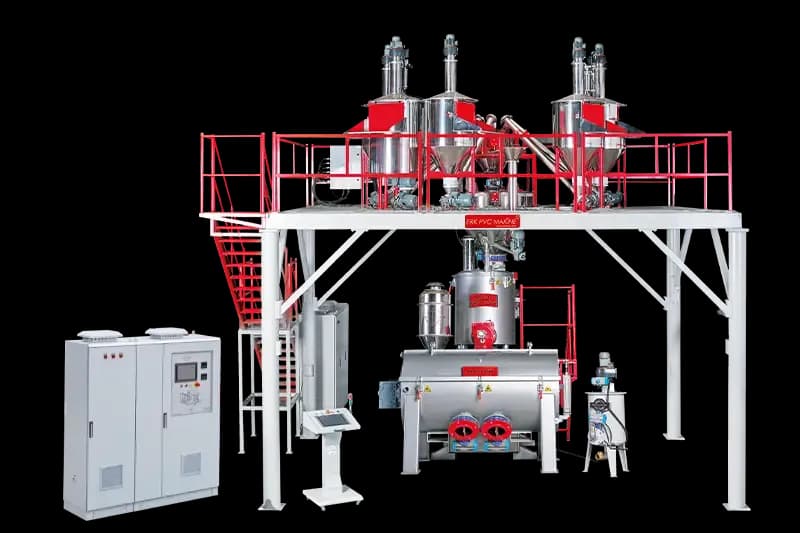
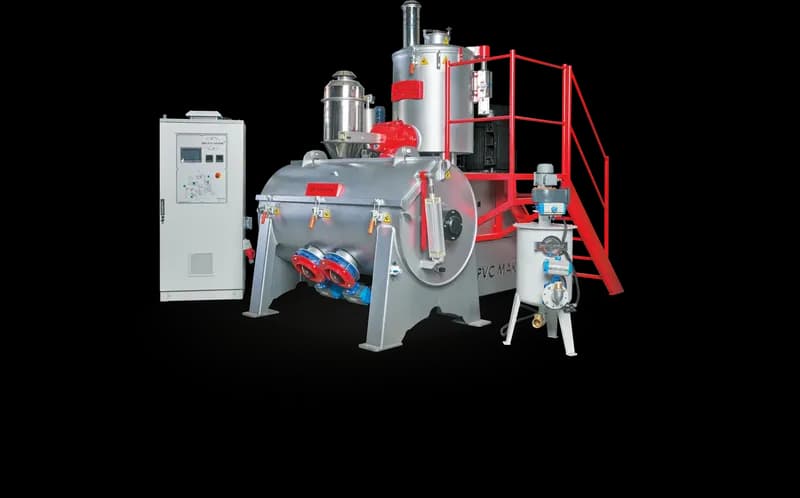
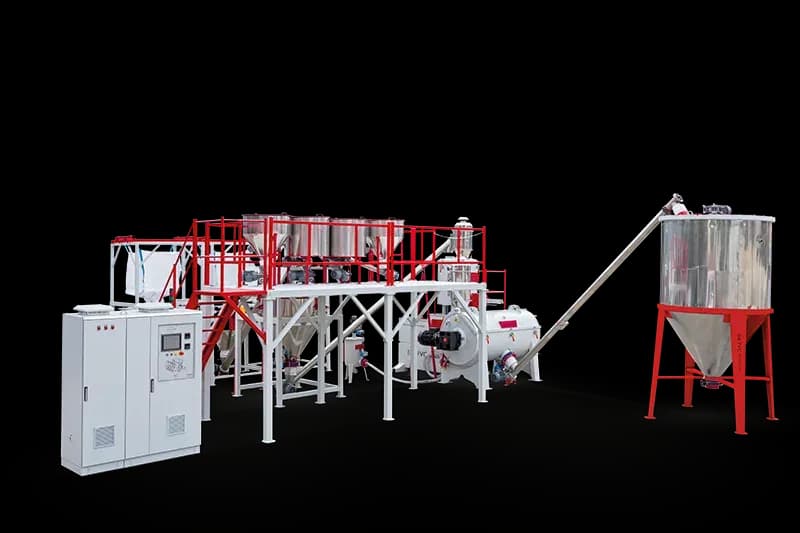
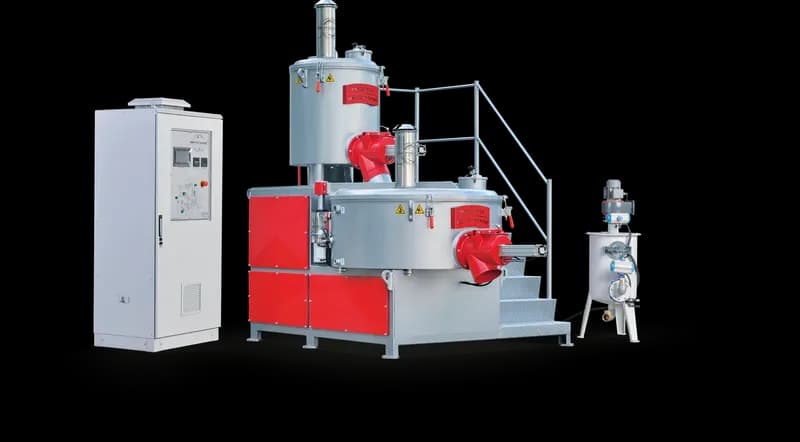
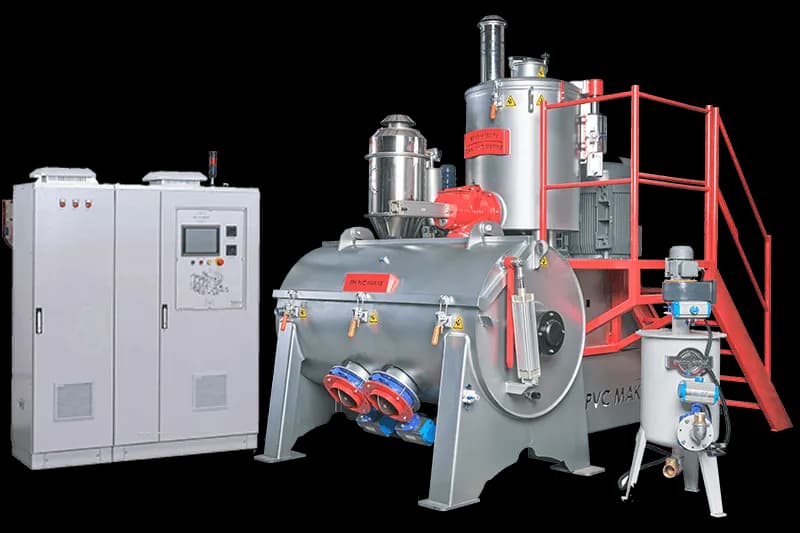
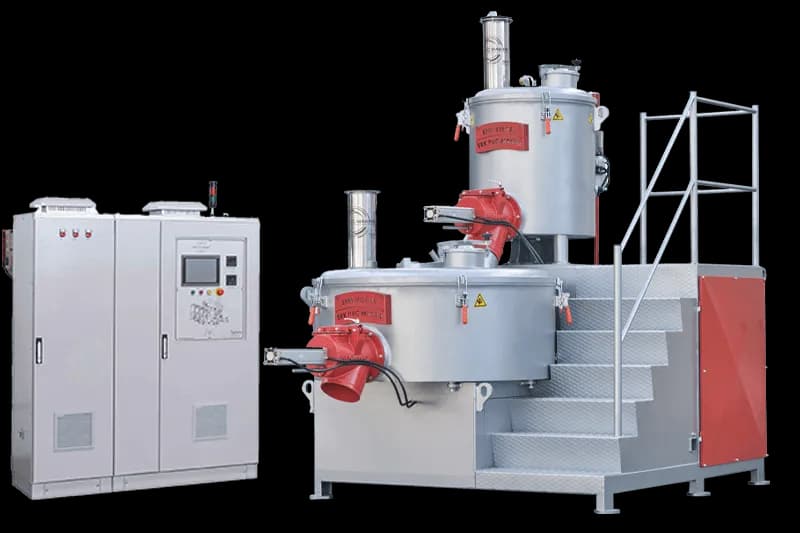
In a flexible PVC recipe the liquids and powders are part of the same batch, so managing them separately invites mistakes. Erk PVC Makine's automatic liquid dosing system weighs liquids by mass and can run with the automatic powder dosing system under one control system. Resin, filler, powder additives and liquids all come from the same recipe; liquids are added at the right stage of the cycle and actual weights can be logged for each batch.
Where does it matter most?
Liquid dosing makes the biggest difference on flexible PVC lines: cable sheathing and insulation compounds, garden and irrigation hose, film and tarpaulin, flooring and artificial leather. These plants often run several hardness grades on the same mixer. Each grade is stored as its own recipe, so a changeover means selecting a different recipe.
Bottom line
Liquid dosing in PVC comes down to two rules: weigh the liquid by mass, and add it at the right temperature. The first keeps the recipe independent of season and viscosity; the second gives a lump-free, free-flowing dry blend. Share your liquid list, batch size and current mixer with us and request a quote.
Frequently Asked Questions
Which liquids are dosed in a PVC recipe?
Most commonly plasticisers such as DOTP and DINP, liquid Ca/Zn or Ba/Zn stabilisers and ESBO. Depending on the recipe there may be other liquid processing aids.
When should plasticiser be added in the hot mixer?
Usually once the resin has warmed up, because pre-heated resin absorbs it faster and more evenly. Filler and other powders go in after the batch has turned free-flowing again.
Why weigh liquids instead of metering them by volume?
The density and viscosity of plasticisers and oil-based additives change with temperature. Measuring mass is not affected by those changes and protects a recipe written in mass ratios.
Why does liquid dosing slow down in cold weather?
As the liquid cools its viscosity rises and it flows more slowly. Keeping tank and line temperatures under control keeps flow behaviour consistent across seasons.
Can liquid dosing run together with powder dosing?
Yes. Erk PVC Makine can set up liquid dosing to run with automatic powder dosing under one control system and one recipe.