

Erk PVC Makine engineering teamUpdated:
What is dosing? Precision dosing in industrial production
Dosing means feeding every ingredient of a recipe into the process in the right amount and the right order. Here is how powder and liquid dosing, the main measuring methods and the link to the mixer work on a PVC mixing line.

Contents10
- 1What is dosing?
- 2Why dosing matters so much in PVC compounding
- 3Powder dosing vs liquid dosing
- 4Gravimetric vs volumetric dosing
- 5Batch vs continuous dosing
- 6How dosing connects to the mixer
- 7Manual vs automatic dosing
- 8Erk PVC Makine dosing systems
- 9What to check when choosing a dosing system
- 10Bottom line
What is dosing?
Dosing is the measured, repeatable feeding of each raw material in a recipe into a production process, in a defined quantity and a defined order. Measurement can be by mass (gravimetric) or by volume (volumetric), and a dosing system can work in batches or continuously at a set rate. The goal is the same composition in every batch, or every hour.
Dosing is used across plastics, chemicals, food, building chemicals and coatings. This article uses PVC mixing lines as the example, because PVC formulations show very clearly why dosing matters.
Why dosing matters so much in PVC compounding
A PVC formulation is never a single material. Alongside the PVC resin it contains a heat stabiliser, lubricants, fillers such as calcium carbonate, an impact modifier, processing aids, pigment and, in flexible PVC, plasticiser. Some of these make up a large share of the recipe, others are used in small amounts. A small error in a minor ingredient can still have a visible effect:
- Too little stabiliser and the compound can yellow or degrade during processing.
- An unbalanced lubricant package causes pressure and torque swings in the extruder and poorer surface quality.
- A drifting filler level changes both mechanical properties and cost per kilogram.
- A pigment error shows up straight away as a colour difference.
That is why dosing is the first step that decides PVC dry blend quality. However good the mixer is, it cannot fix a batch that was weighed wrongly.
Powder dosing vs liquid dosing
A PVC line doses two kinds of material, and each has its own difficulties.
| Powder dosing | Liquid dosing |
|---|---|---|
Typical materials | PVC resin, calcium carbonate, stabiliser, lubricants, modifiers, pigment | Plasticisers, ESBO, liquid stabilisers |
Main difficulty | Varying bulk density, bridging, dust loss | Density and viscosity that change with temperature, dripping |
Used in | Rigid and flexible PVC | Mainly flexible PVC |
With powders, the same volume can weigh more or less depending on moisture and the supplier lot. With liquids, viscosity and density shift with the ambient temperature, so winter and summer batches differ if you measure by volume. For plasticiser and liquid stabiliser handling, see our automatic liquid dosing system.
Gravimetric vs volumetric dosing
Volumetric dosing measures by volume, for example a set number of screw revolutions or a fixed chamber size. It is simple and inexpensive, but it goes wrong whenever the material density changes.
Gravimetric dosing weighs the material directly and stops the feed once the target mass is reached. Density changes do not affect it. In PVC recipes, with fillers that vary from lot to lot and minor additives that matter a lot, this is usually the preferred method.
We compare the two in detail in gravimetric vs volumetric dosing.
Batch vs continuous dosing
Dosing systems also differ in how they run.
- Batch dosing: ingredients are weighed one after another into a complete batch, which is then discharged in one go. PVC dry blend lines built around heating-cooling mixers use batch dosing, because the mixer itself works in batches.
- Continuous dosing: material is fed without interruption at a set rate. This is typical at the extruder throat, for example on compounding or masterbatch lines, using loss-in-weight feeders.
The right choice depends on the process. On a dry blend line, the key requirement is that every mixer batch is correct and ready on time.
How dosing connects to the mixer
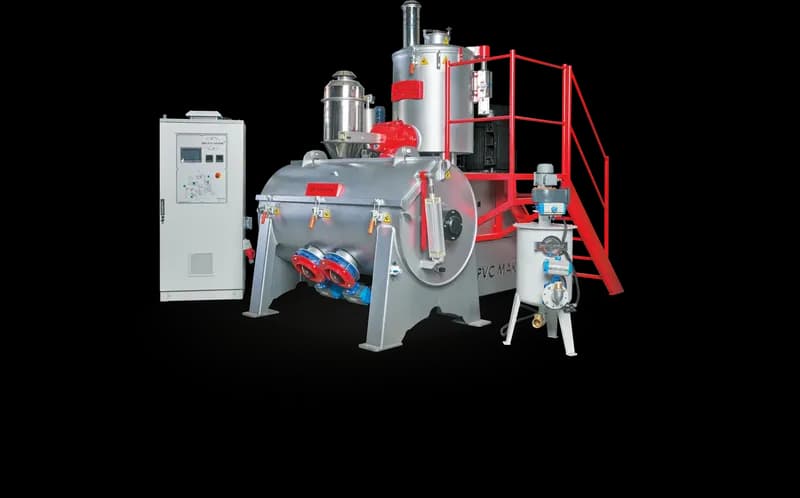
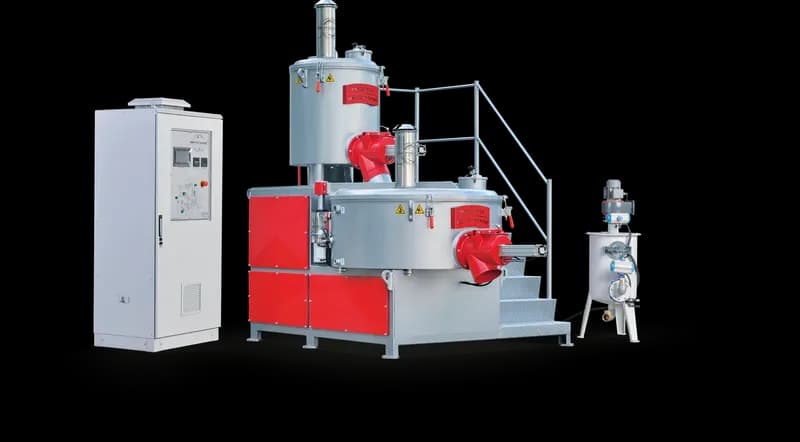
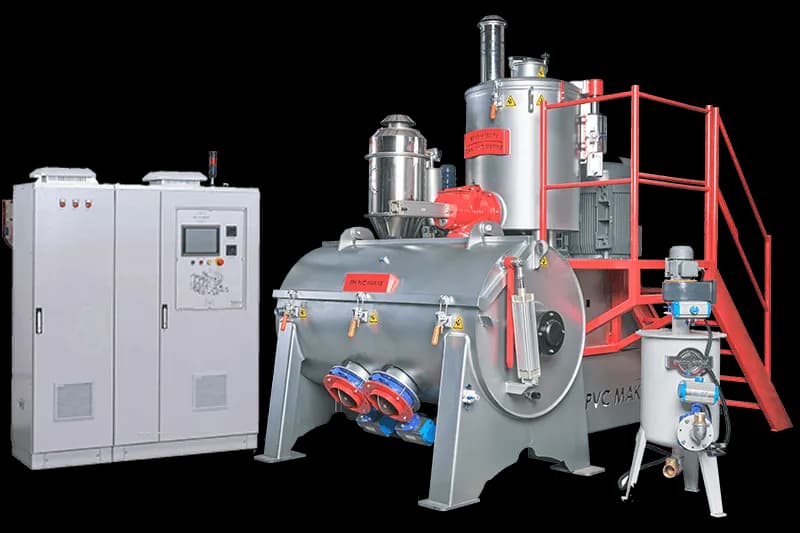
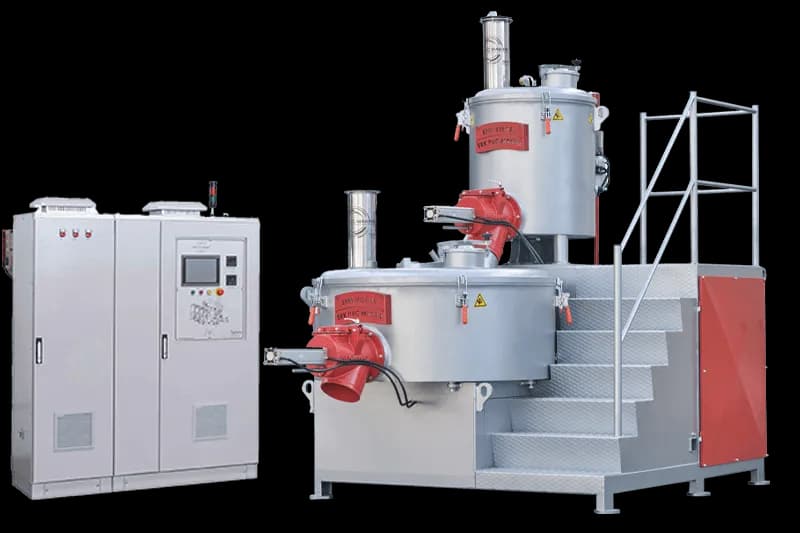
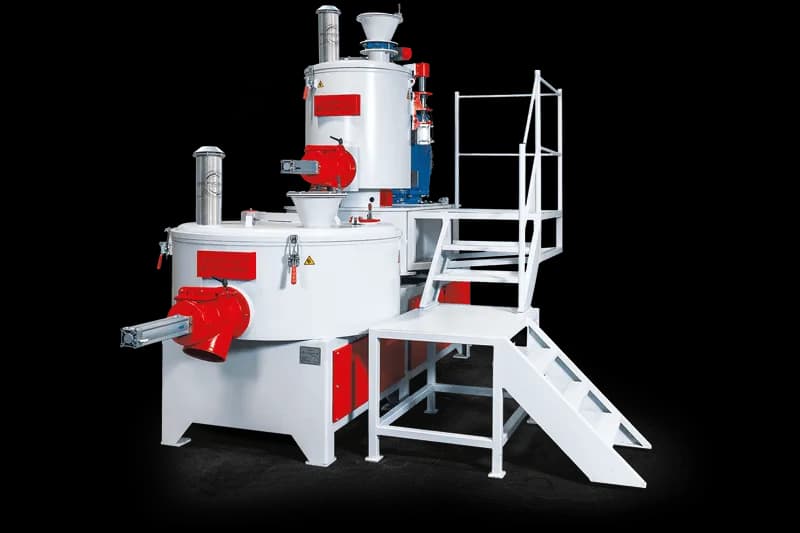
On a dry blend line, the dosing system and the hot mixer work as one unit:
- Select the recipe. The product's recipe is called up in the control system.
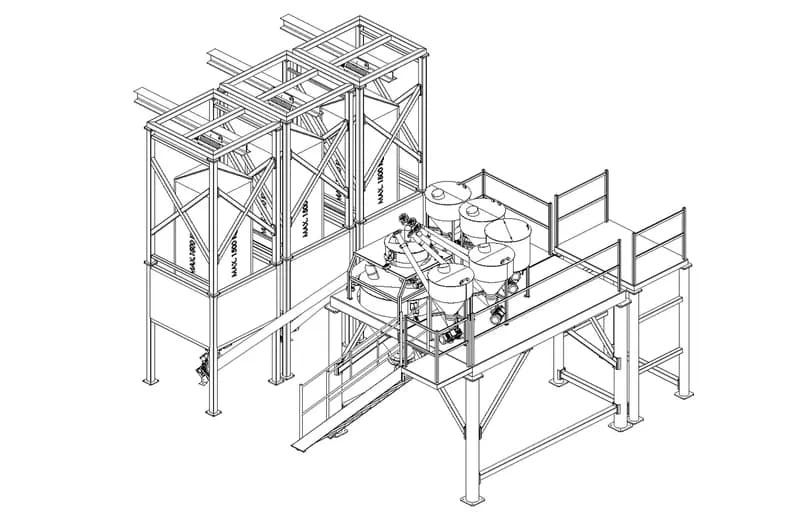
- Weigh the powders. Resin, filler and powder additives are fed from their own storage into a weigh hopper.
- Weigh the liquids. In flexible recipes, plasticiser and liquid stabilisers are prepared on a separate liquid weighing unit.
- Charge the mixer. Powders and liquids go into the hot mixer in the order the recipe defines.
- Prepare the next batch. While the mixer runs, the dosing system weighs the next batch, so the mixer never waits.
Order matters here too. The stage at which each additive enters the mixer has a direct effect on the dry blend, which we explain in PVC additive addition order.
Manual vs automatic dosing
Many plants start with manual weighing: open the bag, weigh it in a bucket, tip it into the mixer. At small volumes that can work, but as output grows the problems add up:
- Weighing results that vary between operators and shifts
- Bad batches from the wrong bag or a forgotten ingredient
- Dust loss, a dusty work area and heavy bag handling
- No record of what went into which batch
Automatic dosing turns these steps into a closed, repeatable process, with the recipe held in the system rather than on a paper sheet.
Erk PVC Makine dosing systems
Erk PVC Makine's dosing systems are designed for PVC mixing lines:
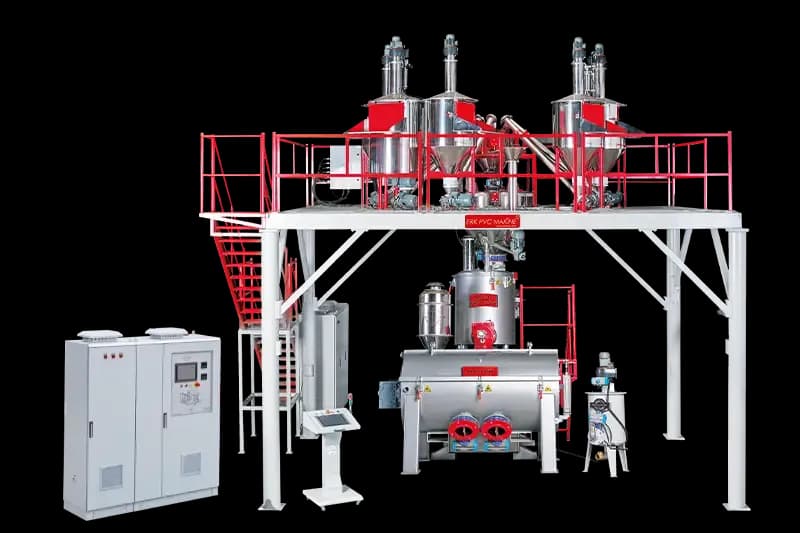
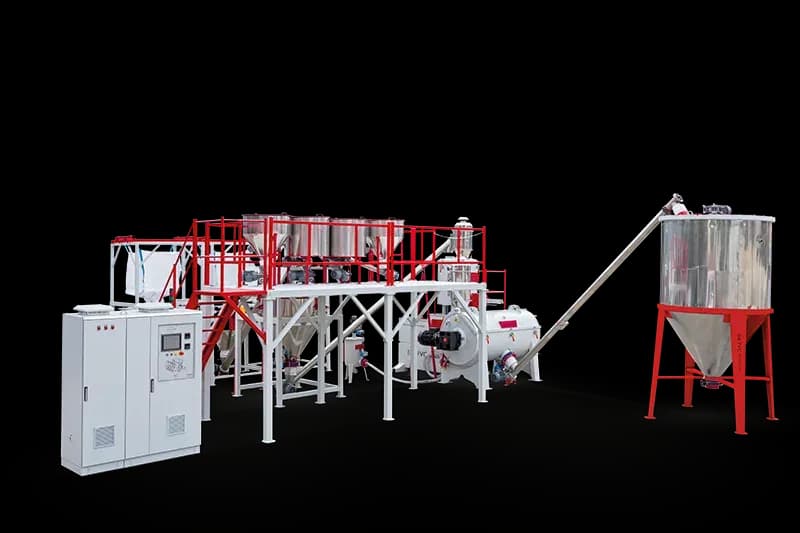
- Automatic powder dosing system: weighs PVC resin, filler and powder additives gravimetrically to the recipe and transfers the batch to the hot mixer, a silo or, where the line needs it, the extruder side.
- Automatic liquid dosing system: weighs plasticisers and liquid stabilisers gravimetrically and runs under the same recipe as the powder dosing.
Both can be planned as one line together with the mixer, storage and feeding equipment.
What to check when choosing a dosing system
- Number of ingredients and their shares: how many powders and liquids, and which is the smallest?
- Batch size and batch frequency: dosing has to keep up with the mixer cycle.
- Raw material form: big bags, sacks or silos?
- How often recipes change: in multi-product plants, recipe management and easy cleaning matter more.
- Traceability: do you need a record of actual weights per batch?
Bottom line
Dosing is where mix quality begins. The right measuring method, the right operating mode and a dosing system matched to the mixer make it far easier to get the same recipe in every batch. If you are planning dosing for your line, send us your ingredient list through the quote form.
Frequently Asked Questions
What does dosing mean in manufacturing?
Dosing is feeding each raw material of a recipe into the process in a defined amount and order. It can be measured by mass (gravimetric) or by volume (volumetric).
What is the difference between gravimetric and volumetric dosing?
Volumetric dosing measures by volume, gravimetric dosing by weight. Because gravimetric dosing is not affected by changes in material density, it is usually preferred for PVC formulations.
Which materials are dosed on a PVC line?
On the powder side: PVC resin, calcium carbonate, stabiliser, lubricants, modifiers and pigment. On the liquid side: plasticisers, ESBO and liquid stabilisers.
What is batch dosing and continuous dosing?
Batch dosing weighs ingredients into a complete batch that is discharged at once; continuous dosing feeds material at a set rate without interruption. Dry blend lines with heating-cooling mixers use batch dosing.
Can automatic dosing be added to an existing mixer?
In most cases yes, but the mixer layout, charging inlet and cycle time need to be checked first. Send us your current line details through the quote form.