

Cooling Mixer Paddles
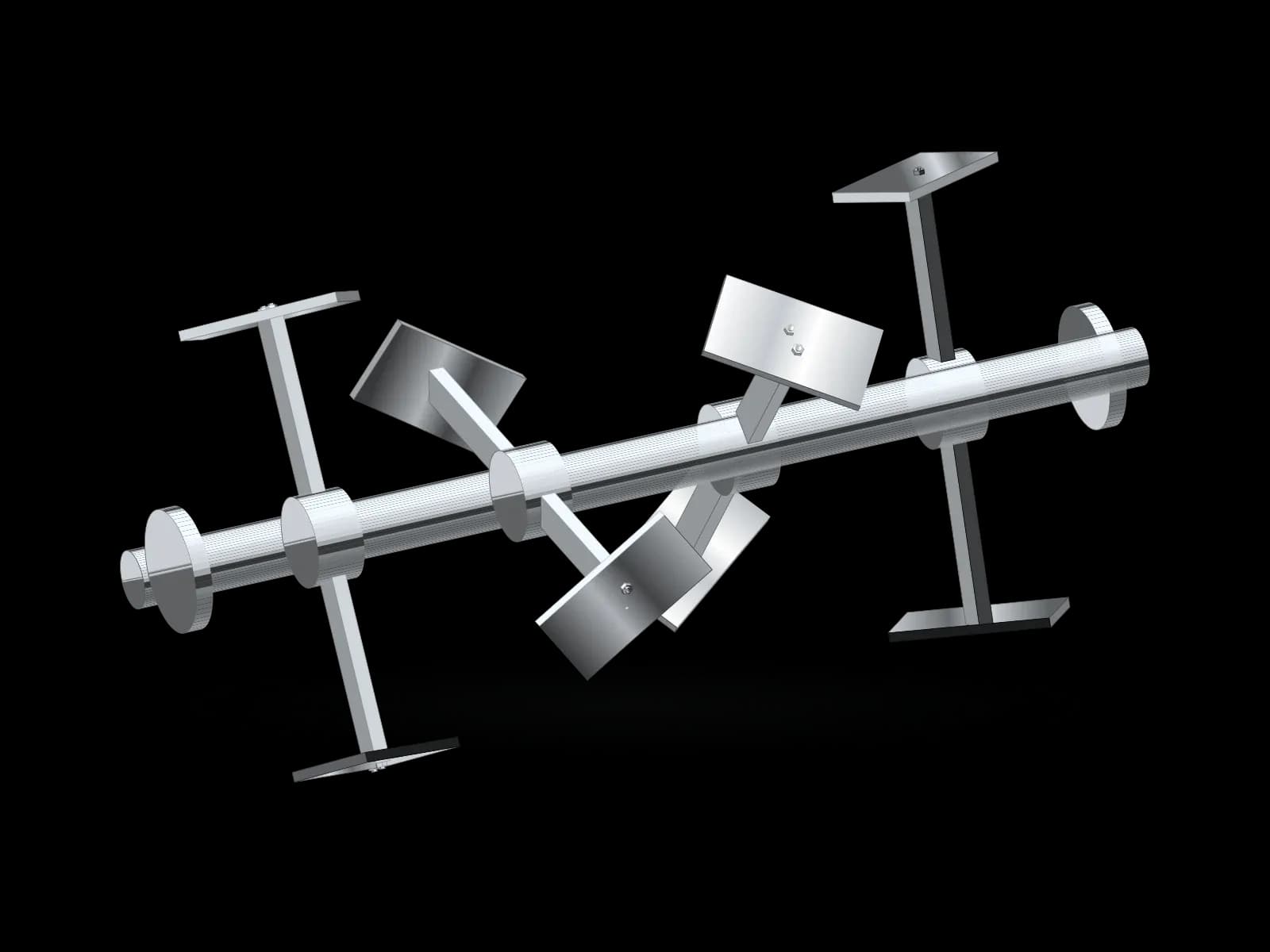
Paddles and blades for the slow agitator of horizontal and vertical cooling mixers, in AISI 304 stainless steel, balanced and made to suit your mixer.
Highlights
What do cooling mixer paddles do?
PVC dry blend leaves the heating turbo mixer hot; left standing it forms lumps and loses its free flow. A cooling mixer keeps the blend moving in its jacketed vessel and brings it down to storage and feeding temperature. The part that creates this movement is the cooler's slow agitator and its paddles. In the field the same part is also called cooler mixer blades, agitator blades or mixing tools.
Their job is different from that of the heating impeller. In the heater the blades warm the material by friction; in the cooler the aim is to keep turning the material over and carry it to the cold vessel wall without heating it. The more evenly every particle meets the cooled wall, the more evenly the blend cools and the fewer lumps form.
The agitator in horizontal and vertical coolers
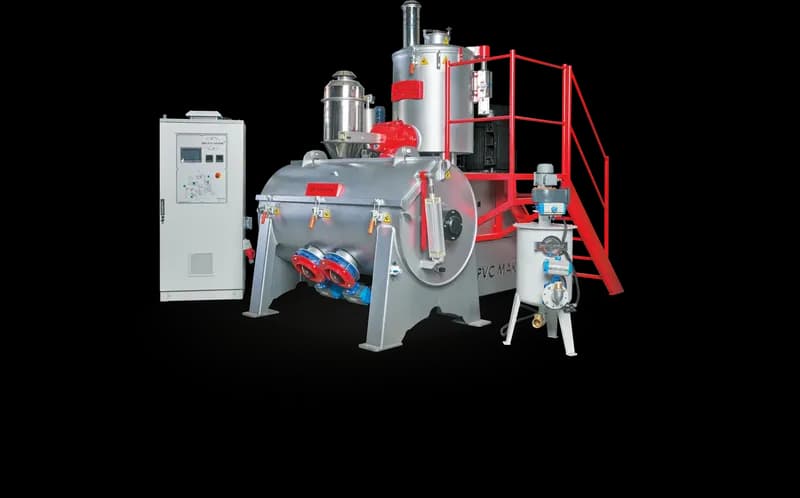
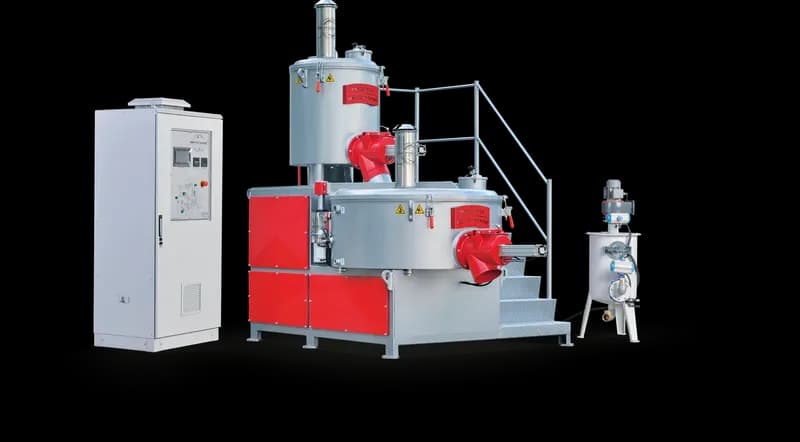
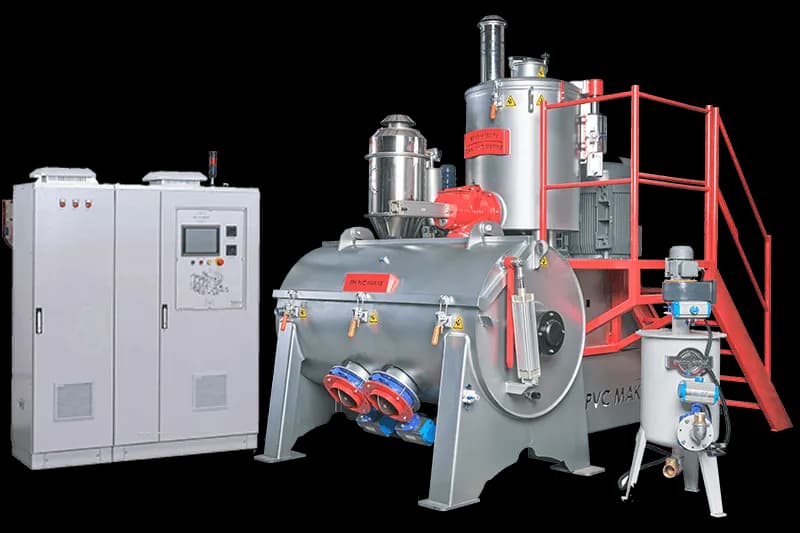
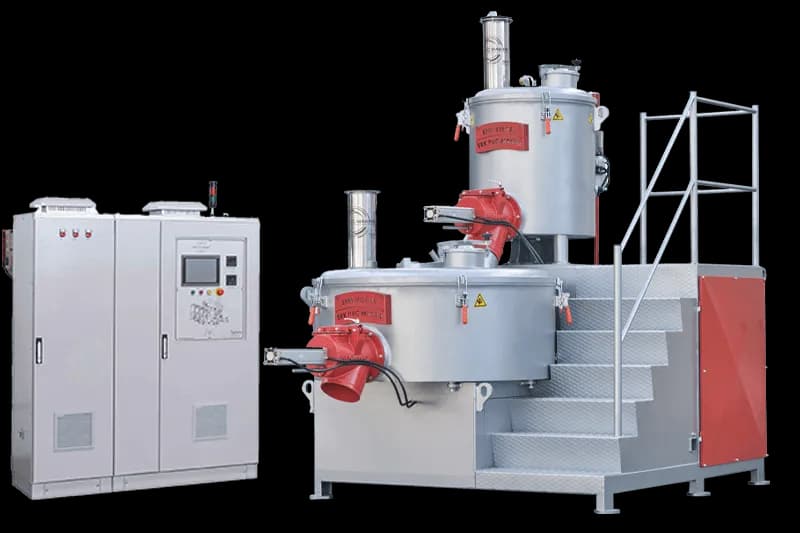
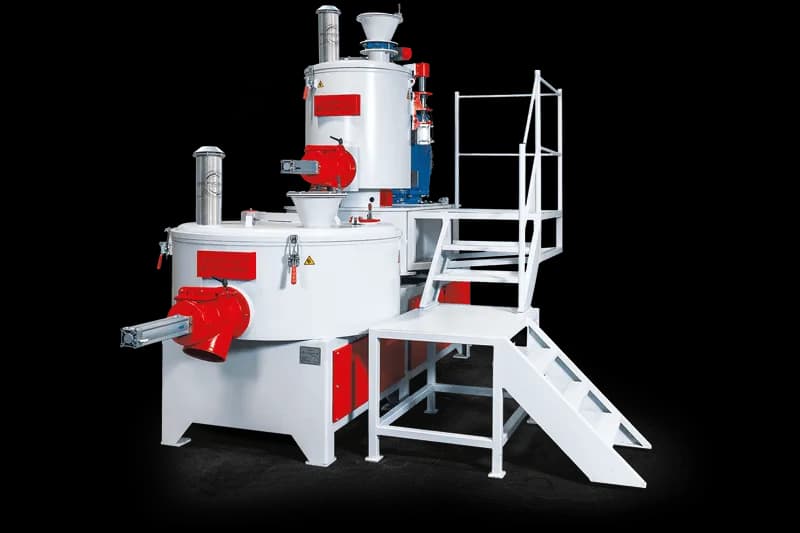
Erk PVC Makine builds two types of cooler and makes paddles for both:
| Horizontal cooler | Vertical cooler |
|---|---|---|
Vessel | Horizontal vessel with a large jacketed surface | Vertical vessel with a smaller footprint |
Agitator | Paddles that move the material along the vessel | Paddles that turn the material inside the vessel |
Erk series |
The shape and number of paddles and their distance from the vessel wall depend on the cooler's design, so paddles are always made for the specific mixer model. The differences between the two cooler types are explained in horizontal or vertical cooler mixer.
Why the paddles matter
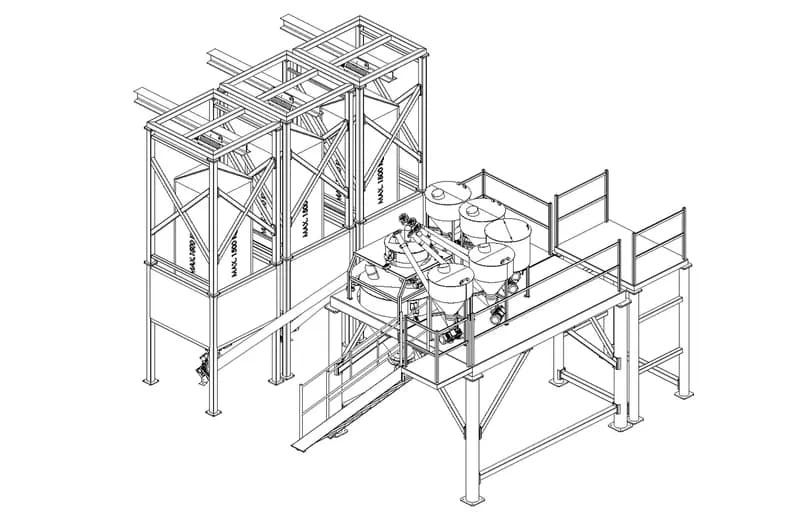
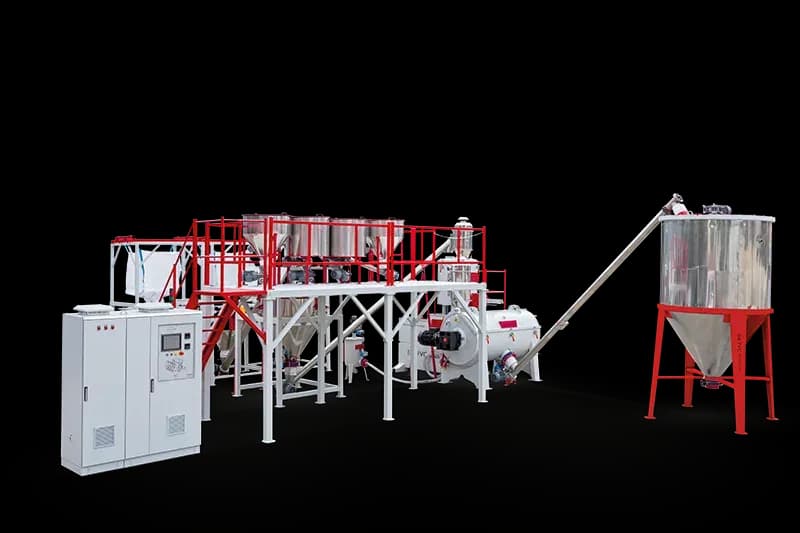
In hot-cold mixer lines the heater and cooler work together: while the heater prepares the next batch, the cooler cools the previous one. If the cooler finishes late, the heater has to wait and the line's hourly output falls. An agitator with worn or misshapen paddles carries the material to the cold wall less effectively; cooling takes longer, and a blend discharged before it is cool enough is more likely to form lumps in the silo. You can see the effect on output in PVC mixer capacity calculation. We therefore recommend recording cooling time as regularly as heating time and reflecting changes in your maintenance plan.
What to consider when choosing paddles
- Cooler type and model: horizontal or vertical vessel, vessel dimensions and shaft connection.
- Recipe: plasticised recipes are more prone to sticking; highly filled recipes speed up wear.
- Batch size: the paddles must be able to move the whole batch coming from the heater.
- Wall clearance: paddles running close to the vessel wall stop material building up on the cold surface.
Share this information and we will define the paddles for your existing cooler and recipe together.
Options
Feature | Option |
|---|---|
Material | AISI 304 stainless steel |
Coating | Optional tungsten carbide coating |
Balance | Paddles are supplied balanced |
Geometry | To the cooler model and the customer's choice |
Delivery | Usually from stock; otherwise 1–2 weeks |
What to send us to order
Your cooler | All we need |
|---|---|
Erk PVC Makine cooler | The mixer's serial number |
Cooler from another manufacturer | A drawing, photos or measurements of the paddle |
If you send photos of a cooler from another manufacturer, photograph the paddle both on the shaft and on its own, with a tape measure next to it. Tell us whether the cooler is horizontal or vertical and which heating mixer it works with. For Erk mixers the serial number is enough to identify the cooler and its paddle set.
What to check during maintenance
Cooler paddles get less attention than the heating impeller, so they are easily missed during maintenance. At a planned stop we recommend checking:
- Paddle edges: whether they are rounded, thinner or notched.
- Fixings: that the bolts and nuts holding the paddles to the shaft are tight.
- Wall clearance: whether the distance from the paddles to the vessel wall and floor has changed; it grows with wear and material is left on the wall.
- Vessel surface: whether material has stuck to or built up on the jacketed wall.
- Balance and noise: that the agitator turns smoothly and without vibration, empty and under load.
Recording these checks and the cooling times lets you see in advance when the paddles need replacing or renewing.
Signs of wear
A cooler agitator turns slowly compared with the heating impeller, but it is in constant contact with hot, filled blend. These signs mean the paddles should be checked:
- Cooling takes longer for the same recipe
- Lumps appear in the blend discharged from the cooler
- Material builds up on the vessel wall or floor
- Vibration or unusual noise from the agitator
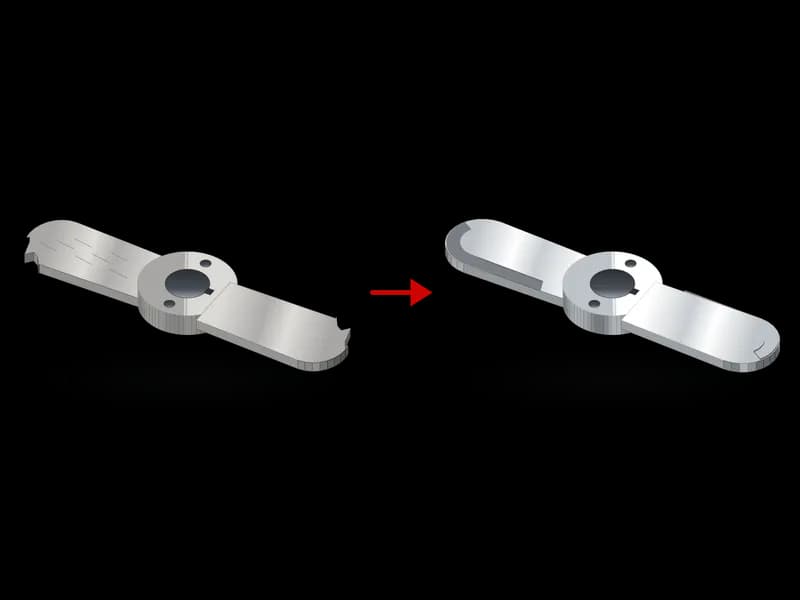
We recommend checking the paddles during the same maintenance stop as the heating impeller. Worn paddles can be replaced, or renewed through our mixer blade coating and refurbishment service. Renewal and coating are available for all paddles, whether or not Erk made them.
If your current cooler is too small
Renewing the paddles brings a cooler close to its original performance; but if the cooler was too small for your heater's batch size or your target output from the start, new parts will not fix that. In that case we can look at our cooling mixer options, which can be installed on their own next to your existing heater.
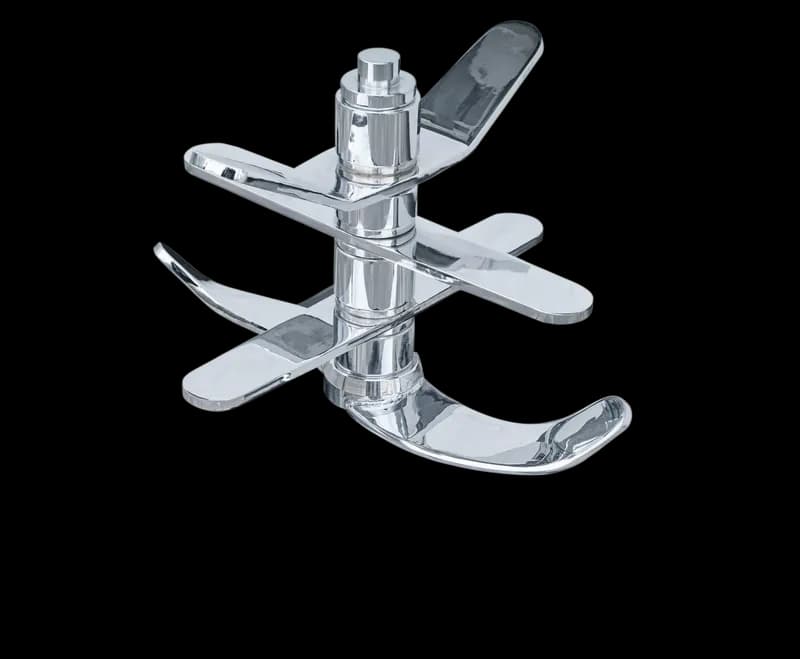
For heating mixer impellers see turbo mixer impeller; for all blade options see mixer blades.
Send us your cooler's serial number or a photo of the paddle, and we will quickly quote your cooling mixer paddles.
Downloads
Frequently Asked Questions
What is the difference between cooling mixer paddles and a turbo mixer impeller?
A turbo mixer impeller turns at high speed in the heater and warms the material by friction. Cooler paddles turn slowly; their job is to keep the material moving and carry it to the cold vessel wall without heating it.
Do you make paddles for horizontal and vertical coolers?
Yes. Erk builds horizontal and vertical coolers, and we make paddles for both types and for coolers from other manufacturers, to suit the mixer model.
What material are the paddles made of?
Paddles are made of AISI 304 stainless steel and supplied balanced. An optional tungsten carbide coating can be applied.
What is the delivery time?
Usually from stock. If the paddles are not in stock, delivery takes 1–2 weeks.
What should I send to order paddles for a cooler from another manufacturer?
A drawing, photos or measurements of the paddle are enough. It also helps to tell us whether the cooler is horizontal or vertical and which heater it works with.
If cooling takes longer, are the paddles the problem?
They may be. Worn paddles carry the material to the cold wall less effectively. Cooling-water temperature and flow, batch size and the recipe also affect cooling time, so we recommend checking these as well as the paddles.
Related Products

Get a Quote
Request a Quote
Fill in the form and our sales engineers will get back to you within one business day.