

Turbo Mixer Impeller
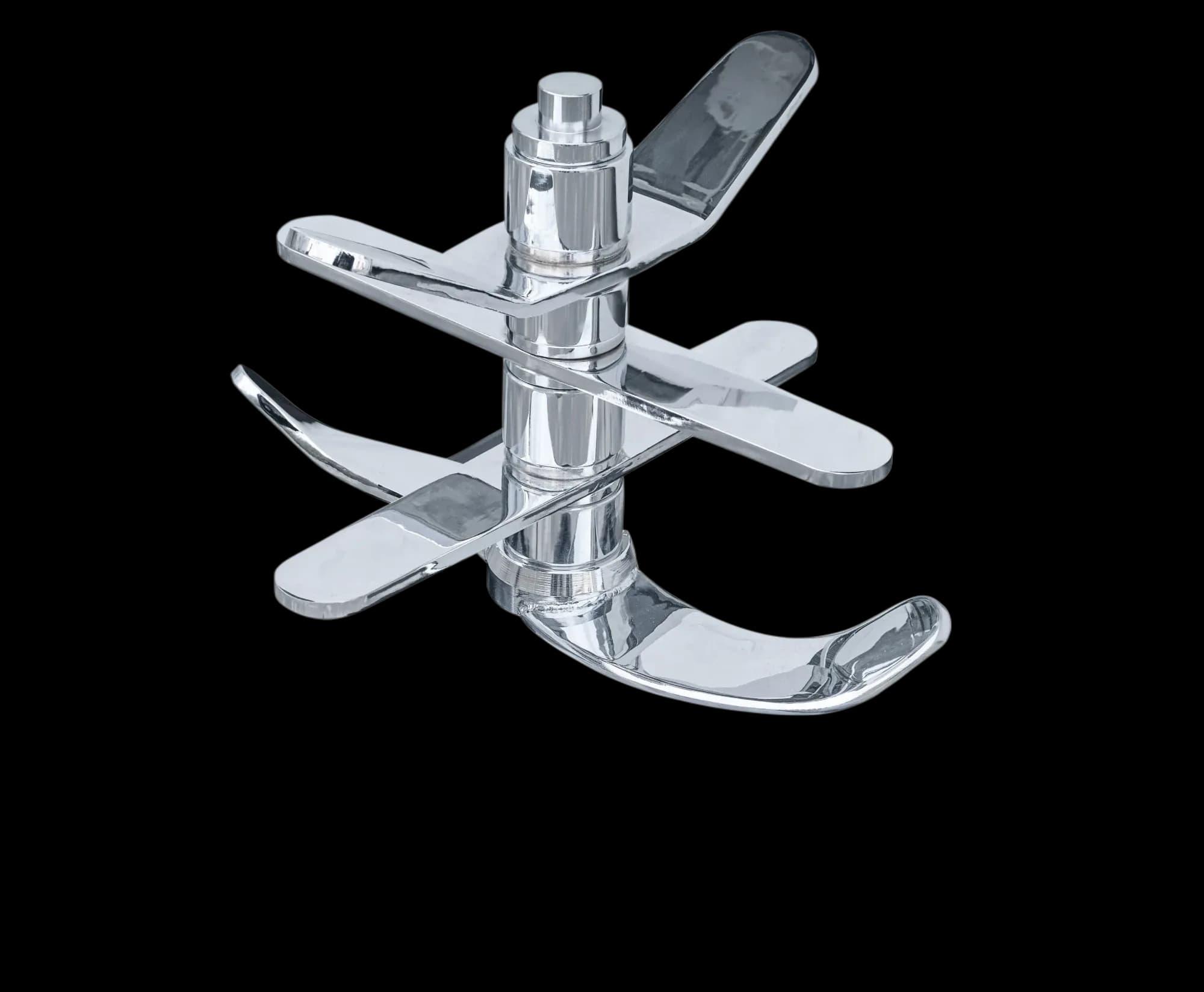
The heart of the heating turbo mixer: impeller and blade sets in AISI 304 stainless steel, balanced and made in a geometry chosen for your recipe.
Highlights
What is a turbo mixer impeller?
A turbo mixer impeller is the set of blades turning at high speed at the bottom of the heating (hot) mixer. In the field the same part is also called a mixer impeller, turbo mixer blades or the turbo mixer rotor. The impeller throws material up along the vessel wall; at the top it turns back towards the centre and drops onto the blades again. During this circulation friction between particles heats the blend, and the stabiliser and other additives spread over the surface of the resin particles.
That is why the impeller is the part with the biggest influence on blend quality in a PVC dry blend line. Heating time, energy use and the bulk density of the dry blend depend directly on its geometry and condition. We explain how it works in what is a turbo mixer.
Parts of an impeller set
A heating mixer impeller is not a single blade but a set of parts that work together. Designs vary, but a set usually includes:
- Hub: the centre part that connects the impeller to the shaft and carries the blades.
- Bottom blade: runs close to the vessel floor, stops material settling there and sets it moving upwards.
- Upper blades: on one or more levels; they spread the material and support the circulation.
- Fasteners: the bolts and nuts that fix the blades to the hub.
The parts of a set are positioned relative to each other, so when you replace one blade we recommend checking the others for wear and balance as well.
The right geometry for rigid and soft PVC
We choose the blade geometry together with each customer, based on what they produce. Rigid PVC recipes, such as profile and pipe, are often highly filled and need fast, controlled heating. In plasticised PVC recipes, such as cable and hose, even absorption of the plasticiser and avoiding lumps come first. If your product range has changed, or your current impeller does not give the heating time and blend you expect, we can review the geometry for your recipe with you.
Options
Feature | Option |
|---|---|
Material | AISI 304 stainless steel |
Coating | Optional tungsten carbide coating |
Balance | Blades are supplied balanced |
Geometry | Chosen with the customer for the recipe and mixer model |
Delivery | Usually from stock; otherwise 1–2 weeks |
We assess at quotation stage whether the coating suits your recipe. In abrasive recipes with a high calcium carbonate content it is chosen to protect the blade edges.
Which mixers?
Impellers are made for the heating mixers of our EPM-H horizontal turbo PVC mixer and EPM-V vertical turbo PVC mixer series. We also make blades to measure for turbo mixers from other manufacturers; see our pages on Papenmeier-compatible and Henschel-compatible blades. For the slow agitator of a cooling mixer, see cooling mixer paddles.
The impeller and mixer output
The condition of the impeller sets not only blend quality but also the line's output. In the heating mixer, the length of a batch depends largely on how long the blend takes to reach its target temperature. A worn impeller moves the material less effectively, so heating takes longer; a few extra minutes per batch add up to a clear loss of output by the end of the day. The cooler also has to wait for the heater, and the number of batches per hour falls. We show the effect of heating time on output with examples in PVC mixer capacity calculation. Recording the heating time regularly is therefore the easiest way to follow the impeller's condition.
What to send us to order
Your mixer | All we need |
|---|---|
Erk PVC Makine mixer | The mixer's serial number |
Mixer from another manufacturer | A drawing, photos or measurements of the blade |
For Erk mixers the serial number tells us the model and the impeller set fitted to it. For other makes we can start from a drawing, photos or measurements. If you send photos, shots of the blade from above and from the side with a tape measure next to it make our work easier. Tell us your recipe type (rigid or soft PVC) too and we will suggest the geometry to match.
Signs of wear: when to replace
Wear depends on the filler (calcium carbonate) content of the recipe and the mixer's running hours. These signs mean the impeller should be checked:
- The blend takes longer to reach its target temperature
- Dry blend quality or bulk density changes
- Vibration or noise from the mixer increases
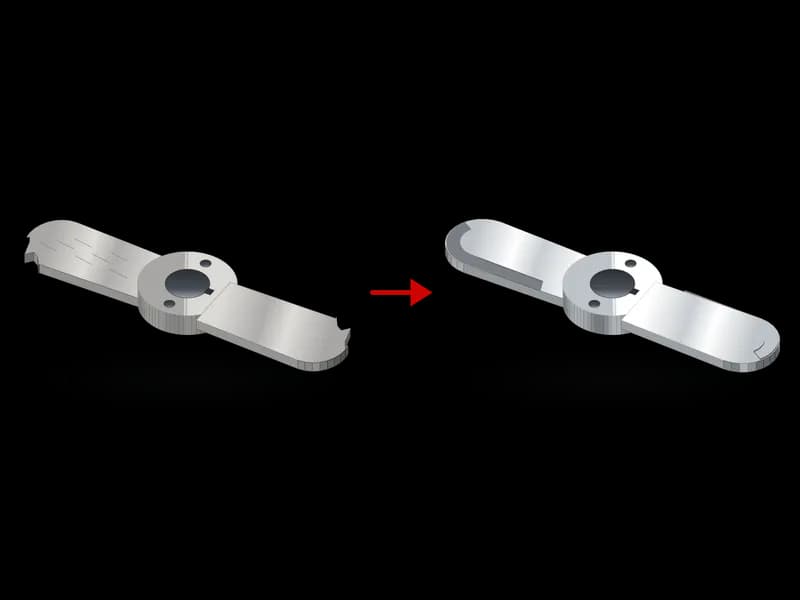
- Blade edges are visibly rounded, thinner or notched
Check blade balance and edge wear during routine maintenance. An unbalanced impeller affects not only the blend but also the life of the shaft and bearings. For the causes of wear and how to check it, see mixer blade wear. If you would rather renew a worn blade than replace it, our mixer blade coating and refurbishment service covers all blades, whether or not Erk made them.
After fitting
After fitting a new impeller, watch the mixer for vibration on the first run and note the heating time of the first batches. That figure is a good baseline for later wear checks. Our service team can support the replacement remotely or on site.
For all blade options, go back to our mixer blades page.
Send us your mixer's serial number or a photo of the blade, and we will quickly quote your turbo mixer impeller.
Downloads
Frequently Asked Questions
Is a turbo mixer impeller the same as a mixer blade?
In the field the same part is called an impeller, blade, paddle or rotor. In a heating turbo mixer it is a set that works together: a bottom blade and upper blades fixed to a hub.
What material is the impeller made of?
Impellers and blades are made of AISI 304 stainless steel and supplied balanced. An optional tungsten carbide coating can be applied.
What is the delivery time?
Impellers are usually shipped from stock. If a set is not in stock, delivery takes 1–2 weeks.
What do I need to send to order an impeller for my Erk mixer?
The mixer's serial number is enough. From it we identify the mixer model and its impeller set.
Do you make impellers for turbo mixers from other manufacturers?
Yes. We make blades for all mixer models. A drawing, photos or measurements of the blade are enough to order, and we choose the geometry for your recipe together.
How do I know the impeller needs replacing?
Longer heating times, a change in dry blend quality or bulk density, more vibration and visible wear on the blade edges are the main signs. We recommend checking balance and edge wear regularly.
Related Products

Get a Quote
Request a Quote
Fill in the form and our sales engineers will get back to you within one business day.